


Gross motor play helps you regulate emotions by allowing your body to process sensory signals from the environment, which reduces frustration and anxiety. Activities like jumping or climbing build confidence and emotional resilience by giving a sense of achievement. Moving your body also releases energy, promoting calmness and reducing irritability. Plus, group play encourages social skills like patience and empathy, strengthening emotional understanding. Keep exploring to discover more ways movement supports your emotional well-being.

Turn the school run and nap time into listening time
- Thousands of audiobooks, podcasts and originals
- Listen on your phone, tablet or Echo — also offline
- Cancel anytime
Key Takeaways
- Gross motor play helps process sensory signals, reducing sensory overload and supporting better emotional response regulation.
- Engaging in physical activities builds confidence and mastery, promoting positive emotional states.
- Active movement releases excess energy, calming the body and stabilizing emotions.
- Social interactions during play develop patience, empathy, and emotional understanding.
- Movement routines enhance sensory processing and resilience, aiding emotional adaptability and stress management.
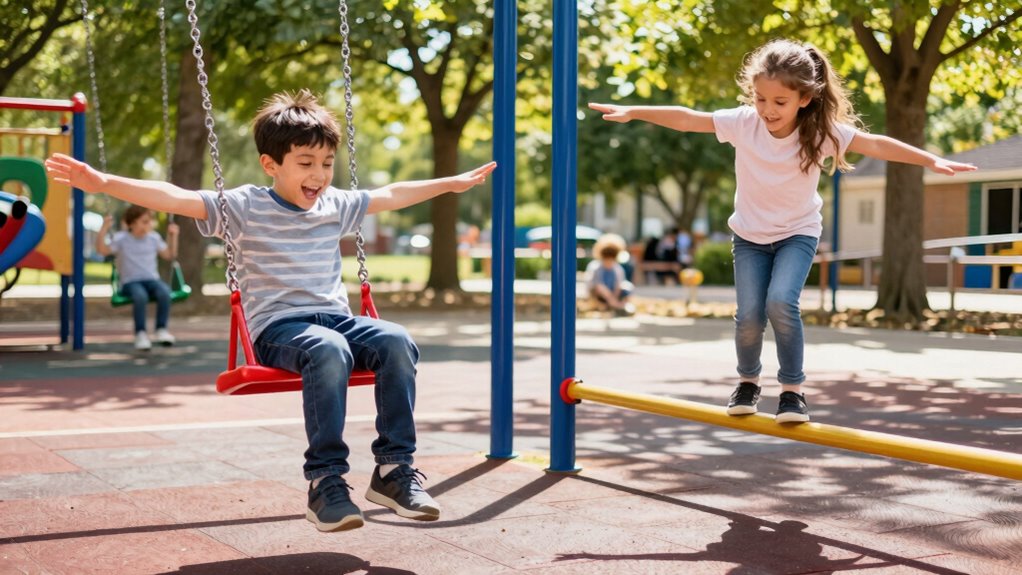
Engaging in gross motor play can considerably influence a child’s ability to manage their emotions. When you encourage active play like running, jumping, or climbing, you’re not just helping them build physical strength—you’re also supporting essential aspects of sensory integration. Sensory integration involves the brain’s ability to process and respond to sensory signals from the environment. Through gross motor activities, children learn to interpret sensory information more effectively, which helps regulate their emotional responses. For example, when a child jumps on a trampoline or explores a climbing frame, they’re refining their sense of balance and body awareness. These experiences give them a better understanding of their physical limits and capabilities, reducing feelings of frustration or anxiety that can come from sensory overload or disorganization.
Active gross motor play helps children process sensory signals and regulate their emotions effectively.
Motor development is another critical component linked to emotional regulation. As children develop their gross motor skills, they gain confidence in their physical abilities. This confidence translates into a sense of mastery, which can boost self-esteem and reduce emotional outbursts fueled by feelings of inadequacy or insecurity. When children master new movements—like catching a ball or hopping on one foot—they experience success that reinforces positive emotions. This sense of achievement can help them better cope with setbacks or challenges, making their emotional responses more balanced over time.
Gross motor play also encourages the release of built-up energy, which is essential for emotional stability. Kids often feel overwhelmed or irritable when they have excess energy that they can’t release constructively. By engaging in active play, they burn off this surplus, leading to calmer, more centered emotional states. Additionally, movement activities often involve social interactions—playing tag or building obstacle courses with peers—which help children develop social skills and emotional understanding. Navigating these social dynamics requires emotional regulation, and physical activity provides a natural context for practicing patience, cooperation, and empathy. Incorporating sensory integration into play routines can enhance children’s ability to adapt to different environments and emotional demands. Furthermore, engaging in diverse movement patterns can stimulate various sensory pathways, supporting overall sensory processing. Consistent movement-based activities can also help children develop routines that foster emotional stability and resilience.
Developing strong sensory processing skills through movement can also improve a child’s overall resilience to stress and emotional upheaval. For some children, the right amount of sensory stimulation can help regulate their mood, making it easier to handle daily challenges. By integrating movement into their routines, you’re helping your child develop a resilient emotional foundation—one rooted in physical confidence, sensory processing, and social understanding.
kids trampoline for sensory play
As an affiliate, we earn on qualifying purchases.
As an affiliate, we earn on qualifying purchases.
Frequently Asked Questions
How Does Gross Motor Play Differ From Fine Motor Activities?
Gross motor play involves large muscle movements like running, jumping, and balancing, helping you develop coordination and muscle strength. Fine motor activities, on the other hand, focus on small movements like writing or buttoning clothes, which enhance dexterity and hand-eye coordination. While gross motor play improves overall muscle development and balance, fine motor skills refine precision and control. Both are essential for overall physical and emotional growth.
Are There Age-Specific Benefits of Gross Motor Play for Emotional Regulation?
Yes, there are age-specific benefits of gross motor play for emotional regulation. As you observe, different age groups experience unique emotional milestones, and gross motor activities support this development. For infants, crawling and rolling help build confidence, while for preschoolers, running and jumping foster emotional resilience. Older children develop self-control and frustration tolerance through team sports and active play. Tailoring activities to age guarantees ideal emotional growth and regulation.
Can Gross Motor Play Improve Emotional Regulation in Children With Special Needs?
Think of gross motor play as a bridge, helping children with special needs cross into better emotional regulation. It promotes sensory integration, calming overstimulated senses, and boosts peer interaction, fostering social skills. When children move actively, they learn to manage emotions better, reducing anxiety and frustration. You’ll notice improved confidence and communication, making emotional regulation feel less like a mountain and more like a walk in the park.
What Role Do Parents or Caregivers Play in Facilitating Gross Motor Play?
As a parent or caregiver, you play a crucial role in facilitating gross motor play by providing opportunities and engaging with your child. Your parental encouragement motivates them to explore and try new activities, boosting their confidence. Through playful supervision, you guarantee safety while allowing freedom to move and experiment. Your active involvement fosters emotional regulation, helping your child feel secure and supported during energetic play sessions.
How Much Daily Gross Motor Activity Is Recommended for Emotional Benefits?
You should aim for at least 60 minutes of daily gross motor activity to boost emotional regulation. Incorporate indoor activities like dance or obstacle courses on bad weather days, and outdoor adventures such as bike riding or playground visits when possible. These activities help release energy, improve mood, and build confidence, making it easier for you to manage emotions effectively. Consistency and variety keep your child’s engagement high and benefits lasting.
Conclusion
By engaging in gross motor play, you give your child’s emotions room to breathe and find their balance. Think of it as a mighty river carving its path—powerful, yet gentle enough to shape the landscape. When your child runs, jumps, and plays actively, they’re not just burning energy; they’re building resilience and emotional strength. So, let their play be a steady current guiding them toward calmer, happier waters.
Cold & flu season Picks
humidifiers
As an affiliate, we earn on qualifying purchases.