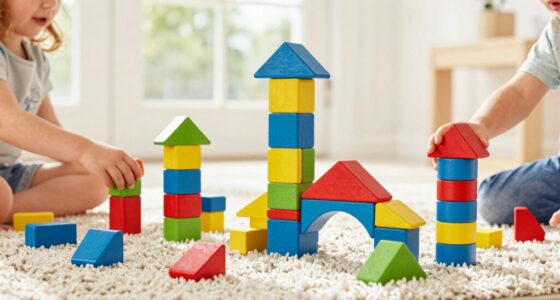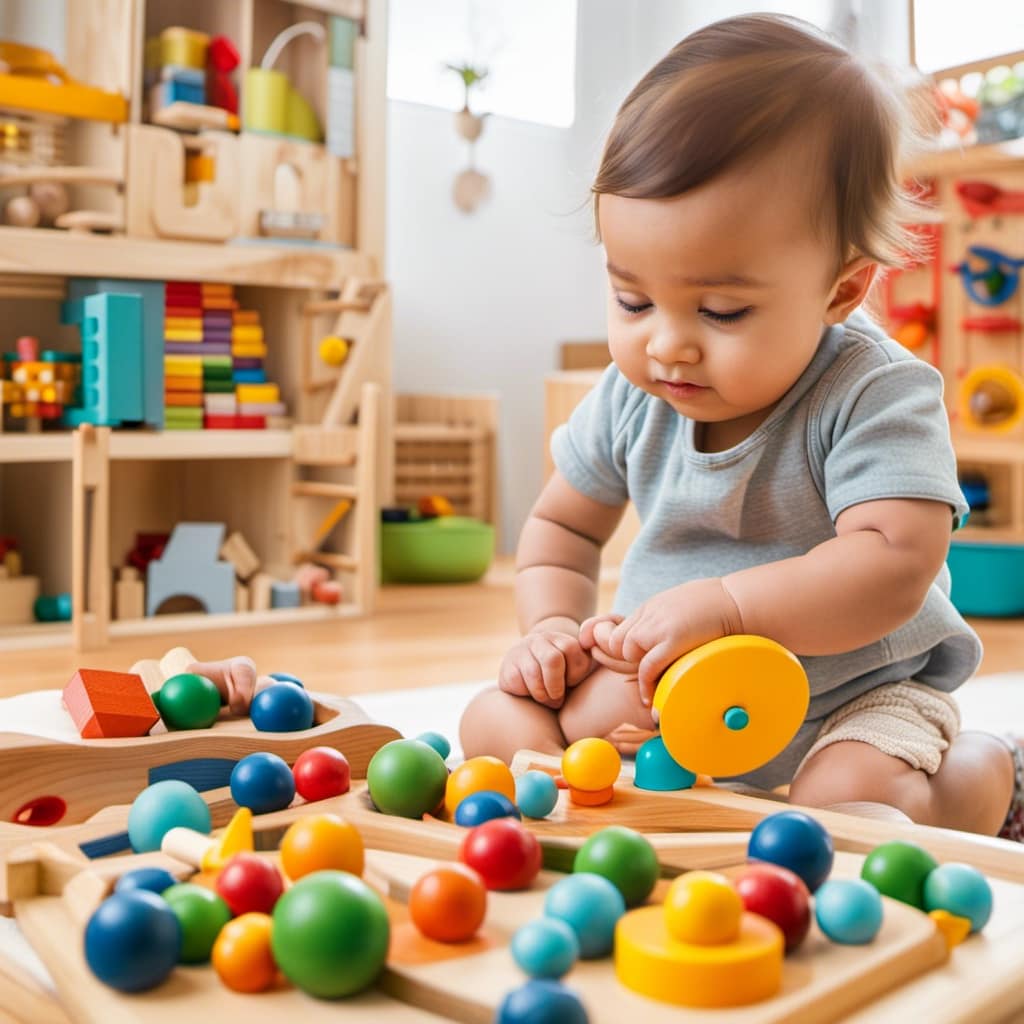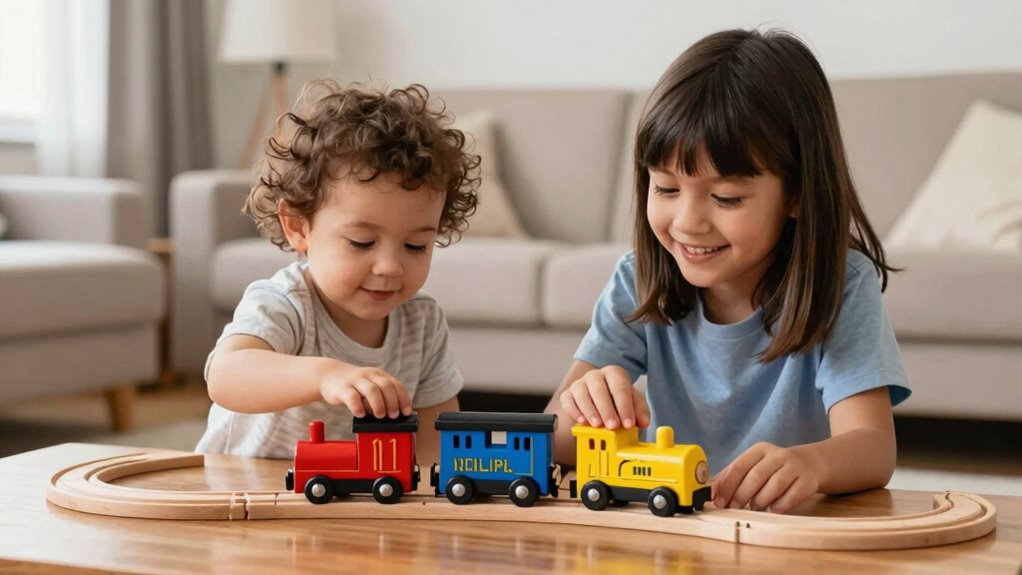

A good shared toy for siblings promotes cooperation, encourages positive interactions, and is suitable for their age. It should be durable, safe, and easy to share, helping curb frustration and conflict. Interactive features and collaborative elements keep kids engaged and working together. Choosing toys that match developmental stages guarantees everyone stays interested and challenged. Discover how selecting the right toys can foster harmony and fun, making playtime enjoyable for everyone involved.

Turn the school run and nap time into listening time
- Thousands of audiobooks, podcasts and originals
- Listen on your phone, tablet or Echo — also offline
- Cancel anytime
Key Takeaways
- Promotes teamwork and communication, encouraging children to collaborate and share responsibilities.
- Is age-appropriate, ensuring safety and engagement for all siblings involved.
- Offers durability and safety features to withstand active play and prevent accidents.
- Facilitates positive social interactions and reduces conflicts during shared use.
- Incorporates interactive elements that foster cooperation and collective achievement.
Sharing toys can be a great way to teach siblings about cooperation and patience. When you encourage your children to play together, they learn important social skills like taking turns, listening, and respecting each other’s space. One of the key benefits of shared play is that it helps kids develop emotional intelligence and problem-solving abilities as they navigate sharing and working together. To maximize these benefits, it’s essential to choose age-appropriate toys that suit each child’s developmental stage. Age-appropriate toys are safe, engaging, and designed to challenge children just enough to keep their interest without causing frustration. For younger kids, simple toys like stacking blocks or soft plush animals work well because they promote tactile exploration and basic social interaction. Older children, on the other hand, might enjoy board games or collaborative building sets that involve strategy and teamwork.
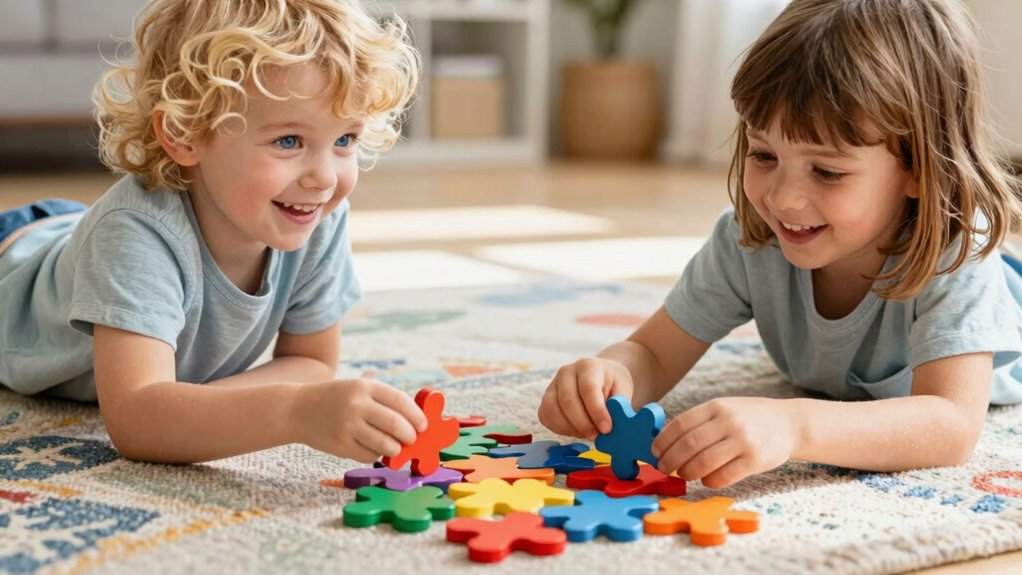
When selecting a shared toy for siblings, you want something that encourages cooperative play rather than competition or conflict. Toys that require teamwork, such as puzzles, craft kits, or pretend play sets, are excellent choices. These toys not only foster communication and collaboration but also help children build a sense of achievement together. It’s important that the toys you choose aren’t overly complex or frustrating, as this can lead to disagreements or feelings of exclusion. Instead, opt for toys that can be easily shared, with enough pieces or parts for everyone to participate equally. This guarantees that all children feel involved and valued during playtime. Additionally, choosing durable toys ensures they can withstand active play and last longer over time. Kids often play vigorously, so selecting sturdy toys that can withstand rough handling means they’ll last longer and remain safe for shared use. Look for toys made from high-quality materials that are easy to clean, especially if you’re sharing them among multiple children. Moreover, considering the developmental stage of each sibling helps ensure the toy is appropriate and engaging for everyone involved, which can lead to more harmonious play experiences. Incorporating interactive features can also enhance cooperation and make shared play more engaging for children of different ages. Using age-specific toys also minimizes the risk of frustration or safety issues during shared play. Properly curated toys can also serve as tools for positive social interactions, fostering a more cooperative environment during play.
shared cooperative toys for siblings
As an affiliate, we earn on qualifying purchases.
As an affiliate, we earn on qualifying purchases.
Frequently Asked Questions
How Do I Introduce a Shared Toy to New Siblings?
To introduce a shared toy to new siblings, start by explaining how it benefits sibling bonding and encourages teamwork. Organize the toy beforehand, ensuring it’s easy to access and tidy, which helps with toy organization. Sit together and demonstrate how to play, emphasizing sharing and taking turns. Encourage positive interactions, praising cooperation. This approach creates a welcoming environment, making the toy experience fun and fostering strong sibling bonds from the start.
What Age Range Is Best for Shared Sibling Toys?
For ideal sibling bonding, the best age range for shared toys is typically between 3 and 8 years old. You should choose toys that promote positive play, prioritize toy safety, and suit their developmental stages. Younger children need durable, simple toys, while older kids enjoy creative, collaborative options. Ensuring safety and encouraging shared experiences help nurture sibling bonds and make playtime safe, fun, and fulfilling for everyone involved.
How Can I Prevent Toy Conflicts Between Siblings?
To prevent toy conflicts, establish clear rules around toy ownership and sharing. Encourage your kids to take turns and practice conflict resolution by calmly discussing their feelings and finding compromises. You can also assign specific times or designated areas for shared play, helping them understand boundaries. Reinforce positive behavior with praise, and consider labeling toys to promote responsibility and reduce disputes. Consistent routines make sharing smoother and more enjoyable.
Are Electronic or Traditional Toys Better for Sharing?
Think of electronic toys as digital fireworks—bright and exciting, but sometimes fleeting. Traditional toys, like puzzles or building blocks, are the steady drumbeat of shared play. For sharing, traditional toys often foster interactive play and learning opportunities, encouraging teamwork and patience. They’re less likely to cause conflicts and more likely to create lasting memories. So, if you want siblings to bond and learn, traditional toys are your best bet for meaningful shared experiences.
How Often Should I Rotate Shared Toys for Siblings?
You should rotate shared toys every few weeks to keep things lively and engaging. Use a toy storage system to organize toys and make rotation easier. Establish a simple rotation schedule, like swapping toys every two or three weeks, so your siblings stay interested and avoid conflicts. Regularly revitalizing their toys encourages sharing, reduces boredom, and helps keep your space tidy.
Conclusion
Choosing the right shared toy can strengthen your siblings’ bond and boost their social skills. Remember, kids who share toys tend to develop better cooperation and empathy. Did you know that 70% of children who regularly share toys report feeling more connected to their siblings? So, pick a toy that’s engaging and encourages teamwork. With the right choice, you’re not just giving them a fun plaything—you’re fostering lifelong relationships.
Columbus Day / Indigenous Peoples' Day Picks
long weekend sales
As an affiliate, we earn on qualifying purchases.