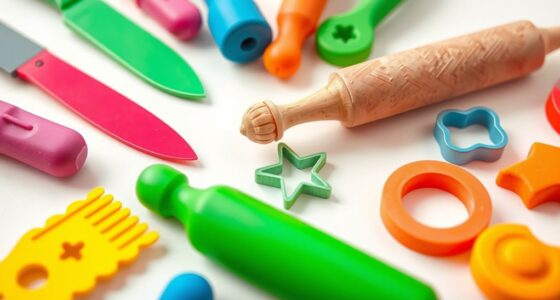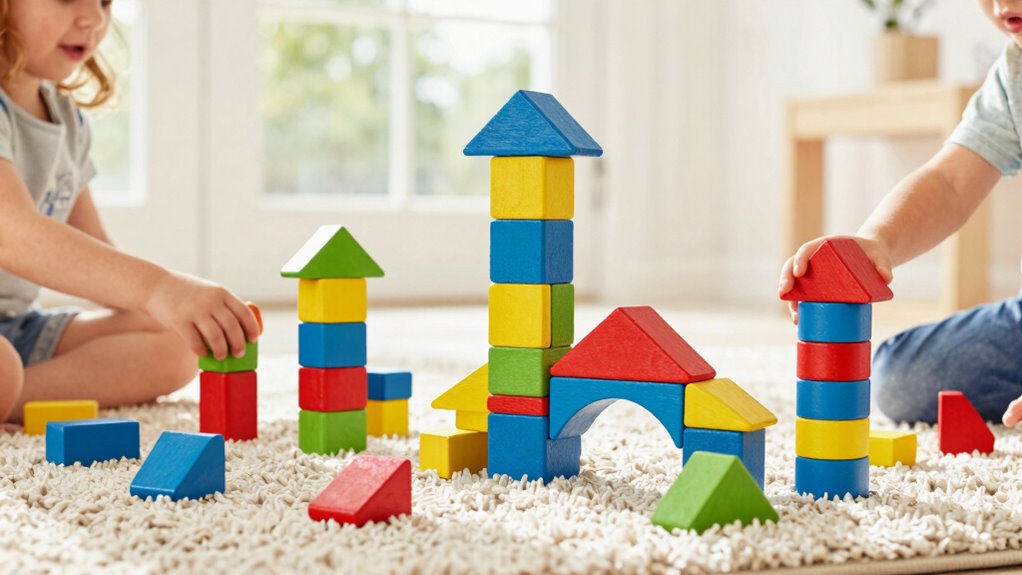

A toy is truly open-ended for preschoolers when it encourages limitless creativity without a set purpose or outcome. You want toys that invite them to explore, experiment, and invent in their own ways, helping develop confidence, imagination, and problem-solving skills. The simplest toys, like blocks or clay, provide a blank canvas for endless possibilities. To discover more about creating and choosing these versatile toys, keep exploring how they can support your child’s growth and fun.
Open a free Amazon Business account
Business pricing, bulk buying and tax-exempt orders.
As an affiliate, we earn on qualifying purchases.
Key Takeaways
- It offers multiple possible uses, encouraging children to invent and explore creatively.
- Lacks predefined outcomes, allowing for limitless imaginative scenarios.
- Is simple in design, providing a blank slate for self-directed play.
- Promotes development of critical thinking, problem-solving, and motor skills.
- Is durable and safe, supporting active, long-term play experiences.

Have you ever wondered why some toys inspire limitless creativity and imagination in preschoolers? The answer lies in what makes a toy truly open-ended. An open-ended toy isn’t designed with a specific purpose or outcome in mind; instead, it invites children to explore, experiment, and invent their own stories and uses. These toys foster creative play, which is essential for nurturing a child’s innate curiosity and problem-solving skills. When children engage with open-ended toys, they don’t just follow instructions—they craft their own unique experiences, allowing their imaginations to flourish and their confidence to grow.
Open-ended toys spark creativity, nurture curiosity, and empower children to invent their own unique play experiences.
What sets these toys apart is their versatility. They can be used in countless ways, adapting to a child’s mood, interests, or developmental stage. For example, building blocks can become castles, bridges, or abstract sculptures, depending on the child’s vision. This flexibility sparks creative play, encouraging children to see beyond the toy itself and envision endless possibilities. By offering a wide range of potential uses, open-ended toys help children develop cognitive and motor skills as they manipulate, assemble, or transform them. This active engagement supports developmental benefits like fine motor coordination, spatial awareness, and critical thinking. Additionally, understanding the importance of durability and quality ensures that these toys remain safe and functional through many hours of active play. Moreover, selecting safe and non-toxic materials is crucial to safeguarding children’s health during their imaginative adventures.
Another key aspect of truly open-ended toys is their simplicity. They often lack elaborate features, electronic components, or predefined functions that could limit a child’s imagination. Instead, they provide a blank canvas, allowing your preschooler to take the lead and steer their play in any direction they choose. This promotes independence, self-expression, and decision-making, which are essential skills at this stage of development. Additionally, choosing durable and high-quality toys ensures they can withstand active play and rough handling over time. Recognizing that a child’s natural curiosity fuels their engagement, open-ended toys serve as ideal tools to support curiosity-driven exploration and learning.
Durability and quality are also important. Because open-ended toys are meant to be used creatively over and over again, they need to withstand active play and rough handling. When you choose sturdy, well-made toys, you’re investing in tools that can grow with your child, offering new ways to explore as they develop new skills and interests.
In short, a truly open-ended toy is one that empowers your preschooler to use their imagination freely, supports their developmental journey, and encourages active, creative play. It’s not about what the toy does, but what your child does with it. These toys become more than just playthings—they become tools for growth, exploration, and endless discovery.
open-ended preschool building blocks
As an affiliate, we earn on qualifying purchases.
As an affiliate, we earn on qualifying purchases.
Frequently Asked Questions
How Can I Tell if a Toy Encourages Creativity?
You can tell if a toy encourages creativity by observing if it sparks artistic exploration and imaginative play. Look for open-ended features like versatile materials, simple design, and no fixed outcomes. When your preschooler uses the toy in different ways, invents stories, or combines it with other items, it’s a sign that it promotes creative thinking. Such toys empower your child to explore their imagination freely and develop problem-solving skills.
Are Open-Ended Toys Suitable for All Preschool Ages?
Open-ended toys are suitable for most preschool ages, but you should consider the toy material and brand reputation. Durable, safe materials like wood or silicone suit younger children, while more complex, versatile toys work well for older preschoolers. Always check if the brand has a good reputation for safety and quality. This guarantees your child can explore creatively while staying safe, regardless of age.
What Safety Features Should I Look for in Open-Ended Toys?
When choosing open-ended toys, you should look for safety standards that guarantee the toy meets regulatory requirements. Check for smooth edges and non-toxic materials to prevent choking hazards. Avoid small parts that could be swallowed, and always supervise play. Opt for sturdy, well-made toys that withstand rough handling. Prioritizing these safety features helps create a safe, engaging environment where your preschooler can explore and learn confidently.
How Do Open-Ended Toys Support Developmental Skills?
Open-ended toys boost your child’s creative play and support cognitive development by encouraging them to imagine, experiment, and solve problems. When they explore different ways to use the toys, they build critical thinking skills and enhance their ability to adapt. These toys motivate your preschooler to think independently, fostering a love for learning while developing important skills like spatial awareness, concentration, and decision-making through endless possibilities.
Can Open-Ended Toys Be Educational as Well as Fun?
Yes, open-ended toys can be both educational and fun. Research shows that children engaged in creative play develop better problem-solving skills. These toys spark imaginative learning, encouraging kids to explore different scenarios and ideas. By inspiring curiosity and fostering self-expression, open-ended toys make learning enjoyable, helping preschoolers develop essential cognitive and social skills while having fun—proving that play and education go hand in hand.
Conclusion
In the end, choosing truly open-ended toys sparks your preschooler’s creativity and problem-solving skills, offering endless possibilities for play. Some might worry these toys lack structure, but that freedom actually encourages imagination and independence. By providing open-ended options, you nurture your child’s development without the need for constant supervision or specific instructions. So, embrace versatile toys—they’re not only more engaging but also help your little one grow into a confident, inventive learner.
Flea & tick season Picks
flea and tick prevention
As an affiliate, we earn on qualifying purchases.