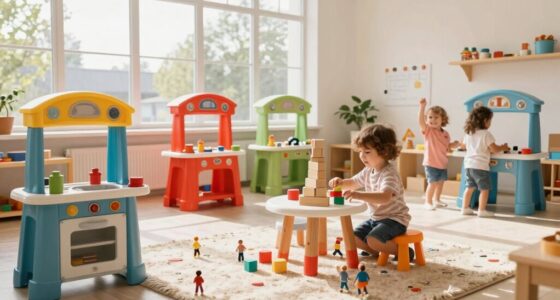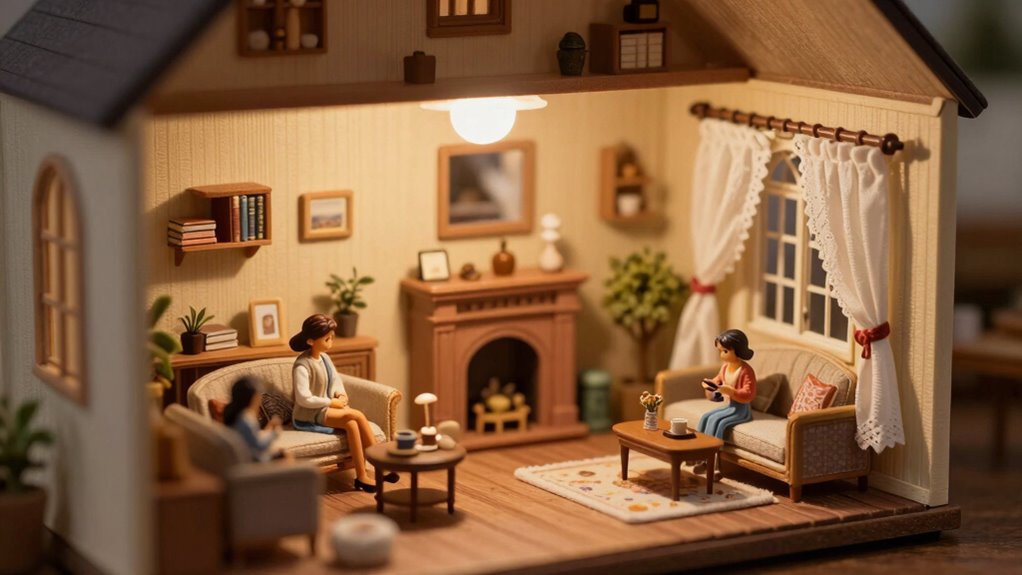

Dollhouses support storytelling for all ages by sparking creativity through scene design and detailed accessories. For children, they encourage imaginative play, helping them explore social roles and daily life in safe, fun scenarios. Adults use dollhouses as artistic tools, expressing stories through decoration and symbolic elements. Both groups find joy in arranging miniature items, which helps them craft rich narratives. Keep exploring to discover how these tiny worlds can inspire your own stories and ideas.
Prime for Young Adults — start your free trial
Fast free delivery, streaming and member deals for eligible 18–24 year olds.
As an affiliate, we earn on qualifying purchases.
Key Takeaways
- Miniature accessories add personality and depth, shaping narratives for all age groups.
- Dollhouses serve as safe spaces for children to explore social roles and daily life scenarios.
- Adults use detailed decor to convey complex stories and symbolic meanings through design choices.
- Arranging accessories stimulates creativity, problem-solving, and storytelling for both children and adults.
- The process of designing and decorating enhances imagination and helps explore character backgrounds and conflicts.
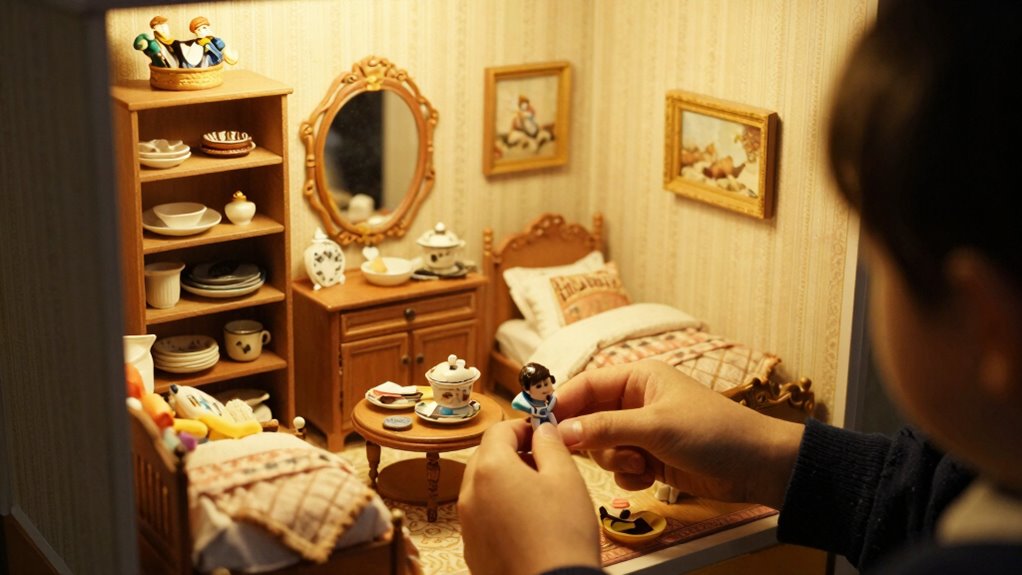
Dollhouses have long been more than just miniature homes; they serve as powerful tools for storytelling, inviting you to create and explore worlds within tiny, detailed spaces. When you add miniature accessories—tiny furniture, tiny dishes, or miniature books—you’re not just decorating; you’re shaping a story. These accessories help bring your dollhouse to life, giving it personality and depth. As you select each piece, you’re actively engaging in narrative development, deciding what kind of world your miniature characters inhabit. Whether it’s a cozy cottage or an elegant mansion, the details you choose influence the stories that unfold within these small spaces.
Miniature accessories bring dollhouses to life, turning tiny spaces into stories filled with personality and imagination.
For children, dollhouses are a gateway to imaginative play. They encourage storytelling by allowing kids to invent scenarios, giving them a safe space to explore social roles, relationships, and everyday life. As children move miniature accessories around, they practice sequencing, problem-solving, and empathy. The act of building and rearranging these tiny worlds supports their cognitive development, helping them understand cause and effect while fueling their creativity. The stories they craft can be simple or elaborate, but each narrative helps them make sense of the world around them.
Adults, on the other hand, often use dollhouses as a canvas for detailed storytelling and artistic expression. When you decorate a dollhouse with miniature accessories, you’re not just creating a visually appealing display—you’re telling a story through design choices. Every tiny piece, from a vintage armchair to a tiny teacup, can hint at a backstory or evoke a certain mood. Many hobbyists enjoy researching periods, styles, or fictional worlds to craft intricate narratives that give their miniature scenes a sense of history and personality. In this way, dollhouses become a form of storytelling that combines craftsmanship with storytelling craft. Additionally, miniature accessories often carry symbolic meaning, enhancing the depth of the stories told within these tiny worlds.
Across ages, dollhouses serve as versatile tools for narrative development. They foster creativity, whether you’re designing a childhood fantasy or an artistic display. The act of arranging miniature accessories helps you think through characters’ lives, settings, and conflicts, no matter your age. For children, it’s about play and discovery; for adults, it’s about storytelling, memory, and artistic expression. Creating scenes with detailed miniature elements can also inspire new ideas and interpretations in the stories you tell. Regardless of your age, dollhouses invite you to step into a miniature world where stories unfold, details matter, and every tiny accessory helps shape the narrative you want to tell.
miniature dollhouse furniture set
As an affiliate, we earn on qualifying purchases.
As an affiliate, we earn on qualifying purchases.
Frequently Asked Questions
What Materials Are Best for Durable Dollhouses?
You should choose wood, plastic, or MDF for durable dollhouses, as these building materials offer excellent durability factors. Wood provides strength and longevity, while plastic is lightweight and resistant to damage. MDF is a budget-friendly option with good durability, though it may be prone to moisture damage if not sealed properly. Consider these materials based on your child’s age and play intensity to guarantee your dollhouse withstands years of storytelling adventures.
How Can Dollhouses Be Adapted for Special Needs Children?
Think of a dollhouse as a canvas waiting to be tailored to a child’s unique needs. You can adapt it with customizable features and sensory-friendly designs, like soft textures, gentle lighting, or quiet spaces. These modifications create a welcoming environment that encourages imaginative play and comfort. By personalizing the dollhouse, you help special needs children explore their world safely, fostering confidence and joy in every tiny room they craft.
Are Vintage Dollhouses Safe for Young Children?
Vintage dollhouses can be charming, but their safety for young children depends on several factors. You should check for small parts or loose pieces that pose choking hazards, as well as non-toxic finishes that guarantee child safety. While vintage charm adds nostalgic appeal, always prioritize safety by inspecting the dollhouse thoroughly and supervising play. If concerns exist, consider replacing or refurbishing parts for a safer, more enjoyable experience.
How Do Dollhouses Enhance Social Skills?
You might find it surprising, but dollhouses actually boost your social skills through role playing. As you create stories and act out scenarios, you naturally practice communication and empathy. This playful interaction encourages language development, helping you express your ideas clearly and listen attentively. By engaging with dollhouses, you develop a deeper understanding of social cues and cooperation, making your interactions more confident and meaningful.
Can Dollhouses Be Integrated With Digital Storytelling Tools?
Yes, you can integrate dollhouses with digital storytelling tools. You might use augmented reality to bring virtual customization into the physical dollhouse, allowing you to enhance stories with interactive elements. AR can overlay digital scenes, characters, or environments, making storytelling more immersive and engaging. This blend of traditional dollhouses and digital tech helps you create dynamic narratives that appeal across ages, fostering creativity and innovation in storytelling.
Conclusion
As you step back, the tiny rooms of the dollhouse come alive with imagined stories—bright curtains sway as if whispering secrets, miniature furniture invites adventures, and tiny figures await your next scene. You realize that dollhouses aren’t just playthings; they’re gateways to boundless creativity, bridging generations through shared stories. With each click of a door or shift of a chair, you’re reminded that storytelling, like a cozy home, offers comfort, connection, and endless possibility across ages.
Evergreen bestsellers Picks
bestsellers
As an affiliate, we earn on qualifying purchases.