
Engaging young children in fun, age-appropriate games helps develop key executive functions like self-control and working memory. Activities such as turn-taking, following changing rules, and memory matching challenge their ability to focus, wait patiently, and manage impulses. Incorporating water-based activities or simple challenges boosts their mental flexibility and emotional regulation. These games build a strong foundation for school success and daily life skills; keep going to discover more ways to support your child’s development.
Key Takeaways
- Use age-appropriate games like “Simon Says” and memory matching to boost working memory and self-control.
- Incorporate turn-taking and rule-following activities to develop patience and emotional regulation.
- Combine self-control with working memory tasks, such as following changing rules during play.
- Engage children in water-based activities to promote calmness, focus, and mental flexibility.
- Integrate playful challenges that encourage problem-solving, impulse control, and adaptability for holistic executive function development.
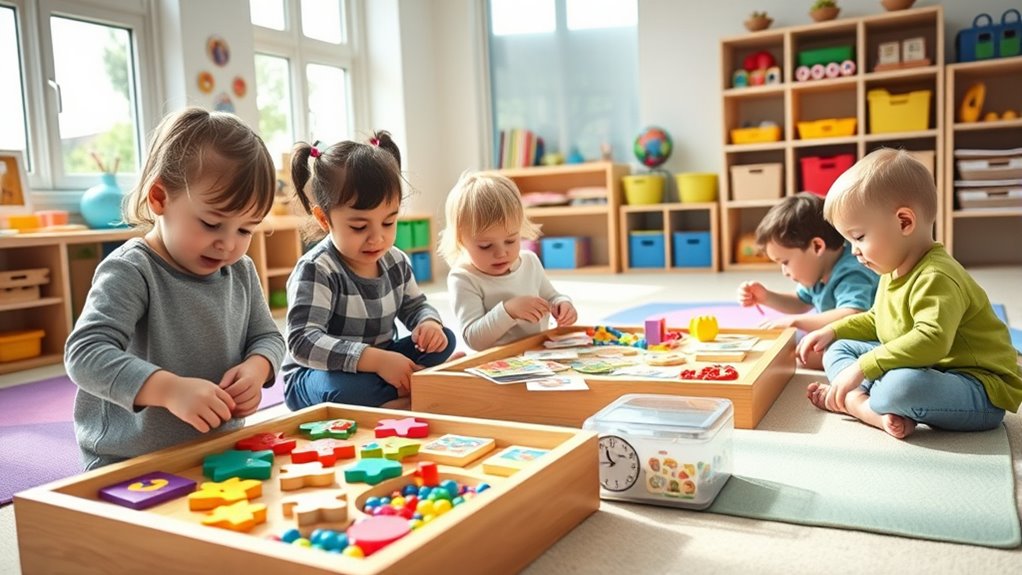
Have you ever wondered how you can boost your brain’s ability to plan, focus, and solve problems? It’s a common curiosity, especially when you want to help young children develop strong executive functions early on. One effective way to do this is by engaging them in executive function games designed specifically for the early years. These games aren’t just fun—they’re powerful tools that strengthen critical skills like self-control, working memory, and cognitive flexibility. Incorporating self-control strategies into play helps children learn patience, delay gratification, and manage impulses. For example, games that require waiting turns or following rules teach kids to regulate their emotions and actions. These activities build a foundation for self-control strategies that they’ll carry into later life.
Alongside self-control, working memory activities are essential. These activities challenge children to hold and manipulate information in their minds, which directly supports their ability to focus and plan. Classic games like “Simon Says” or memory matching games are perfect for this. They require children to remember instructions or visualize where matching pairs are located, sharpening their working memory. When children practice these activities regularly, they improve their capacity to retain information and apply it to new tasks. This boosts their problem-solving abilities and helps them stay on task longer, even when distractions arise.
Moreover, early childhood games designed to enhance executive function often combine both self-control strategies and working memory activities. For instance, a game might ask children to follow a set of rules that change each round, requiring them to remember the rules and control their impulses to act out of turn. Such games encourage kids to develop mental flexibility while practicing patience and self-regulation. As they become more adept at these tasks, they gain confidence in their ability to handle more complex challenges.
In addition, understanding the role of floating on water as a calming and focus-enhancing activity can serve as a creative way to support executive functions in children. Engaging in water-based activities can help children develop patience and self-regulation as they learn to balance and move smoothly, reinforcing their ability to stay calm and attentive.
Engaging children in these targeted games provides more than just entertainment; it actively develops their brain’s executive functions. When you incorporate simple, age-appropriate activities that focus on self-control strategies and working memory, you’re helping children build the mental skills they’ll need for school success and everyday life. These early interventions set the stage for better attention, improved problem-solving, and stronger planning skills later on. So, next time you’re looking for a fun activity, choose games that challenge their self-control and working memory—your child’s brain will thank you for it.

Cognitive Flexibility for Kids: Rule-Switching Games and Adaptation Skills for Handling Change | An Executive Function Skill Builder Workbook
As an affiliate, we earn on qualifying purchases.
As an affiliate, we earn on qualifying purchases.
Frequently Asked Questions
How Can I Assess My Child’s Current Executive Function Skills?
You can assess your child’s executive function skills through parental observation and developmental checklists. Watch how they manage tasks like following directions, waiting their turn, or organizing toys. Use checklists to track progress in areas like working memory, flexibility, and inhibitory control. Regularly observing and noting behaviors helps you identify strengths and areas needing support, guiding you to choose activities that promote their growth effectively.
Are There Specific Games Tailored for Children With Developmental Delays?
Yes, there are specific games tailored for children with developmental delays. These games often incorporate adaptive strategies and focus on personalized interventions to meet each child’s unique needs. You can find activities that promote skills like memory, self-control, and problem-solving, all designed to be engaging and achievable. By choosing adaptable games, you help your child build executive functions gradually and confidently, fostering their growth and development effectively.
How Often Should Executive Function Games Be Played for Optimal Benefits?
You should aim for game frequency of about 3 to 5 times a week to see ideal benefits. Consistency is key, so establishing an optimal schedule that fits into your child’s routine helps reinforce skills without causing fatigue. Keep sessions short, around 10-15 minutes, and gradually increase as your child’s attention and skills improve. Regular play promotes steady development of executive functions like memory, problem-solving, and self-control.
Can Executive Function Games Replace Traditional Early Childhood Education?
Executive function games can’t replace traditional early childhood education, but they complement it well. These games boost skills like cognitive flexibility and attention control, helping your child adapt to new challenges and stay focused. By integrating these activities into their routine, you support their overall development. Remember, a balanced approach combining play-based learning and formal education best prepares your child for future success.
What Signs Indicate a Child Needs Additional Support Beyond Game-Based Activities?
Think of your child’s development as a delicate garden that needs special care. If you notice behavioral red flags like persistent tantrums, trouble focusing, or difficulty following instructions, it might signal they need extra support. Falling behind developmental milestones, such as speech delays or trouble with social skills, also indicates they may benefit from additional help beyond game-based activities. Trust your instincts and consult a professional if concerns grow.
Conclusion
By playing these executive function games, you can unleash your child’s incredible brainpower, turning everyday moments into powerful learning adventures. These games aren’t just fun—they build skills that shape your child’s future as if you’re laying the foundation for a skyscraper that reaches the sky. Keep encouraging play, and watch as your little one’s abilities skyrocket, making their potential as limitless as the stars. The impact is truly mind-blowing!