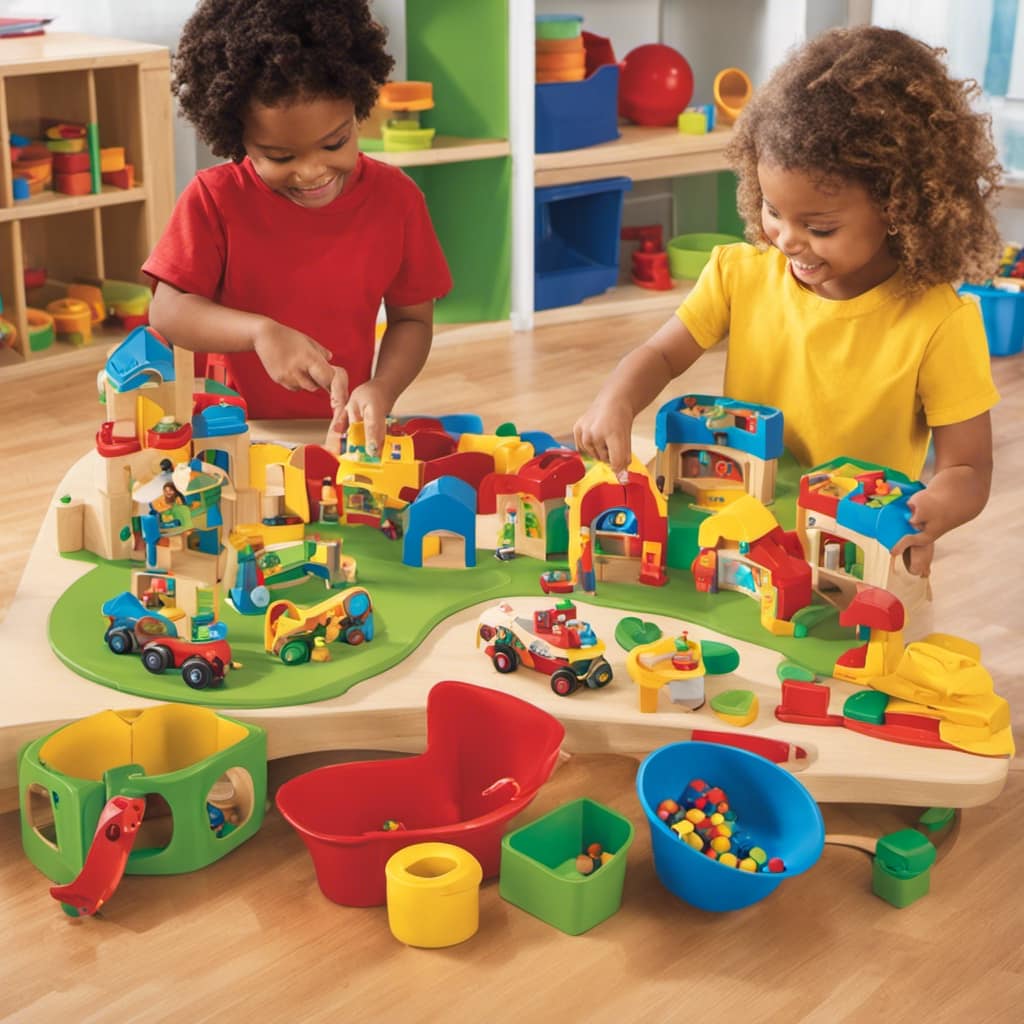
When teaching toy sharing and ownership, it’s key to set clear play rules that emphasize respect and fairness. Encourage your child to take turns and recognize that toys belong to everyone involved, reinforcing patience and kindness. Support their choices while guiding them to understand boundaries. By modeling respectful behavior and offering gentle reminders, you help your child develop social skills and confidence. Keep exploring ways to foster positive play and respectful sharing.

Turn the school run and nap time into listening time
- Thousands of audiobooks, podcasts and originals
- Listen on your phone, tablet or Echo — also offline
- Cancel anytime
Key Takeaways
- Explain that toys belong to everyone and emphasize taking turns to promote fairness.
- Use calm reminders and praise to reinforce sharing behaviors and respectful play.
- Guide children on understanding ownership, encouraging them to respect others’ belongings.
- Model respectful behavior and involve parents to support social skills development.
- Establish simple play rules early, highlighting the importance of patience, fairness, and positive interactions.

Sharing toys can be a fun way for kids to learn cooperation and develop social skills, but understanding ownership and play rules is just as important. When children are encouraged to share, you’re helping them build valuable lessons about respecting others’ belongings and working together. At the same time, fostering child independence is vital, as it allows kids to make choices about their play and understand boundaries. Your role as a parent or caregiver is to strike a balance between guiding their independence and providing support through parental involvement. This helps children feel confident in their decisions while understanding the importance of fair play.
Balancing guidance and independence helps children learn sharing, respect, and social skills effectively.
As your child learns to share, you should set clear, consistent rules about ownership. Explain that toys belong to everyone involved and that taking turns is a way to guarantee everyone gets a chance to play. When you’re involved in this process, you teach your child to recognize the value of patience and fairness. Parental involvement doesn’t mean hovering or micromanaging; instead, it means being present to facilitate understanding. For example, if your child refuses to share a favorite toy, calmly remind them that sharing can be fun and that everyone deserves a turn. This guidance encourages them to develop their social skills and respect others’ feelings.
Encouraging child independence also means letting your kid make decisions about their toys and playtime within reasonable boundaries. You might give them choices, like which toy to play with or whom to share with first. By doing so, you’re empowering them to develop confidence and autonomy. At the same time, it’s important to be nearby, observing and stepping in when necessary to reinforce rules and model respectful behavior. This parental involvement ensures that your child feels supported, not pressured, and learns about ownership and sharing at their own pace.
Introducing play rules early helps children understand that toys aren’t just personal possessions but tools for social interaction. Make things simple and straightforward, so your child can grasp the concept of taking turns and respecting others’ belongings. Praise them when they share or show kindness, reinforcing positive behavior. Remember, fostering child independence doesn’t mean leaving your child to figure everything out alone; it’s about guiding them with patience and consistency. Your involvement helps them learn the importance of sharing, respecting ownership, and following rules, all of which are essential for their social development. Additionally, understanding child development principles can help tailor your approach to suit your child’s unique needs, making the learning process more effective and enjoyable. Over time, your child will learn that playing together can be fun and rewarding when everyone respects each other’s rights and feelings.
Frequently Asked Questions
How Do Cultural Differences Influence Toy Sharing Practices?
You see that cultural differences shape toy sharing practices through cross-cultural norms and sharing etiquette. In some cultures, you’re encouraged to share toys freely, fostering community and cooperation. In others, you might be more reserved, valuing personal ownership and control. These norms influence how you approach sharing, whether you’re open and generous or cautious and private, affecting your interactions and understanding of acceptable play behaviors.
What Are Effective Strategies to Teach Children About Ownership Respect?
You can teach children about ownership respect by setting clear sharing boundaries and explaining why respecting others’ belongings matters. Encourage respectful communication by modeling polite language and active listening when discussing ownership. Reinforce these lessons consistently through positive feedback and gentle reminders. Creating opportunities for children to practice sharing within established boundaries helps them understand the importance of respecting others’ possessions and fosters a caring, respectful attitude toward ownership.
How Can Parents Encourage Fair Play With Shared Toys?
To encourage fair play with shared toys, you should promote taking turns and setting boundaries. Encourage your child to wait patiently for their turn and praise them when they do. Establish clear boundaries about sharing, like how long they can play with a toy before passing it on. Remind them that respecting others’ turns and boundaries fosters kindness and cooperation, making playtime more enjoyable for everyone.
What Are Common Conflicts in Toy Sharing, and How Can They Be Resolved?
When it comes to toy disputes, you need to set clear sharing boundaries early on, so conflicts don’t snowball. Kids often clash over toys because they don’t understand each other’s expectations. To resolve this, encourage open communication and establish fair turn-taking. If disputes arise, gently mediate and remind children that sharing means caring, helping them learn patience and respect while avoiding the feeling that they’re caught between a rock and a hard place.
How Does Toy Sharing Impact Children’s Social Development?
Toy sharing helps you foster children’s empathy development by encouraging them to contemplate others’ feelings and needs. When conflicts arise, they learn conflict resolution skills, such as sharing, taking turns, and communicating effectively. This process enhances their social skills, making them more considerate and cooperative. As you guide them through sharing experiences, you support their emotional growth and help build positive relationships with peers.
Conclusion
By understanding toy sharing, ownership, and play rules, you create a cheerful, cooperative environment—like a well-tuned orchestra where everyone knows their part. When you respect others’ toys and set clear guidelines, playtime becomes smoother and more enjoyable. Remember, sharing is like watering a garden; it helps friendships grow stronger. So, embrace these rules, and watch your playtime blossom into a fun, respectful adventure that everyone cherishes.
Halloween Picks
halloween
As an affiliate, we earn on qualifying purchases.