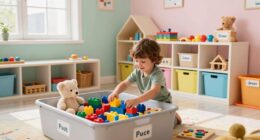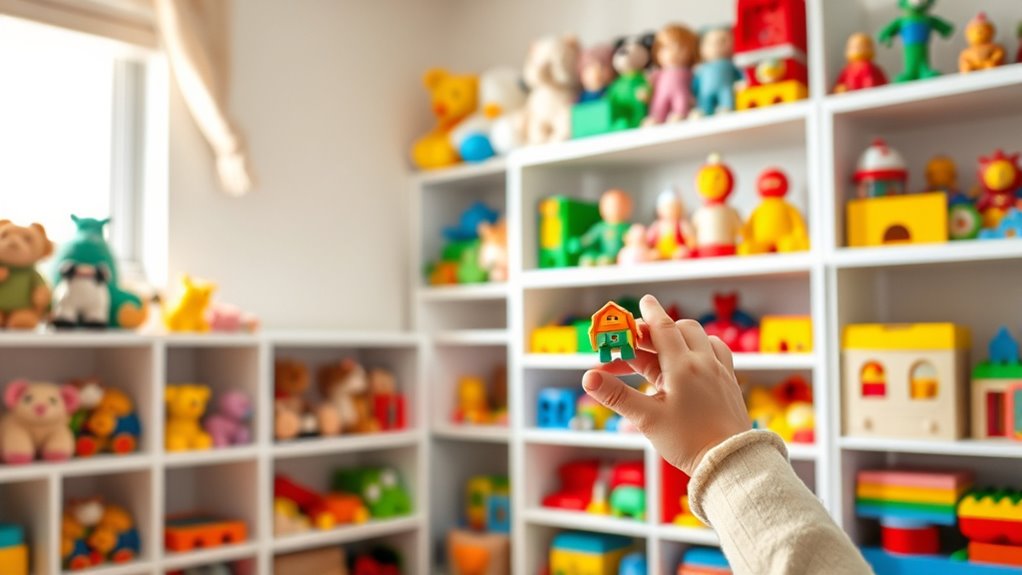

To keep your child’s play environment engaging, rotate 5 to 10 toys every 1 to 2 weeks. This prevents boredom, reduces clutter, and promotes deeper focus on fewer toys. Adjust frequency based on your child’s attachment and curiosity, introducing new toys gradually. Use clear bins and labels to make swapping easy and organized. Maintaining a balanced rotation schedule helps foster development and sustained interest—learn more about optimizing your toy rotation plan next.
Play games included with Prime
Start a Prime free trial and play with Amazon Luna on your devices.
As an affiliate, we earn on qualifying purchases.
Key Takeaways
- Rotate toys every 1 to 2 weeks to keep play fresh and engaging.
- Limit active toys to 5 to 10 at a time to prevent overwhelm.
- Observe your child’s attachment to determine if rotation frequency needs adjustment.
- Reintroduce previous toys periodically to stimulate growth and curiosity.
- Use organized storage with clear labels for easy swapping and maintaining tidiness.
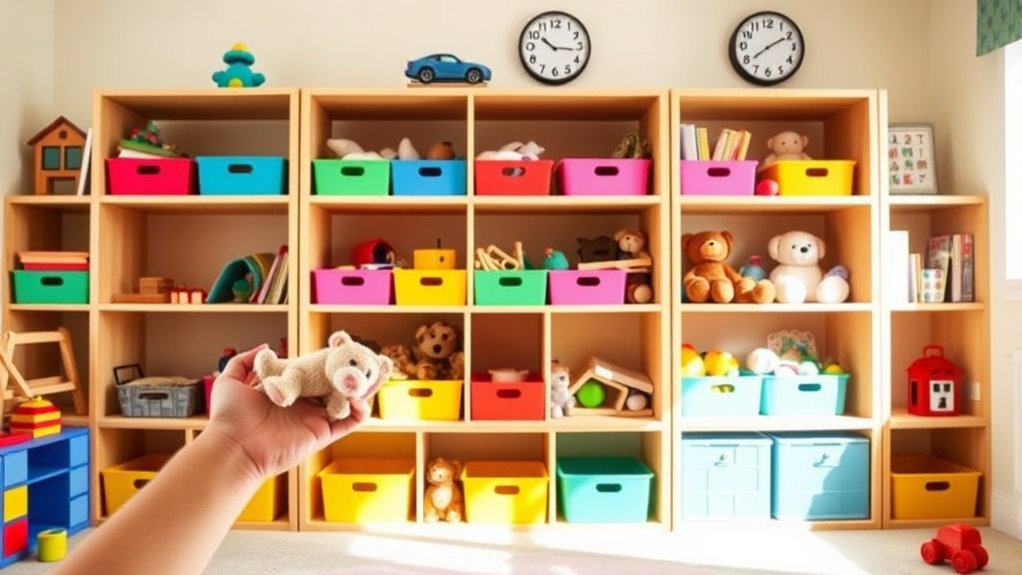
Ever wonder how to keep your child’s toys fresh and engaging? One effective way is through toy rotation, which not only prevents clutter but also promotes your child’s development. You’ll want to create designated bins or shelves for different sets of toys, labeling them clearly so you can quickly swap them out. Using transparent containers allows your child to see what’s inside, encouraging independence and decision-making. When you rotate toys, you keep the environment stimulating, preventing boredom and overexposure to the same items. This method helps your child focus on a smaller selection at a time, fostering better engagement and exploration.
In terms of developmental benefits, rotating toys allows your child to develop a range of skills. When they have fewer toys out, they tend to play more thoughtfully, which enhances creativity and problem-solving. By periodically introducing new toys or reintroducing previous ones, you can stimulate different areas of their growth, such as fine motor skills, language development, or social interaction. Rotating toys also gives you insight into which items your child prefers, helping you select future toys that align with their interests and developmental needs. Plus, it’s an excellent way to teach your child about patience and delayed gratification, as they learn to look forward to the next set of toys.
As for how often to rotate, a good rule of thumb is every one to two weeks. This frequency strikes a balance between keeping things fresh and not overwhelming your child with too many choices at once. If your child seems particularly attached to certain toys, you might extend the time a bit, gradually introducing new items to maintain interest. When deciding how many toys to keep out, aim for a manageable number—around five to ten at a time. This allows your child to focus deeply on each toy, rather than feeling overstimulated by an abundance of options. Keep in mind that the goal isn’t to hide toys permanently but to create a dynamic environment that encourages learning and discovery.
Additionally, implementing organized storage solutions can make toy rotation more efficient and stress-free. Ultimately, toy rotation is a simple yet powerful strategy. It keeps playtime exciting, supports your child’s development, and helps you stay organized. With a little planning and consistent effort, you’ll find that your child’s toys remain engaging and beneficial, transforming play into an enriching experience every day.
Frequently Asked Questions
What Are the Signs My Child Is Bored With Current Toys?
You’ll notice toy boredom when your child shows signs of disinterest, like ignoring or avoiding their current toys. They might become easily distracted, fussier, or less engaged during play. If they frequently leave toys unfinished or don’t ask for their favorites, it’s a clear sign of toy boredom. Observing these signs helps you know when to rotate toys, keeping their interest fresh and encouraging continued imaginative play.
How Do I Store Toys During Rotation Periods?
Think of storage solutions as your child’s toy treasure chest. During rotation schedules, neatly pack away toys in labeled bins or clear containers for easy access later. Use shelves or under-bed storage to keep them organized yet out of sight. This keeps your space tidy and makes swapping toys seamless. Regularly rotate and update stored toys, so your child stays engaged and excited with fresh options, preventing boredom.
Can Toy Rotation Help Reduce Screen Time?
Yes, toy rotation can help reduce screen time by encouraging your child to engage more with physical toys, which naturally limits their reliance on screens. When you rotate toys regularly, you keep their interest high and promote toy engagement, making it easier to set boundaries around screen use. This approach not only fosters creativity but also creates a balanced environment where your child prefers active play over passive screen time.
What Age Groups Benefit Most From Toy Rotation?
You’ll find that children aged 1 to 5 benefit most from toy rotation, as it helps them stay engaged with age-appropriate toys that support their developmental benefits. By regularly changing toys, you encourage curiosity, improve fine motor skills, and promote problem-solving. This approach keeps play fresh and challenging, ensuring your child’s growth is stimulated while preventing boredom and fostering a love for learning through varied, developmentally suitable toys.
How Can I Involve Children in the Toy Rotation Process?
Think of toy rotation as planting seeds for curiosity. You can involve your children by explaining why choosing age-appropriate toys matters and encouraging them to pick their favorites. Let them help you decide which toys to put away or bring out, fostering parent-child communication. This process makes them feel involved and responsible, turning toy rotation into an exciting game rather than a chore, and helps develop their decision-making skills.
Conclusion
By rotating your toys regularly, you keep playtime exciting and prevent overwhelm. The common belief is that rotating every few weeks helps your child stay engaged and appreciate their toys more. While there’s no one-size-fits-all rule, experimenting with a rotation schedule can reveal what works best for your family. Ultimately, the key is to find a balance that keeps your child curious and happy, making toy management easier and playtime more fun for everyone.
NFL season / tailgating Picks
team gear
As an affiliate, we earn on qualifying purchases.