
To create taste-safe sensory recipes for babies and toddlers, focus on colorful and textured foods that invite exploration. Use soft, easy-to-handle ingredients like mashed fruits, steamed veggies, and gentle finger foods arranged in fun shapes or patterns. Incorporate sensory tools like silicone molds or textured mats to boost engagement and fine motor skills. Combining visual appeal with safe textures helps make mealtime fun and encourages curiosity. Keep exploring to discover more tasty, sensory activities tailored for little ones.
Key Takeaways
- Use colorful fruits and vegetables in fun shapes to boost visual appeal and sensory exploration.
- Incorporate safe, textured tools like silicone molds and textured mats to enhance tactile engagement.
- Arrange foods in playful patterns or animal shapes to stimulate curiosity and encourage independent handling.
- Offer a variety of textures—smooth, crunchy, chewy—to develop sensory awareness and fine motor skills.
- Create vibrant, attractive food presentations to motivate tasting new textures and foster positive eating habits.
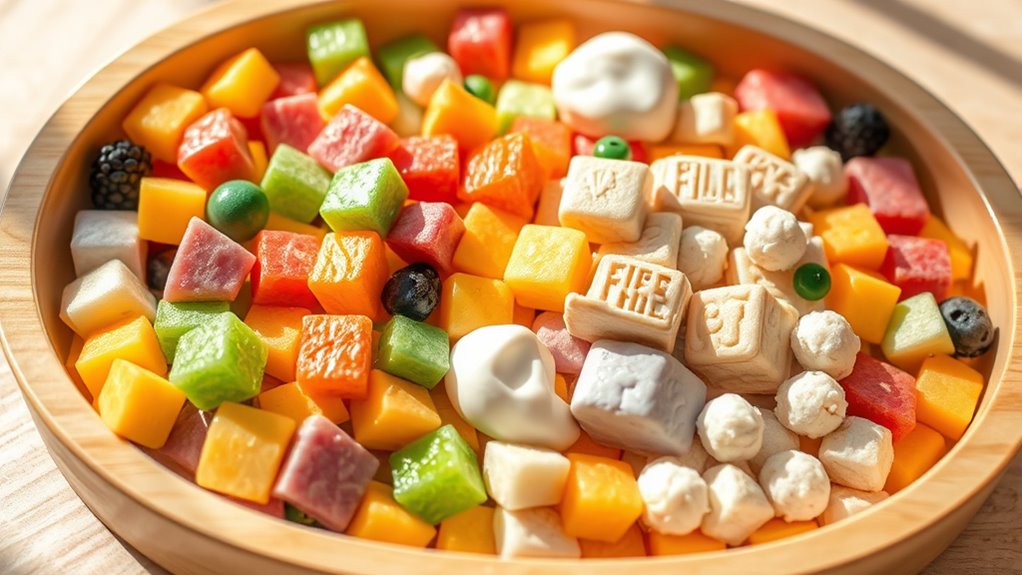
Introducing sensory recipes for babies and toddlers is a wonderful way to support their development through hands-on exploration. When you focus on food presentation, you not only make the experience visually appealing but also stimulate your child’s curiosity and engagement. Bright colors, interesting shapes, and varied textures capture their attention and invite them to explore with their senses. Using sensory play tools like silicone molds, small spoons, or textured mats can encourage safe handling and manipulation of food, making the experience more interactive. These tools help your little one develop fine motor skills while enjoying the process of discovering new flavors and textures.
As you prepare sensory recipes, think about how the food looks and feels. You can arrange colorful fruits like blueberries, sliced kiwis, and diced mango on a plate in playful patterns or shapes. Incorporate different textures—smooth, crunchy, chewy—to give your toddler a variety of sensory input. For example, offering a combination of soft banana slices, crunchy apple chips, and chewy dried fruit can make the experience more enriching. When you use sensory play tools, you make it easier for your child to explore independently, fostering confidence and curiosity. For instance, letting them scoop yogurt with a small spoon or press playdough-like mashed sweet potato into molds can build their hand strength and coordination.
Food presentation matters because it turns eating into an engaging activity. You can create fun faces, animals, or abstract patterns with the ingredients, making mealtime more exciting. These visual cues help your child associate positive feelings with trying new foods and textures. Additionally, incorporating sensory play tools into the process gives your little one a sense of control and discovery. For example, using textured mats or silicone cupcake liners can make the experience more tactile and enjoyable. As they touch, squeeze, and explore the food, they’re also practicing important skills like grasping and hand-eye coordination. Incorporating visual appeal into sensory recipes further stimulates your child’s interest and encourages a positive attitude toward eating new textures.
Frequently Asked Questions
When Should I Start Introducing Sensory Recipes to My Baby?
You can start introducing sensory recipes to your baby around 4 to 6 months, when they begin exploring with their hands and mouth. Focus on early sensory exploration with safe ingredient selection, like soft fruits or cooked vegetables. Always supervise closely and guarantee textures are appropriate for your baby’s developmental stage. This approach helps develop their senses safely while fostering curiosity and fine motor skills.
Are There Any Allergies to Watch for With These Recipes?
An ounce of prevention is worth a pound of cure. When trying new recipes, always practice allergen awareness and consider allergy testing beforehand to spot potential reactions. Watch for signs like hives, swelling, or difficulty breathing. Keep a food diary and introduce new ingredients one at a time. Being vigilant helps safeguard your little one from allergies and ensures safe, enjoyable sensory experiences.
How Can I Ensure the Recipes Are Age-Appropriate?
To guarantee recipes are age-appropriate, focus on texture variety and ingredient safety. You should choose soft, easily mashable textures suitable for your child’s developmental stage, gradually introducing more complex textures as they grow. Always verify that ingredients are safe for your child’s age, avoiding choking hazards and potential allergens. Consult your pediatrician if unsure, and observe your child carefully for any adverse reactions when trying new textures or ingredients.
Can Sensory Recipes Help With My Child’s Developmental Delays?
Sensory recipes can support your child’s developmental delays by promoting sensory integration, which helps them process different stimuli more effectively. Engaging in these activities encourages exploration and can improve fine motor skills, coordination, and sensory responses. By incorporating age-appropriate sensory recipes into your routine, you help your child reach developmental milestones more confidently. Consistent, enjoyable sensory experiences foster growth and boost their confidence in exploring new textures and tastes.
What Safety Precautions Should I Take During Sensory Play?
You must be hyper-vigilant during sensory play because even the tiniest slip-up can cause chaos! Always follow strict supervision guidelines, never leave your little one alone, and keep a close eye on their activities. Guarantee hygiene practices are impeccable—wash hands thoroughly and sanitize materials regularly. Use safe, non-toxic items, and create a clutter-free zone. These precautions help prevent accidents and keep playtime both fun and safe for your child.
Conclusion
Now that you have these taste-safe sensory recipes, you’re all set to introduce your little explorer to new textures and flavors. Remember, patience is key—think of it as your own personal voyage to flavor discovery, like a modern-day Columbus of the culinary seas. Keep it fun, safe, and full of love, and watch your baby or toddler develop confident eating habits. With a little bit of magic and a dash of curiosity, mealtime becomes an enchanting adventure you both will cherish.