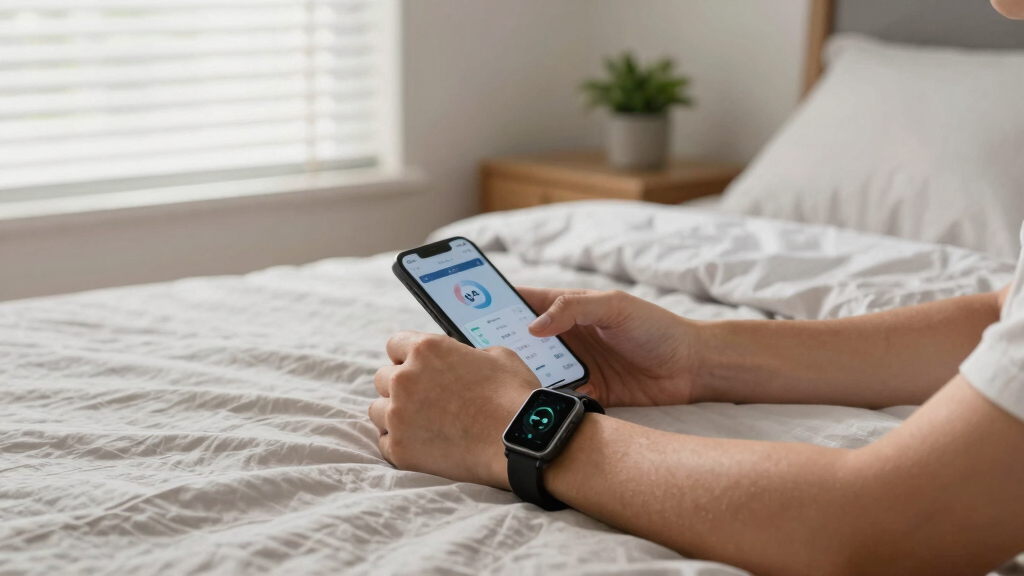
Among the best sleep tracking devices, I rank the Withings Sleep as the best overall because its under-mattress design removes charging and overnight-wear friction. The Fitbit Charge 6 is my value pick for buyers who also want daytime fitness features, while the Withings ScanWatch 2 pairs discreet sleep monitoring with a more traditional watch design. The main choice is between passive tracking, a feature-rich smartwatch, and a screenless wearable built around recovery. Battery demands, subscriptions, ecosystem compatibility, and comfort can matter more than the longest feature list. Continue reading for my full breakdown of which device fits each type of sleeper.
Play games included with Prime
Start a Prime free trial and play with Amazon Luna on your devices.
Start playingAs an affiliate, we earn on qualifying purchases.
Complete the kit


Key Takeaways
- Withings Sleep ranks first because automatic, under-mattress tracking is easier to maintain every night than a wearable that must be charged and tolerated in bed.
- Fitbit Charge 6 offers the strongest value balance, giving buyers more daytime utility than the sleep-focused Withings pad without the higher cost and bulk of a full smartwatch.
- Higher prices do not automatically produce a better sleep purchase: ScanWatch 2 and Sense 2 justify their cost through design or broader wellness tools, not sleep tracking alone.
- Screenless trackers split into two distinct camps: Google Fitbit Air favors low-distraction everyday use, while WHOOP 5.0/MG is built around intensive recovery analysis and a membership.
- Ecosystem and recurring cost can reorder the list, especially for Garmin users drawn to the Index Sleep Monitor or athletes who can make use of WHOOP coaching.
| Garmin Index Sleep Monitor |  | Best Overall | Device Type: Upper-arm sleep band | Sensor Type: Optical and Pulse Ox | Battery Life: Up to 7 nights | VIEW LATEST PRICE | See Our Full Breakdown |
| Withings Sleep |  | Best Contact-Free Tracker | Device Type: Sleep tracking pad | Sensor Technology: Pneumatic sensor | Placement: Under the mattress | VIEW LATEST PRICE | See Our Full Breakdown |
| Fitbit Sense 2 |  | Best for Stress and Sleep Insights | Model: Sense 2 | Battery Life: 6+ days | Water Resistance: 50 meters | VIEW LATEST PRICE | See Our Full Breakdown |
| Withings ScanWatch 2 |  | Best Battery Life | Device Type: Hybrid smartwatch | Battery Life: Up to 35 days | Health Monitoring: ECG, heart rate, and AFib detection | VIEW LATEST PRICE | See Our Full Breakdown |
| Fitbit Charge 6 |  | Best Compact All-Rounder | Device Type: Fitness tracker | Operating System: Android Wear 1.0 | GPS: Enabled | VIEW LATEST PRICE | See Our Full Breakdown |
| Fitbit Versa 4 Fitness Smartwatch |  | Best Sleep-and-Fitness Smartwatch | Battery life: 6+ days | Water resistance: 50 meters | Connectivity: Bluetooth 5.0 | VIEW LATEST PRICE | See Our Full Breakdown |
| Google Fitbit Air Screenless Activity Tracker |  | Best Screenless Everyday Tracker | Battery life: Up to 7 days | Compatibility: iOS and Android | Fit size: 130-210 mm | VIEW LATEST PRICE | See Our Full Breakdown |
| Fitbit Inspire 3 Health & Fitness Tracker |  | Best Value Fitbit for Sleep | iOS compatibility: Apple iOS 16.4 or higher | Android compatibility: Android 11.0 or higher | Heart-rate tracking: 24/7 | VIEW LATEST PRICE | See Our Full Breakdown |
| WHOOP 5.0/MG Activity Tracker |  | Best for Recovery-Focused Athletes | Battery life: 14+ days | Membership duration: 12 months | Water protection: Waterproof | VIEW LATEST PRICE | See Our Full Breakdown |
| sleep tracking device | Battery Life |
|---|---|
| Garmin Index Sleep Monitor | Up to 7 nights |
| Withings Sleep | — |
| Fitbit Sense 2 | 6+ days |
| Withings ScanWatch 2 | Up to 35 days |
| Fitbit Charge 6 | — |
| Fitbit Versa 4 Fitness Smartwa | 6+ days |
| Google Fitbit Air Screenless A | Up to 7 days |
| Fitbit Inspire 3 Health & Fitn | — |
| WHOOP 5.0/MG Activity Tracker | 14+ days |
More Details on Our Top Picks
Garmin Index Sleep Monitor
I rank the Garmin Index Sleep Monitor first because its screen-free upper-arm design keeps the focus squarely on overnight data. It records sleep stages, HRV, duration, and breathing variations, giving Garmin Connect users a richer recovery picture without requiring them to wear a watch in bed. Compared with the Withings Sleep pad, it works away from a specific mattress and can distinguish the wearer’s data more reliably in a shared bed. The tradeoff is having a band around the upper arm, which some sleepers may dislike more than an under-mattress sensor. Its seven-night battery is practical, though the Withings ScanWatch 2 lasts far longer between charges. I also treat its Pulse Ox readings and women’s health estimates as wellness guidance, not medical findings.
Pros:- Tracks sleep stages, HRV, sleep duration, and breathing-related metrics
- Screen-free upper-arm placement avoids wearing a watch to bed
- Runs for up to seven nights between charges
- Syncs sleep and recovery data with Garmin Connect
Cons:- Upper-arm placement may feel restrictive to some sleepers
- Sleep and wellness readings are estimates rather than medical diagnoses
- Pulse Ox breathing variations are unavailable in some countries
Best for: Garmin Connect users who want detailed overnight recovery data without sleeping in a full smartwatch
Not ideal for: Highly touch-sensitive sleepers who dislike an upper-arm band or buyers seeking medically diagnostic readings
- Device Type:Upper-arm sleep band
- Sensor Type:Optical and Pulse Ox
- Battery Life:Up to 7 nights
- Material:Nylon
- Band Size:S-M: 12.8 x 2.5 x 0.02 inches
- Device Dimensions:0.3 x 1.6 x 1.5 inches
- Weight:0.5 ounces
- Color:Black
- Compatible Devices:Smartphones, tablets, and personal computers
Our verdict“I would choose this for the strongest balance of sleep-focused detail, portability, and Garmin ecosystem integration.”
Withings Sleep
I place the Withings Sleep just behind Garmin’s Index because it offers the least intrusive way to collect nightly data: the pneumatic sensor stays beneath the mattress. That makes it better suited to people who remove wristbands during sleep, and its snoring detection and sleep-cycle analysis provide more targeted bedtime feedback than the broader Fitbit Charge 6. There is no battery routine on the wrist, either. Yet this convenience comes with less flexibility. Unlike the Garmin Index Sleep Monitor, the pad is tied to one bed, and mattress construction or placement can affect suitability. It also lacks the daytime activity, ECG, and stress tools included with Fitbit wearables. I see its automatic, contact-free tracking as the main reason to buy it, while possible app connectivity trouble keeps it from taking the top position.
Pros:- Tracks sleep without requiring a wristband or arm band
- Detects snoring alongside sleep cycles
- Measures overnight heart rate
- Automatically gathers data from beneath the mattress
Cons:- Compatibility and placement can vary across mattress and bed types
- Cannot follow the user between beds without being moved and set up again
- App connectivity may be inconsistent
Best for: Home sleepers who want automatic sleep, snoring, and heart-rate tracking without wearing anything overnight
Not ideal for: Frequent travelers, adjustable-bed owners, or buyers who also want daytime fitness and health tracking
- Device Type:Sleep tracking pad
- Sensor Technology:Pneumatic sensor
- Placement:Under the mattress
- Sleep Analysis:Sleep cycles and phases
- Snoring Detection:Supported
- Heart-Rate Monitoring:Supported
Our verdict“I would pick this for effortless home tracking when wearable comfort matters more than portability or daytime metrics.”
Fitbit Sense 2
I rank the Fitbit Sense 2 as the strongest choice for buyers who want sleep data linked with stress and wider health trends. Its ECG, SpO2, continuous heart-rate monitoring, and stress tools give more context around restless nights than the simpler Withings Sleep pad. It also adds GPS and exercise tracking, making it a better all-day companion. Compared with the Fitbit Charge 6, the larger smartwatch format offers a more spacious interface, but it costs the wearer more wrist space and demands charging after roughly six days rather than providing the ScanWatch 2’s 35-day endurance. Some insights may sit behind Google Health Premium once the included three-month membership ends. I give it this role because its sleep-and-stress pairing is unusually useful, though subscription dependence and smartphone requirements weaken its long-term value.
Pros:- Combines sleep tracking with stress-management tools
- Includes ECG, SpO2, and 24/7 heart-rate monitoring
- Built-in GPS supports phone-free route tracking
- Water resistant to 50 meters
Cons:- Some deeper insights may require a paid membership after the trial
- Six-plus-day battery life trails the Withings ScanWatch 2
- Some functions depend on a compatible smartphone
Best for: Fitbit users who want to connect sleep patterns with stress, heart, oxygen, and exercise data in one smartwatch
Not ideal for: Subscription-averse buyers or people who want a small tracker with multiweek battery life
- Model:Sense 2
- Battery Life:6+ days
- Water Resistance:50 meters
- Small Wrist Fit:5.1-7 inches
- Large Wrist Fit:6.5-8.6 inches
- Health Sensors:ECG, SpO2, and 24/7 heart rate
- GPS:Built in
- Included Membership:3 months of Google Health Premium
Our verdict“I would choose the Sense 2 for a broad view of how sleep, stress, and daily activity interact.”
Withings ScanWatch 2
The Withings ScanWatch 2 earns its place through a rare advantage for sleep tracking: up to 35 days of battery life. I favor it for buyers who routinely miss nights of data because their smartwatch is charging. It tracks sleep stages and breathing while adding ECG, heart rate, AFib detection, and more than 40 sports. Compared with the Fitbit Sense 2, its analog face looks more like a traditional watch and lasts several weeks longer. The compromise is a smaller digital interface with fewer on-watch apps and controls, so the Withings app carries much of the analytical workload. It also lacks the contact-free comfort of the Withings Sleep pad. I rank it below the Sense 2 for sleep-specific guidance, but its sapphire glass and stainless-steel construction make it the more polished long-term wearable.
Pros:- Up to 35 days of battery life reduces gaps in overnight tracking
- Tracks sleep stages and breathing
- Adds ECG, heart rate, and AFib detection
- Sapphire glass and stainless steel provide a durable premium build
Cons:- Small digital display offers fewer smartwatch interactions than the Fitbit Sense 2
- The Withings app is required for full analysis
- Wrist-based design may bother people who dislike wearing a watch in bed
Best for: Traditional-watch fans who want dependable sleep and heart tracking without charging every week
Not ideal for: Buyers who expect a large digital display, rich app support, or detailed controls directly on the watch
- Device Type:Hybrid smartwatch
- Battery Life:Up to 35 days
- Health Monitoring:ECG, heart rate, and AFib detection
- Sleep Tracking:Sleep stages and breathing
- Sports Tracking:More than 40 sports
- Fitness Metrics:VO2 max and heart-rate zones
- Compatibility:Android and iOS
- Materials:Stainless steel case and sapphire glass
- Sizes:Multiple sizes and finishes
Our verdict“I would buy this for reliable multiweek tracking in a watch that does not look overtly technical.”
Fitbit Charge 6
I choose the Fitbit Charge 6 for buyers who want capable sleep tracking without moving up to a full-size smartwatch. Its narrow band records sleep alongside heart rate, stress, ECG, and activity, while built-in GPS and Google Maps add value beyond bedtime. Compared with the Fitbit Sense 2, it is the more compact option, though the smaller screen can make its many menus feel crowded. It cannot match the Garmin Index Sleep Monitor’s sleep-first design or the Withings ScanWatch 2’s stated 35-day battery life. Google Wallet and YouTube Music controls broaden its everyday appeal, but some personalized analysis requires Google Health Premium after the included three months. I place it fifth because it is a versatile fitness tracker with useful sleep tools, rather than the most specialized device for understanding sleep.
Pros:- Slim format combines sleep, heart-rate, stress, ECG, and activity tracking
- Built-in GPS supports outdoor workouts without relying on phone location
- Google Maps and Google Wallet add practical daytime functions
- Water resistant to 50 meters
Cons:- Some personalized insights require a paid membership after three months
- Small display can make the feature-rich interface feel dense
- Provided product data does not state expected battery life
Best for: Active buyers who want sleep, heart, workout, navigation, and payment features in a slim wrist tracker
Not ideal for: Sleep-focused buyers who prefer a wearable-free sensor or want detailed insights without an ongoing membership
- Device Type:Fitness tracker
- Operating System:Android Wear 1.0
- GPS:Enabled
- Health Features:Sleep monitoring, ECG, heart rate, and stress tracking
- Band Material:Silicone
- Case Material:Stainless steel or metal
- Water Resistance:50 meters
- Included Bands:Small and large
- Included Membership:3 months of Google Health Premium
Our verdict“I would pick the Charge 6 when sleep tracking matters, but fitness and everyday smart features matter just as much.”
Fitbit Versa 4 Fitness Smartwatch
I rank the Fitbit Versa 4 as the strongest choice here for buyers who want sleep insights without giving up a screen, notifications, or workout tools. Its built-in GPS and 40-plus exercise modes make it more capable away from a phone than the Fitbit Inspire 3, while its 6-plus-day battery reduces charging gaps that can erase overnight data. It also covers heart rate and broader wellness trends, giving sleep records useful daytime context. The tradeoff is depth: the WHOOP 5.0/MG places greater emphasis on recovery coaching, and the Fitbit Sense 2 offers more advanced stress and sleep tools. Some insights also sit behind app activation or membership access. I see the Versa 4 as the best balanced option, rather than the most specialized sleep tracker.
Pros:- Built-in GPS supports phone-free route tracking
- More than 40 exercise modes connect sleep data with daily activity
- 6-plus-day battery helps preserve continuous overnight records
- Three-month Google Health Premium membership adds access to enhanced insights
Cons:- Some health insights require app activation or paid membership access
- Provides less recovery-focused analysis than WHOOP 5.0/MG
- Requires a compatible iOS or Android phone
Best for: Active buyers who want overnight sleep tracking, built-in GPS, workout modes, and smartwatch notifications in one device
Not ideal for: Recovery-focused athletes who want deeper coaching, or swimmers needing protection beyond a 50-meter water-resistance rating
- Battery life:6+ days
- Water resistance:50 meters
- Connectivity:Bluetooth 5.0
- Location tracking:Built-in GPS
- Exercise modes:More than 40
- Health tracking:24/7 heart rate and sleep tracking
- Operating temperature:-14° to 113°F
- Maximum operating altitude:28,000 feet (8,534 m)
- Included membership:3-month Google Health Premium membership
Our verdict“I recommend the Versa 4 to buyers who want capable sleep tracking inside a practical fitness smartwatch.”
Google Fitbit Air Screenless Activity Tracker
The Google Fitbit Air earns its place by removing the screen, which can make a wearable less distracting during the day and less intrusive in bed. Its lightweight adjustable band and up-to-seven-day battery suit buyers who value consistent wear more than wrist-based data access. Compared with the Fitbit Versa 4, it sacrifices GPS, notifications, and instant stats; compared with the WHOOP 5.0/MG, it offers shorter battery life and a less performance-centered identity. The companion app becomes the main way to examine sleep and heart-rate trends, so this is a poor match for anyone who wants immediate feedback. Personalized coaching adds direction, but premium functions require a subscription. I rank it as the simpler screenless choice for routine wellness tracking rather than intensive athletic analysis.
Pros:- Screenless design reduces nighttime light and daytime distractions
- Lightweight adjustable fit supports continuous wear
- Up to seven days of battery life limits missed nights
- Personalized coaching turns tracked data into practical guidance
Cons:- No screen for quick access to sleep scores or daily metrics
- Detailed analysis depends heavily on the companion app
- Premium coaching features require a subscription
Best for: Screen-averse sleepers who want a lightweight band for everyday heart-rate, activity, and sleep tracking
Not ideal for: Buyers who want on-wrist sleep scores, built-in GPS, notifications, or full coaching without subscription costs
- Battery life:Up to 7 days
- Compatibility:iOS and Android
- Fit size:130-210 mm
- Display:Screenless
- Connectivity:Bluetooth
- Tracking:Fitness, heart rate, and sleep
- Coaching:Personalized AI-powered coaching
- Color:Lavender
Our verdict“I favor the Fitbit Air for sleepers who want discreet background tracking and are comfortable reviewing everything on a phone.”
Fitbit Inspire 3 Health & Fitness Tracker
I place the Fitbit Inspire 3 in the value slot because it covers sleep, continuous heart rate, stress, and activity without the broader smartwatch hardware of the Versa 4. Its Daily Readiness Score and sleep analysis help connect a poor night with the next day’s activity plan, while mindfulness tools give wellness-minded buyers more than raw bedtime records. Against the Fitbit Air, the Inspire 3 provides a display for checking information without opening an app; against the Versa 4, it loses built-in GPS and richer smartwatch functions. That makes it less suitable for runners who want routes recorded without a phone. Compatibility requirements also exclude older handsets, and the supplied data does not state battery duration. I view it as the accessible Fitbit entry point for sleep and stress tracking.
Pros:- Combines sleep, heart-rate, stress, and activity monitoring
- Daily Readiness Score connects recovery with exercise planning
- On-device display offers quicker access than a screenless tracker
- Mindfulness and stress-management tools broaden its wellness focus
Cons:- No built-in GPS for independent route tracking
- Requires iOS 16.4 or later or Android 11.0 or later
- Battery duration is not stated in the supplied product data
Best for: Budget-conscious wellness trackers who want visible sleep, stress, heart-rate, and readiness information on a slim wearable
Not ideal for: Phone-free runners or owners of older smartphones, since it lacks built-in GPS and requires newer iOS or Android versions
- iOS compatibility:Apple iOS 16.4 or higher
- Android compatibility:Android 11.0 or higher
- Heart-rate tracking:24/7
- Sleep features:Sleep tracking and sleep analysis
- Wellness features:Stress management and mindfulness sessions
- Fitness features:Exercise modes and automatic exercise tracking
- Additional tracking:Menstrual health tracking
- Included membership:3-month Google Health Premium membership
Our verdict“I recommend the Inspire 3 to value-minded buyers who want core Fitbit sleep insights without paying for a full smartwatch.”
WHOOP 5.0/MG Activity Tracker
The WHOOP 5.0/MG takes the athlete-focused role because it frames sleep alongside strain and recovery instead of treating bedtime as a separate score. Its 14-plus-day battery and Wireless PowerPack reduce interruptions, a clear advantage over the Fitbit Air and Versa 4 for buyers who want long, continuous trend lines. It is also waterproof and integrates with Strava and TrainingPeaks, making the collected data more useful within a structured training routine. Yet the screenless design offers no notifications or instant feedback, and WHOOP lacks the everyday smartwatch functions found on the Versa 4. The included 12-month membership softens the initial commitment, but continued access to the platform’s full value carries an ongoing cost. I rank it as the strongest recovery-led pick, but excessive for casual sleep curiosity.
Pros:- Sleep, strain, and recovery data work together for training decisions
- 14-plus-day battery supports long uninterrupted tracking periods
- Waterproof screenless design suits continuous wear
- Integrates with Apple Health, Google Health Connect, Strava, and TrainingPeaks
Cons:- No display or device-based notifications
- Full platform value depends on an ongoing membership
- Offers few functions outside fitness, health, and recovery tracking
Best for: Athletes and structured-training enthusiasts who want sleep interpreted through strain, recovery, and coaching trends
Not ideal for: Casual sleepers who want a one-time purchase, on-device scores, notifications, or general smartwatch functions
- Battery life:14+ days
- Membership duration:12 months
- Water protection:Waterproof
- Display:Screenless
- Tracking:Heart rate, sleep, strain, recovery, and menstrual cycle
- Coaching:Personalized AI analysis
- Integrations:Apple Health, Google Health Connect, Strava, and TrainingPeaks
- Included hardware:WHOOP 5.0 device, SuperKnit band, and Wireless PowerPack
Our verdict“I would choose WHOOP 5.0/MG for serious training analysis, but not for buyers seeking a conventional smartwatch or subscription-free ownership.”
How We Picked
I ranked these devices by nightly adherence, useful sleep insight, and ownership friction. A tracker cannot build a meaningful baseline if it is uncomfortable, frequently charging, or easy to forget, so form factor and battery demands carried more weight than feature count. I also examined how well each option turns overnight signals into readable patterns rather than overwhelming the buyer with charts. Daytime fitness tools earned credit when they strengthened the product’s value without making sleep tracking harder. Build quality, app usability, platform compatibility, and recurring fees shaped the final order.
The ranking favors devices that make sense for a broad group of sleepers, which places the passive Withings Sleep and versatile Fitbit Charge 6 near the top. Premium watches follow when their design, wellness tools, or broader utility justify the added expense. More specialized products rank lower because they suit narrower buyers, not because they lack merit. I marked down options that rely heavily on a particular ecosystem or paid membership. This method makes practical long-term use the deciding factor rather than the largest sensor list.
Factors to Consider When Choosing Best Sleep Tracking Devices
I would choose a sleep tracker by starting with how it fits into the night, then narrowing the field by data needs, charging habits, and total cost. The best device on paper becomes a poor purchase if it spends nights on a charger or feels distracting in bed. A simpler tracker that collects consistent data can be more useful than an expensive model worn only occasionally. These factors help separate lasting value from feature overload.
Match the Form Factor to Your Sleep Habits
An under-mattress pad asks almost nothing from the sleeper, making it a strong fit for anyone who dislikes wearing jewelry in bed. Its limitation is that it follows the bed rather than the person, so it is less useful for travel or irregular sleeping locations. Wrist and arm wearables keep the record attached to the user and can connect sleep with daytime activity, stress, or training. They also introduce skin contact, fit, and nighttime comfort into the buying decision. Screenless bands reduce visual distraction, while smartwatches provide convenient controls at the cost of added bulk. I would prioritize the form factor most likely to be used for several uninterrupted weeks, since trends become more informative with consistent wear.
Choose Data That Can Change a Habit
More metrics do not always lead to better decisions. For many buyers, sleep duration, schedule consistency, resting heart rate, and overnight interruptions offer enough information to spot patterns. Detailed stage estimates and recovery scores can add context, but they may also create anxiety when a single night looks poor. I prefer devices that explain why a score changed and connect it to behavior rather than presenting an unexplained number. Buyers focused on exercise should seek links between sleep and training load, while general wellness users may gain more from bedtime regularity and stress trends. The right data set is the one that supports a repeatable action the next day.
Treat Battery Life as a Data-Quality Feature
Battery life affects more than convenience because every missed night creates a gap in the trend line. Smartwatches with bright displays and many apps may need more charging attention than slim or screenless trackers. A quoted multi-day battery estimate can also shrink when continuous monitoring and notifications are active. I recommend checking whether a device can charge during a shower or morning routine without losing meaningful daytime data. Passive pads remove wearable charging from the nightly routine, though they still need a fixed power connection. For forgetful chargers, low-maintenance power may improve the quality of the record more than an extra sensor would.
Calculate the Full Cost of the App and Membership
The purchase price tells only part of the story. Some trackers provide useful summaries without payment, while others place deeper trends, coaching, or historical analysis behind a membership. A modest monthly charge can exceed the hardware price over two or three years. I would compare the included free experience before treating any introductory membership as permanent value. Subscription-heavy platforms make the most sense for buyers who regularly use their coaching, recovery, and planning features. Anyone seeking basic sleep duration and consistency should favor strong core features without recurring fees.
Pay More for a Clear Reason
A premium tracker is worthwhile when it replaces another device, suits a preferred watch style, or supports a demanding training routine. Paying extra solely for additional sleep stages is harder to justify because consumer devices estimate stages rather than measure them like a sleep laboratory. Hybrid watches can earn their price through discreet styling and long wearability, while advanced smartwatches add stress, exercise, and communication tools. Athletes may benefit from recovery coaching that turns sleep data into training guidance. Beginners usually gain more from clear trends and simple goals than from dense analytics. I would upgrade only when the added capability solves a specific daily need.
Frequently Asked Questions
Is an under-mattress sleep tracker better than a wearable?
An under-mattress tracker is better for buyers who value automatic tracking and zero wrist discomfort. Because it stays with the bed, it can collect a consistent home record without charging a wearable. A wrist or arm device is more useful for travel and for connecting sleep with exercise, stress, or recovery. I would choose a pad for sleep-focused home monitoring and a wearable for whole-day context. Couples should also check how a pad handles separate sleeping positions before buying.
How accurate are consumer sleep trackers at identifying sleep stages?
Consumer trackers estimate sleep stages from movement, heart-rate patterns, and other body signals rather than directly measuring brain activity. Their stage labels should be treated as directional estimates, not exact clinical measurements. I give more weight to repeated patterns in sleep duration, timing, and resting heart rate than to one night’s stage percentages. A strange result is often more useful as a prompt to watch the next several nights than as a verdict on sleep quality. Anyone needing a medical answer should seek professional sleep evaluation.
Do I need a paid subscription to get useful sleep data?
No, but the amount of analysis included without payment varies by platform. Withings devices can appeal to buyers seeking useful core tracking, while WHOOP ties much of its value to an ongoing membership and coaching system. Fitbit products may provide basic information without a subscription while reserving some deeper tools for Premium. I suggest multiplying the monthly fee by the expected ownership period before comparing prices. A subscription is justified only if the added trends or coaching will shape regular decisions.
Is a screenless tracker better for sleep than a smartwatch?
A screenless tracker can be better when low weight and fewer bedtime distractions matter most. Google Fitbit Air and WHOOP 5.0/MG also target buyers who prefer checking insights in an app rather than on the device. A smartwatch offers alarms, controls, and visible daily information, but its larger case may be less comfortable overnight. The Fitbit Charge 6 sits between these formats with a smaller display and broader everyday utility. I favor screenless designs for disciplined app users and smartwatches for buyers who want one device for many tasks.
Can a sleep tracker tell me if I have sleep apnea or another sleep disorder?
No consumer tracker should be treated as a stand-alone diagnosis. These devices can flag unusual breathing, heart-rate, or sleep-disruption patterns, but algorithms and available health features differ by product and region. A pad or wearable may help create a longer record to discuss with a clinician. I would use tracker data as supporting context rather than proof that a disorder is present or absent. Persistent snoring, gasping, severe daytime sleepiness, or other concerning symptoms call for medical assessment even when an app reports normal sleep.
Conclusion
For most sleep-focused buyers, my best overall pick is Withings Sleep because passive tracking removes the comfort and charging problems that interrupt many wearable records. The Fitbit Charge 6 is the best value for anyone who wants useful sleep and fitness features in one compact device. Beginners should start with the Fitbit Inspire 3, which keeps the experience simpler than Charge 6 or a full smartwatch. The Withings ScanWatch 2 is my premium choice for buyers who want sleep tracking inside a traditional-looking watch rather than the more overtly digital Fitbit Sense 2. Buyers seeking wider stress and wellness tools should choose Sense 2, while Versa 4 makes more sense when everyday smartwatch utility matters more than advanced health depth.
The Garmin Index Sleep Monitor is the specific-needs pick for Garmin users who want overnight data without sleeping in a conventional watch. Google Fitbit Air suits buyers seeking a lightweight, screenless device with multi-day battery life, whereas WHOOP 5.0/MG is better aligned with athletes willing to pay for recovery coaching. WHOOP is harder to recommend for basic sleep tracking because its membership adds long-term cost. Versa 4 and Sense 2 offer broader on-wrist functions than the Air or WHOOP, but they also bring more screen and bulk into bed. I would let nightly comfort, ecosystem fit, and recurring cost break the final tie.
Fall yard work Picks
leaf blowers
As an affiliate, we earn on qualifying purchases.