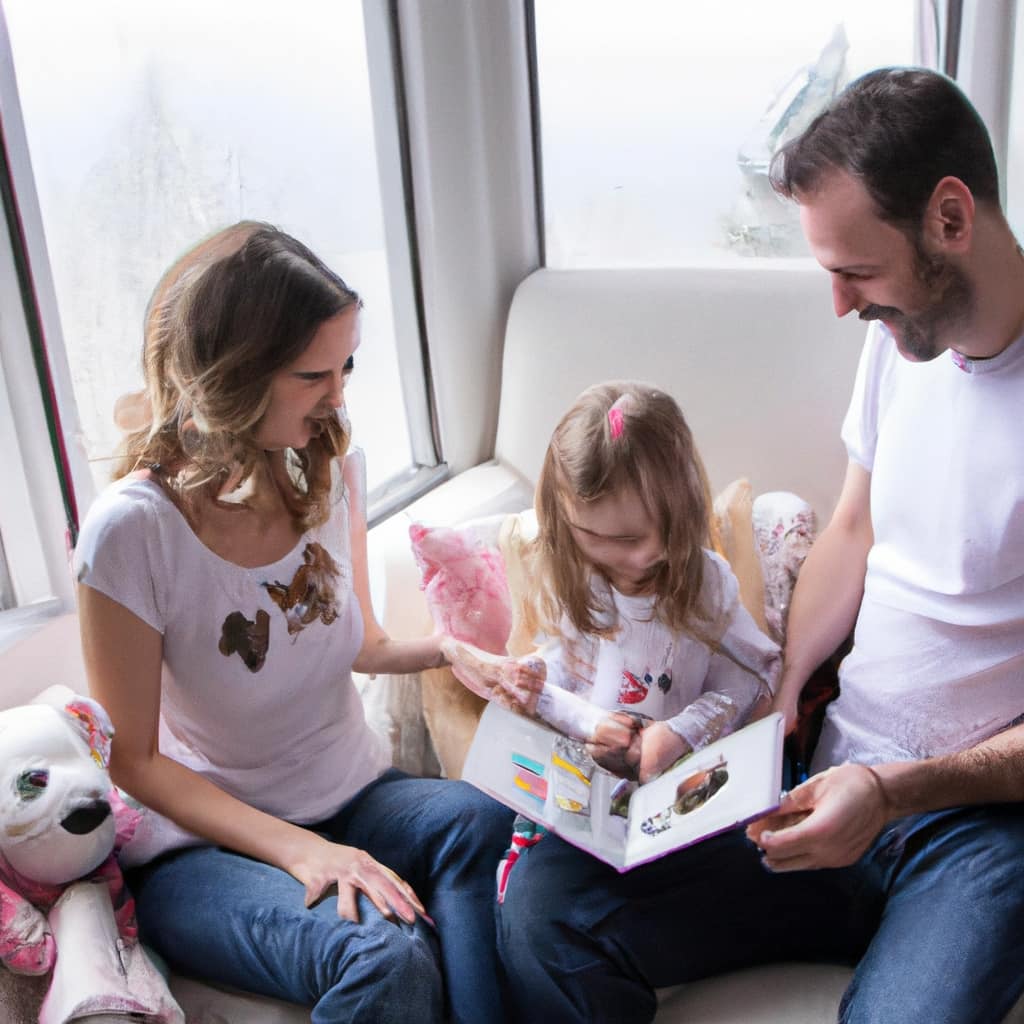


Creating a home play space that balances challenge and calm helps your child grow physically, emotionally, and socially. Challenging activities like obstacle courses promote confidence and resilience, while calm areas offer a retreat for relaxation and self-regulation. By designing spaces with both elements, you support your child’s development and well-being. If you keep exploring, you’ll discover how to build an environment that nurtures growth and fosters self-awareness in your little one.
Key Takeaways
- Combining challenge and calm supports balanced development by fostering physical, emotional, and cognitive growth.
- Diverse play zones promote self-regulation skills through transitions between active and relaxing activities.
- Challenging elements build confidence and resilience, while calming areas provide emotional regulation and relaxation.
- A variety of sensory experiences enhance learning, sensory development, and environmental awareness.
- Natural textures and biodiversity create a grounding environment that connects children to nature and promotes well-being.
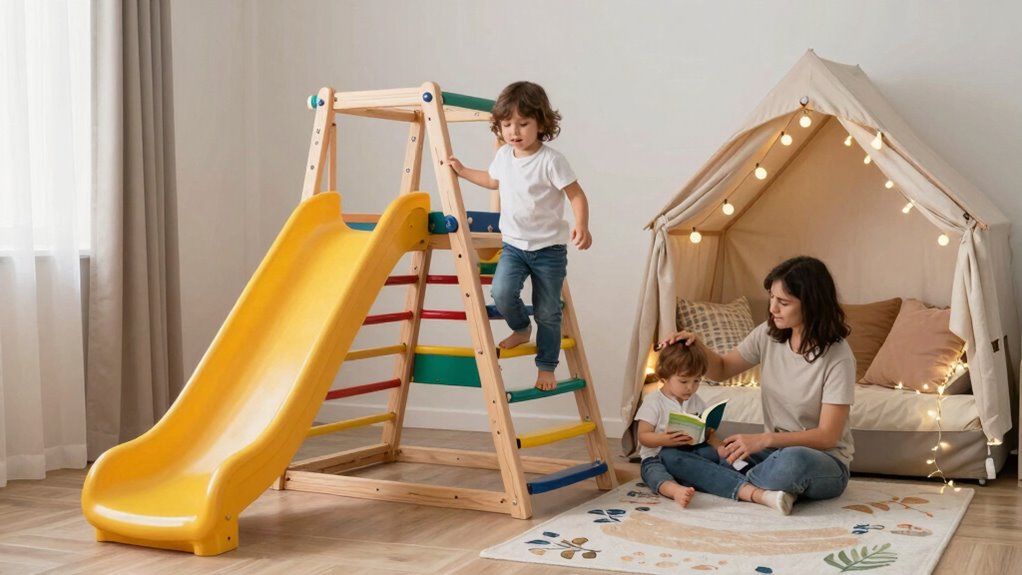
Have you ever wondered how to create a home play space that balances excitement with tranquility? The key is designing an environment that offers both challenge and calm, so your child can explore, learn, and relax in harmony. When you set up your space thoughtfully, you give your child the opportunity to develop essential skills while also feeling safe and centered. Incorporating elements like indoor obstacle courses and sensory stations can make a big difference, providing the right mix of stimulation and serenity. Understanding techniques for engaging children can help you craft a balanced environment that fosters growth and relaxation. An indoor obstacle course encourages physical activity and problem-solving. You might set up cushions, tunnels, or balance beams that challenge your child’s coordination and strength. As they navigate these obstacles, they build confidence and resilience. But it’s equally important to balance this with calming activities. This is where sensory stations come into play. These stations use textures, calming lights, or gentle sounds to help your child regulate emotions and sensory input. Think of a bin filled with soft fabric scraps, a tray of rice or beans to scoop, or a quiet corner with plush pillows and dim lighting. These stations serve as a retreat after energetic play, helping your child unwind and feel grounded. Incorporating developmental benefits into your setup can further support your child’s overall growth and well-being. Creating a space that combines both elements might seem tricky, but it’s all about arrangement and variety. Place the obstacle course in one area to invite active play, then set aside a cozy corner with sensory stations nearby for moments of calm. This layout encourages your child to move freely between high-energy challenges and peaceful retreats, teaching them self-awareness and self-regulation. Paying attention to biodiversity elements within your space—such as plants or natural textures—can also enhance their sensory experience and connection to nature. Additionally, integrating natural elements can support their sensory development and foster a sense of environmental awareness.

JOVA Plat-Act 4-in-1 Balance Beam & Stepping Stones for Kids Ages 3+, Obstacle Course Toy with Ring Toss & Flag Game, Non-Slip & Easy to Store & Clean, Indoor Outdoor Balance Play for Kids
- Versatile 4-in-1 Design: Balance beam, flag game, obstacle jumps, ring toss
- Multiple Play Configurations: 15+ ways to assemble and create routes
- Sensory 3D Training: Multi-textured surfaces enhance sensory development
As an affiliate, we earn on qualifying purchases.
As an affiliate, we earn on qualifying purchases.
Frequently Asked Questions
How Do I Balance Challenge and Calm in Limited Space?
To balance challenge and calm in limited space, focus on creative design and space optimization. Use multi-functional furniture and vertical storage to maximize room. Create designated zones for active play and quiet activities, like a cozy reading nook. Incorporate sensory elements for calm and open areas for challenge. This approach guarantees your child enjoys stimulating play while also having peaceful spots to relax, all within a compact environment.
What Age Is Best Suited for Challenging Play Areas?
You should introduce challenging play areas for children aged 3 to 7, as they’re at a crucial stage for creative design and sensory integration. During this time, kids benefit from activities that develop coordination, problem-solving, and independence. Balance challenging elements with calming ones to support their growth. By tailoring the space to their developmental stage, you foster both confidence and relaxation, making play both stimulating and soothing.
Can Challenging Spaces Cause Frustration for Children?
Challenging spaces can sometimes feel like climbing a steep hill, leading to frustration if kids struggle without guidance. But with parental involvement, you can help children navigate these tricky spots, turning frustration into growth. Incorporating sensory integration activities within challenging areas guarantees kids stay engaged and supported. This balance fosters resilience, helping children develop confidence and problem-solving skills, all while feeling safe and understood in their play environment.
How Often Should I Update Play Challenges at Home?
You should update play challenges every few weeks to keep your child’s interest high. Incorporate new interactive toys and sensory activities regularly, as they stimulate different skills and prevent boredom. Observe your child’s reactions—if they seem uninterested or frustrated, it’s time to introduce fresh challenges. Rotating these elements guarantees your play space remains engaging, balancing challenge and calm, and supporting your child’s growth and development effectively.
What Safety Precautions Are Necessary for Challenging Play Zones?
You should conduct a thorough risk assessment before setting up challenging play zones, identifying potential hazards. Use appropriate safety equipment like helmets, knee pads, and cushioning mats to protect your child during play. Always supervise closely, guarantee equipment is securely installed, and remove any sharp or dangerous objects. Regularly inspect the area for wear and tear, updating safety measures as needed, to create a safe environment where your child can explore confidently.
Conclusion
Creating a balanced home play space that offers both challenge and calm isn’t just about fun—it’s about supporting your child’s development. When you provide opportunities for both excitement and relaxation, you help your child grow resilient, focused, and content. So, why settle for a space that only entertains or soothes? By blending challenge and calm, you nurture a well-rounded environment where your child can thrive. Isn’t that the kind of space every child deserves?