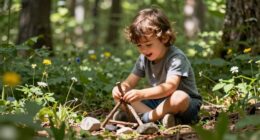
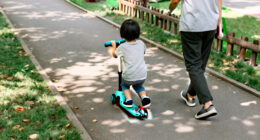
Play is one of the most important parts of childhood. It gives children room to move, imagine, experiment, solve problems, and connect with the people around them. For parents and caregivers, however, supporting healthy play can feel surprisingly complicated. Children have different interests and abilities, homes have different space constraints, and an activity that captivates one child may leave another looking for something else to do.

Turn the school run and nap time into listening time
- Thousands of audiobooks, podcasts and originals
- Listen on your phone, tablet or Echo — also offline
- Cancel anytime
This guide offers a practical way to think about family play without turning it into another demanding project. The goal is not to fill every hour or buy every kind of toy. It is to create a varied play environment in which children can be active, curious, creative, and calm. The sections below cover outdoor exploration, ride-on play, early cycling, sensory activities, tabletop games, safety, and choosing age-appropriate options. Each section also points to focused Healthy Kid Play guides for families ready to explore a particular category in more detail.
Build a Balanced Play Environment
A useful play collection does not need to be large. It needs to offer different kinds of experiences. A child may want vigorous movement in the morning, imaginative role-play after lunch, and a quiet visual activity later in the day. Having options across several broad play styles makes it easier to respond to those changing needs.
- Active play encourages whole-body movement, coordination, and physical confidence.
- Exploratory play invites children to observe, collect, compare, and ask questions.
- Imaginative play lets children create stories, roles, rules, and pretend worlds.
- Constructive play involves assembling, arranging, designing, or solving.
- Social play gives children opportunities to communicate, cooperate, and take turns.
- Quiet sensory play can provide a lower-intensity alternative when children need a change of pace.
These categories often overlap. A backyard expedition may combine movement, science, storytelling, and family conversation. A fishing game may involve fine-motor practice, counting, pretend play, and turn-taking. Rather than assigning every toy a single educational purpose, watch how your child naturally uses it and make space for that play to develop.
As an affiliate, we earn on qualifying purchases.
Encourage Outdoor Discovery
Outdoor play does not require a wilderness destination. A garden, local park, beach, woodland path, or tree-lined neighborhood can give children plenty to investigate. Leaves, stones, insects, tracks, clouds, and seasonal changes all provide starting points for observation. Even a short walk can become an expedition when a child has a question to pursue.
Explorer tools can add structure without dictating the entire activity. Containers, viewing tools, notebooks, and identification materials may help children slow down and notice details. Families comparing ready-made sets can begin with this guide to the best nature explorer kits for adventurers of all ages. The right type of kit depends on where it will be used, what the child already owns, and whether the child prefers collecting, observing, recording, or role-playing.
Turn Nature Walks Into Child-Led Adventures
Simple prompts can extend an outing while keeping the child in charge. Ask what looks different from the last visit, how many textures they can find, or where they think a particular insect might live. Avoid making every outing feel like a lesson or quiz. Curiosity grows more naturally when children have time to wander, look closely, and follow unexpected discoveries.
Children who are fascinated by small creatures may enjoy a more focused setup. The Healthy Kid Play overview of bug catching kits for kids can help families compare tools intended for this kind of exploration. Adult guidance remains important: teach children to handle living things gently, avoid unknown or potentially harmful species, keep hands away from faces, and release creatures in an appropriate place after brief observation.
Make Room for Big-Movement Play
Running, climbing, pedaling, pushing, and steering can all be deeply engaging forms of play. Large-movement activities also give children immediate feedback: they learn how a shift in balance, speed, direction, or effort changes what happens next. The challenge for adults is matching the activity to the child, the location, and the level of supervision available.
Before introducing larger wheeled toys, consider the complete play area. Look for a surface that suits the toy, adequate room for turning and stopping, separation from vehicles and other hazards, and a clear boundary the child understands. Supervision should reflect the child’s age, judgment, experience, and the equipment being used. Manufacturer instructions, age guidance, rider limits, and protective-equipment recommendations should always be checked for the specific item.
Ride-On Vehicles for Pretend and Active Play
Ride-on vehicles can support many kinds of make-believe. A child may pretend to visit a campsite, deliver supplies, work on a farm, or travel across an invented landscape. For families researching larger powered models, the guide to 24V ride-on jeeps for toddlers provides a category-focused starting point. Pay close attention to suitability rather than choosing solely by appearance. Controls, dimensions, intended rider age, seating configuration, operating surface, and adult oversight all matter.
Children drawn to farm play may prefer a different style of vehicle. This comparison of 24V ride-on tractors with trailers for kids explores options built around the tractor-and-trailer format. A trailer can inspire loading and hauling games, but families should follow the maker’s instructions about what it may carry and how it should be used.
Fit and capacity deserve special attention, especially for older, taller, or heavier riders. A listed capacity is a safety boundary, not a target to estimate casually. Families looking for roomier options can review these high weight limit ride-on cars, then verify current specifications directly before making a decision. Also consider where the vehicle will be stored and whether an adult can comfortably move it when it is not being driven.
Support the Journey From Balance to Pedaling
Learning to ride a bike involves several skills: balancing, steering, starting, stopping, looking ahead, and eventually coordinating the pedals. Children do not all acquire those skills in the same order or at the same pace. A low-pressure approach helps them build confidence through short, repeatable experiences.
Balance bikes let children focus on stability and steering before pedaling enters the picture. Convertible designs are intended to change configuration as skills develop, potentially reducing the need to switch immediately to a completely different cycle. Families considering this route can explore the guide to convertible balance-to-pedal bikes for kids.
Correct fit is essential. A child needs an appropriate riding position and the ability to manage the bike safely in its current configuration. Use a properly fitted helmet, choose a traffic-free practice area, inspect the bike regularly, and follow the manufacturer’s assembly and adjustment instructions. Begin with brief sessions and stop before fatigue turns practice into frustration. Progress may be uneven, and that is normal.
Create Calm Without Treating Play as a Cure-All
Healthy play includes quieter moments as well as energetic ones. Some children enjoy watching slow movement, sorting objects, drawing, listening to stories, or repeating a simple action. These activities can help create a gentler transition between parts of the day, especially after busy outings or highly stimulating play.
Liquid motion toys offer a contained visual experience as colored liquid moves through a clear chamber. The guide to liquid motion bubblers introduces options for families interested in this category. They can be used as visual play objects or as part of a quiet corner, but they should not be presented as a treatment for emotional, sensory, or medical needs.
Before use, inspect the object for damage and follow its age and handling guidance. Place quiet-play materials somewhere comfortable but still connected to family life. A calm space should be available as an option, not used as punishment or as a way to isolate a child who needs support.
Use Tabletop Games to Bring People Together
Small games can be useful when outdoor play is impractical, when several children want a shared activity, or when the family needs something compact. They also create natural opportunities to practice waiting, taking turns, following changing rules, and coping with outcomes.
Magnetic fishing games are a familiar example. Children guide a small rod toward target pieces, often within a themed play area. Depending on the particular game and how the family uses it, play might include matching, naming colors, counting catches, inventing stories, or collaborating toward a shared goal. This roundup of magnetic fishing games can help families compare the available styles.
For younger children, check the stated age range and inspect all pieces for size and condition. Magnets require particular care: damaged components and loose magnets can present serious hazards if swallowed. Store the complete set securely, supervise according to the child’s age and habits, and remove a toy from use if its parts become cracked or exposed.
Choose Playthings With the Whole Family in Mind
A good choice fits more than a child’s current fascination. It also fits the household. Before selecting a toy or activity, think about where it will be used, how it will be stored, who will supervise it, and what maintenance it may require.
- Check the manufacturer’s age, size, weight, and usage guidance.
- Consider the child’s present abilities rather than buying only for a future stage.
- Measure large items and their intended storage area before choosing.
- Look at the number and size of loose parts if younger siblings share the space.
- Plan for charging, batteries, cleaning, inspection, and replacement parts where relevant.
- Ask whether the activity works with the household’s typical time and supervision.
- Favor play value that matches the child’s interests over novelty alone.
“Grows with the child” can mean several things. An item may physically adjust, become usable in a new configuration, or simply support more elaborate play as the child matures. None of those possibilities guarantees long-term interest. The most reliable clue is often the child’s existing behavior: what they repeatedly choose to do when they have unstructured time.
Keep Safety Part of the Routine
Safety is not a one-time check performed when a toy enters the home. Equipment can loosen, crack, wear down, or become unsuitable as children change how they use it. Make quick inspections part of the family routine, particularly for wheeled toys, outdoor equipment, objects containing liquids, and sets with small components.
Teach rules in language a child can act on: where riding stops, which creatures should not be touched, where small pieces stay, and when an adult must help. Consistent boundaries are easier to remember than rules that change without explanation. At the same time, no rule replaces attentive supervision when an activity requires it.
Let Healthy Play Stay Playful
Parents do not need to optimize every activity or direct every minute. Children benefit from invitations, materials, safe boundaries, and engaged adults, but they also need freedom to decide what a toy becomes. An explorer kit can support a backyard mission. A ride-on tractor can deliver imaginary harvests. A balance bike can become part of a family adventure. A fishing game can spark an underwater story instead of a competition.
Aim for rhythm rather than perfection: active and quiet, indoors and outdoors, independent and shared, familiar and new. Observe what holds your child’s attention, rotate neglected materials when useful, and keep family participation relaxed. The strongest play environment is not the one with the most equipment. It is the one that makes room for curiosity, movement, connection, imagination, and the child’s own ideas.
Halloween Picks
halloween
As an affiliate, we earn on qualifying purchases.