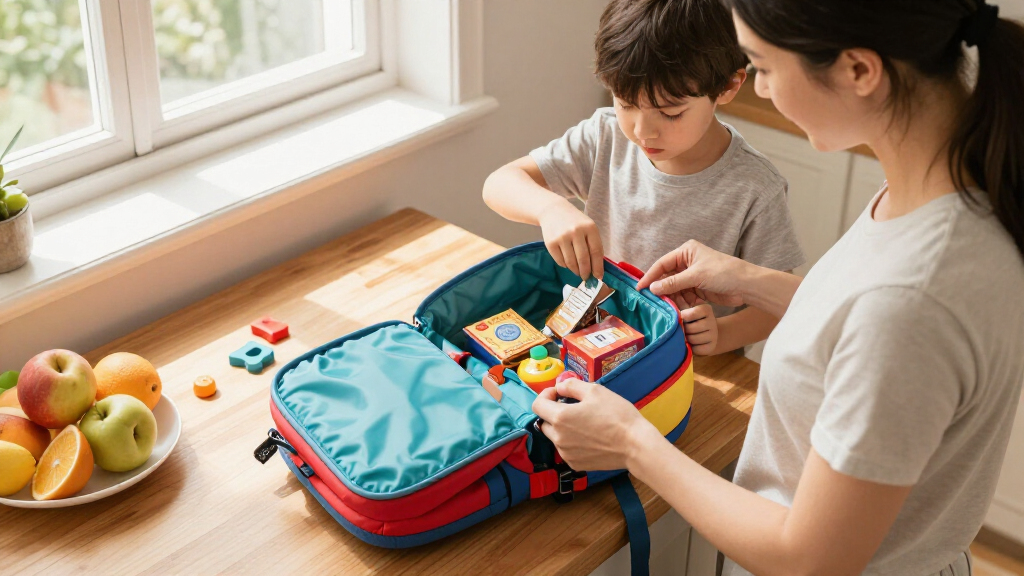

Children’s ergonomic backpacks are designed to keep growing spines comfortable by combining padded back panels, adjustable harnesses, and lightweight frames that distribute weight away from the shoulders. After comparing fit, support, and durability across 15 popular models, the Osprey Daylite Jr. earns my top spot for its genuinely scaled-down suspension and all-around versatility, while the Deuter Forest Fox 14 stands out as the most supportive option for heavier loads and hiking, and the SKYSPER Kids Backpack delivers the best value under a tight budget. The main tradeoff in this category is between true ergonomic engineering — which usually costs more and adds a bit of weight — and cheap, lightweight school bags that sacrifice structure and back support. Age and torso length matter more than brand here, because a well-designed 14L pack on a preschooler defeats the purpose entirely. Keep reading for the full breakdown of which backpack fits which child, and which ones I’d skip altogether.

Turn the school run and nap time into listening time
- Thousands of audiobooks, podcasts and originals
- Listen on your phone, tablet or Echo — also offline
- Cancel anytime
Complete the kit


Key Takeaways
- Only three packs in this lineup — the Osprey Daylite Jr., Deuter Forest Fox 14, and Deuter Schmusebär — carry true ergonomic engineering like structured back panels and load-lifting harnesses; most budget options rely on simple padded straps alone.
- Volume-to-age matching was the biggest differentiator: the Deuter Schmusebär (8L) and Ten Little (12-inch) suit preschoolers, while the Bluboon and Rockpapa 15-inch packs only make sense for elementary and middle school students carrying laptops or binders.
- Budget picks like the SKYSPER and Mountaintop models prove you can get a chest strap and decent padding under mid-range prices, but their stitching and zipper durability lag noticeably behind the Deuter and Osprey builds.
- Novelty designs (STEAMEDBUN corduroy, Mibasies flower print) trade structure for style — cute, but the soft floppy construction undermines weight distribution for anything heavier than a lunchbox.
- Extras like the whistle buckle on the waterproof green daypack and the recycled materials in the Ten Little are genuine differentiators at this price level, not marketing fluff.


| children’s ergonomic backpack | Material | Dimensions | Capacity | Water Resistance |
|---|---|---|---|---|
| Deuter Unisex Child’s Forest F | Recycled polyester | 15 x 8.7 x 6.7 in | — | — |
| SKYSPER Kids Backpack 12L/18L | Water-resistant high-quality fabric | — | 12L / 18L | — |
| Deuter Schmusebär Children’s B | 600D PES | — | 8 L | Water resistant |
| Osprey Daylite Jr. Kids’ Commu | — | 13.4H x 8.7W x 7.1D in | — | — |
| MOONBABY Girls Backpack for Sc | Water-resistant polyester | 17.7 x 11.8 x 6.7 in | 22.9L | — |
| Mountaintop 8L/12L Kids Backpa | Polyester | 8.3"L x 5.9"W x 14.9"H | 8L / 12L | Not water resistant |
| STEAMEDBUN Corduroy Kids Backp | Corduroy | — | — | Water resistant (light rain) |
| Kids Backpack for School | Oxford fabric | — | — | Waterproof |
| Bluboon Boys School Backpack | Polyester | 17.5 x 12 x 6.5 inches | — | Waterproof |
| Mibasies Kids Backpack for Gir | Polyester | 15" x 11.5" x 5" | 12L | — |
| Ten Little Kids Backpack | Recycled polyester | 12" x 10" x 4" | 8 liters | Waterproof |
| Mountaintop 15L Kids Backpack | 600D nylon | 9.5"L x 5.9"W x 15.4"H | 15L | Not water resistant |
| Kids’ Backpacks for Girls & Bo | Eco-friendly fabrics | — | — | — |
| Rockpapa 15-Inch Kids Backpack | Oxford fabric, polyester lining | 15.3 x 11.4 x 5.1 inches | 15 liters | Water repellent |
| Kids Backpack for Boys and Gir | Polyester with nylon lining | 25 x 14 x 41 cm | 15 liters | Water resistant |
More Details on Our Top Picks
Deuter Unisex Child’s Forest Fox 14, Hiking Backpack, 14 Liter – Spearmint-Seagreen
The Forest Fox 14 stands out as the most complete ergonomic package in this lineup. Its structured back pads with ventilation are what actually separate an ergonomic children’s pack from a standard school bag — the load sits against a supportive, breathable frame rather than sagging into the child’s spine. Compared with the Osprey Daylite Jr., it carries a heavier recommended load (up to 6.6 lbs) with proper weight distribution, and unlike the SKYSPER, it includes reflective safety details and a rain cover. The recycled polyester construction is a genuine durability upgrade over generic polyester bags. The tradeoff is price: this is a premium piece of German engineering, and at 14 liters it still won’t swallow a full stack of textbooks. This pick makes the most sense for families who hike or attend forest school and want a pack that protects a growing back.
Pros:- Ergonomic, ventilated back pads that properly support heavier loads
- Reflective details plus an included rain cover for safety and weather
- Durable, eco-friendly recycled polyester construction
- Multiple compartments keep weight organized and balanced
Cons:- Premium price compared to budget picks like the SKYSPER or MOONBABY
- 14L capacity limits bigger school hauls
Best for: Active families whose kids hike, camp, or attend forest school and need real load-bearing ergonomics
Not ideal for: Budget shoppers or kids who mainly carry bulky schoolbooks — the 14L capacity and premium price don’t fit either
- Volume:14 liters
- Weight:13.7 oz
- Dimensions:15 x 8.7 x 6.7 in
- Recommended Load:2.3 – 6.6 lbs
- Back Length:9.4 – 12 in
- Recommended Body Height:39 – 51 in
- Material:Recycled polyester
Our verdict“The best choice for parents who want true ergonomic load support for outdoor-loving kids and will pay for it.”
SKYSPER Kids Backpack 12L/18L for Ages 4-10
For the price of a pizza night, the SKYSPER delivers most of what matters ergonomically: a ventilated back panel, adjustable straps, and water- and stain-resistant fabric that survives juice boxes and mud puddles. The two size options (12L and 18L) are a smart touch the Deuter Schmusebär can’t match — you can size up as your child grows instead of replacing the bag. Compared with the Forest Fox 14, you give up the structured back padding, the rain cover, and any reflective safety detailing, which is the real cost of the low price. This option stands out for families who need one dependable do-everything bag for school and weekend outings without the premium outlay. Just don’t expect it to carry heavy loads as comfortably as the Deuter options.
Pros:- Two capacity options (12L/18L) let the bag grow with the child
- Water-resistant and stain-resistant fabric handles daily messes
- Ventilated back panel and adjustable straps at a low price
- Very affordable compared to premium brands
Cons:- No reflective safety features for dark mornings or evenings
- Back support is basic compared to structured packs like the Forest Fox
Best for: Budget-conscious parents of 4-10 year olds who want one versatile bag for school days and casual outdoor trips
Not ideal for: Kids who walk to school in low light or carry heavy loads — no reflective detailing and lighter back support than the Deuter picks
- Capacity:12L / 18L
- Age Range:4–10 years
- Material:Water-resistant high-quality fabric
- Back Panel:Ventilated
- Straps:Adjustable
- Style:Vibrant outdoor design
Our verdict“The smart pick for families who want solid everyday ergonomics and durability without paying Deuter prices.”
Deuter Schmusebär Children’s Backpack (8 L)
Most toddler backpacks are stuffed-animal carriers with straps; the Schmusebär is a genuine scaled-down hiking pack. Its Contact System back cushion keeps the load off a small child’s spine, and the adjustable chest strap — rare at this size — stops the shoulder straps from sliding off narrow preschool shoulders. Compared with the Mountaintop 8L and the Ten Little preschool bag, this is the only option with Deuter’s proven back construction, and the reflective prints add visibility the SKYSPER lacks. The tradeoff is straightforward: 8 liters means a lunchbox, a sweater, and not much else. The cuddly-bear styling also skews young, so a style-conscious 5-year-old may already find it babyish. This model is better suited to ages 3-5 than the listed range suggests.
Pros:- Genuine Contact System ergonomic back cushion, not just padded fabric
- Adjustable chest strap keeps straps anchored on small frames
- Reflective prints improve visibility
- Featherlight 290 g weight barely registers on a toddler
Cons:- 8L capacity is outgrown quickly
- Water resistant, not waterproof — contents soak in sustained rain
Best for: Parents of 3-5 year olds who want real ergonomic back support in a first backpack for preschool or day hikes
Not ideal for: Kindergarteners and up who need to carry folders, lunch, and a water bottle — the 8L capacity fills up fast
- Capacity:8 L
- Weight:290 g
- Age Range:3 years and up
- Material:600D PES
- Back System:Contact System cushion
- Water Resistance:Water resistant
- Compartments:1 main compartment plus storage pockets
Our verdict“The best first backpack for preschoolers whose parents prioritize back support over capacity.”
Osprey Daylite Jr. Kids’ Commuter Backpack, Blue
Weighing in at under 0.7 lbs, the Daylite Jr. is the lightest school-focused pack here, and that matters: a light bag is the simplest ergonomic intervention there is, because it adds almost nothing to whatever your child stuffs inside. The mesh harness is breathable and comfortable for daily wear, and the large grab handle makes it easy for parents to snatch off a hook. Compared with the Forest Fox 14, it gives up structured back padding but wins on everyday practicality and a lower price; compared with the MOONBABY, it’s far lighter but holds far less. Osprey’s brand reputation for durability also outclasses generic packs like the Bluboon. The catch: it’s compact, and older elementary kids with binders and devices will find it tight. This pick makes the most sense for younger students with modest loads.
Pros:- Ultra-light 0.69 lb weight minimizes total load on the spine
- Breathable, comfortable mesh harness for all-day wear
- Trusted Osprey build quality and warranty support
- Multiple pockets plus interior sleeve keep small items sorted
Cons:- Limited storage for larger items like folders and lunch bags
- No structured back support like the Deuter options offer
Best for: Parents of early-elementary kids who want a trusted brand, minimal weight, and simple daily organization
Not ideal for: Older kids carrying binders, devices, or a full day’s books — the compact main compartment runs out of room
- Dimensions:13.4H x 8.7W x 7.1D in
- Weight:0.69 lbs
- Harness:Breathable mesh
- Pockets:Multiple, incl. water bottle pockets
- Extras:Large grab handle, interior sleeve, internal name tag
- Use:Daily school and activities
Our verdict“The lightest, most reliable everyday school pack here for kids whose loads stay small.”
MOONBABY Girls Backpack for School and Travel
When every other ergonomic pick here tops out around 14-18 liters, the MOONBABY’s 22.9L and nine compartments make it the choice for girls who actually carry things — textbooks, a lunch bag, gym clothes, and a tablet. The padded ergonomic straps and breathable back panel matter more at this capacity, because a big bag invites a heavy load, and the design distributes it better than flat-panel budget bags like the Rockpapa 15-inch. Compared with the Osprey Daylite Jr., it’s heavier at 1.5 lbs, but that weight buys real carrying room for the 6-14 age range. The compromises: no reflective strips for kids walking home in the dark, and the styling is unapologetically girly, which narrows its audience. This option stands out for capacity-hungry students, not minimalists.
Pros:- Class-leading 22.9L capacity with nine organized compartments
- Padded ergonomic straps and breathable back panel reduce strain under heavy loads
- Water-resistant, durable polyester construction
- Extra carry handles give pickup flexibility
Cons:- Heaviest pack in this lineup at 1.5 lbs before anything is packed
- No reflective safety strips for low-light visibility
- Design limits appeal to buyers outside its target style
Best for: Girls aged 6-14 carrying full school loads who need serious capacity with strain-reducing straps
Not ideal for: Kids who walk or bike to school in low light — the lack of reflective detailing is a real safety gap
- Dimensions:17.7 x 11.8 x 6.7 in
- Capacity:22.9L
- Weight:1.5 lbs
- Material:Water-resistant polyester
- Compartments:9
- Suitable Age:6–14 years
- Back Panel:Breathable padded
Our verdict“The pick for older girls with big daily loads, as long as they don’t commute in the dark.”
Mountaintop 8L/12L Kids Backpack Toddler School Bag for Girls and Boys
For parents shopping for a first backpack for ages 2-5, this Mountaintop stands out because it gets the proportions right — an 8L or 12L body and 0.8 lb weight mean a toddler can actually carry it without toppling backward. Compared with the Deuter Schmusebär, which is similarly sized for preschoolers, this one leans more outdoor-adventure in styling, with breathable padding and a three-pocket layout suited to snacks, a jacket, and a lovey. The tradeoff is real, though: unlike the Kids Backpack with Whistle Buckle later in this list, there is no water resistance at all, so a rainy walk to preschool means a wet change of clothes. Hand-wash-only care is another inconvenience for a bag aimed at an age group famous for juice spills.
Pros:- Scaled-down proportions that fit toddler torsos comfortably
- Featherlight at 0.8 lbs, encouraging independent carrying
- Breathable padded straps unusual at this price and age range
- Rugged polyester holds up to outdoor roughhousing
Cons:- Zero water resistance — rain soaks contents quickly
- Main compartment too small for folders or larger school items
- Hand wash only, inconvenient for spill-prone ages
Best for: Parents of 2-5 year olds who want a lightweight, properly-scaled first backpack for preschool or day trips
Not ideal for: Families in rainy climates or anyone needing machine-washable gear — the fabric soaks through and requires hand washing
- Capacity:8L / 12L
- Dimensions:8.3″L x 5.9″W x 14.9″H
- Weight:0.8 lbs
- Material:Polyester
- Recommended Age:3-8 years
- Number of Pockets:3
- Water Resistance:Not water resistant
Our verdict“This pick makes the most sense for toddler families who prioritize fit and low weight over weather protection.”
STEAMEDBUN Corduroy Kids Backpack for Boys and Girls 5-8, 15 inch Dinosaur Design
What separates this STEAMEDBUN from stiffer options like the Bluboon Boys School Backpack is the soft corduroy construction — the entire pack flexes against a child’s back rather than pressing into it, which matters for 5-8 year olds wearing a bag all school day. The chest buckle with an integrated whistle adds a genuine safety function that most fashion-first kids packs skip. Storage is generous for the age group, with four compartments keeping lunch separate from library books. The compromises are the fabric itself: corduroy handles light rain only, far less weather protection than the waterproof Oxford fabric on the Green Whistle Buckle backpack, and the playful prints lock you into a look your child may outgrow by third grade.
Pros:- Soft corduroy exterior gentler on small backs than rigid packs
- Whistle-equipped chest buckle keeps straps positioned and adds safety
- Four compartments for organizing school and travel gear
- Lightweight enough for all-day wear
Cons:- Handles light rain only — not a wet-weather bag
- Playful prints limit longevity as tastes change
Best for: Parents of 5-8 year olds who want a plush, comfortable everyday school bag their child will love wearing
Not ideal for: Kids who walk to school in frequent rain, or families wanting a design that lasts beyond a year or two of dinosaur enthusiasm
- Size:15″ x 11″ x 5″
- Material:Corduroy
- Recommended Age:5-8 years
- Number of Pockets:3
- Number of Compartments:4
- Water Resistance:Water resistant (light rain)
- Closure Type:Zipper
- Maximum Device Size:15 inches
Our verdict“This option is best for young students whose priority is day-long comfort, provided the weather where you live stays mostly dry.”
Kids Backpack for School, Waterproof Green Lightweight Backpack with Whistle Buckle
This is the most ergonomically complete budget option in the lineup: adjustable chest and waist belts, reflective strips, and a structured back panel — a combination usually reserved for hiking packs like the Deuter Forest Fox 14. For a child who walks to school or waits at a bus stop, the waterproof Oxford fabric and reflective detailing solve the two biggest safety gaps: wet books and low visibility. The wide kindergarten-through-middle-school sizing is both its strength and its weakness — unlike the age-tuned Mountaintop toddler pack, a single bag spanning that range will fit a 6-year-old loosely and a 12-year-old snugly. And buyers wanting color choice will be disappointed; green is the only option, a real limitation next to the pattern-rich Mibasies below.
Pros:- Full load-transfer system with chest and waist belts rarely found at this price
- Waterproof Oxford fabric with reflective strips for dark mornings
- Multiple zippered compartments keep heavy items organized
- Scales from kindergarten through middle school
Cons:- One-size-fits-many sizing compromises fit at both age extremes
- Single color option limits appeal to style-conscious kids
Best for: Walking commuters and families needing one durable, weatherproof bag that grows with the child across several grades
Not ideal for: Kids who care about expressing style through their backpack, since color choice is essentially nonexistent
- Material:Oxford fabric
- Color:Green
- Water Resistance:Waterproof
- Suitable For:Kindergarten through middle school
- Safety Features:Whistle buckle, reflective strips
- Support Features:Adjustable chest and waist belts, ergonomic design
- Storage:Multiple zippered pockets
Our verdict“This model is better suited to practical families who value weather protection and load support over design variety.”
Bluboon Boys School Backpack, Lightweight Kids Bookbag for Elementary and Middle School, Water-Resistant, Fits 15.6 Inch Laptop
When your child hits the grades where a Chromebook or tablet comes home nightly, most 12-14L kids packs stop working — and that’s exactly the gap this Bluboon fills. With a dedicated sleeve fitting up to a 15.6-inch laptop and 17.5 inches of height, it out-carries the Mibasies 12L and the SKYSPER 12L/18L while staying in lightweight kids territory rather than jumping to an adult commuter bag. The padded back and adjustable straps keep it wearable for elementary and middle school frames. Two caveats temper the recommendation: the 6.5-inch depth means bulky binders and lunchboxes compete for space, and unlike purpose-built ergonomic picks, it lacks chest or waist stabilization — something to weigh if your child’s load regularly runs heavy.
Pros:- Padded laptop sleeve fits devices up to 15.6 inches
- Six pockets and three compartments for serious organization
- Water-resistant polyester shrugs off bus-stop drizzle
- Roomy 17.5-inch frame bridges kids and teen sizing
Cons:- 6.5-inch depth gets tight with binders plus a lunchbox
- No chest or waist belt for load stabilization
- No stated manufacturer warranty
Best for: Elementary and middle schoolers who carry a laptop or tablet daily and need more capacity than toddler-scaled packs offer
Not ideal for: Students hauling very heavy loads daily — no chest or waist belt means all weight sits on the shoulders
- Dimensions:17.5 x 12 x 6.5 inches
- Material:Polyester
- Water Resistance:Waterproof
- Number of Pockets:6
- Number of Compartments:3
- Fits Laptop Size:Up to 15.6 inches
- Weight:Lightweight
Our verdict“Compared with smaller picks, this one makes sense only once a device enters the picture — buy it for the laptop sleeve, not the ergonomics.”
Mibasies Kids Backpack for Girls, 5-8 Years, Pink Flower Design
The Mibasies earns its spot by packing more practical features per dollar than any other styled pack here: an insulated front pocket for snacks, a name tag, a breathable back panel, padded adjustable straps, and a whistle chest buckle — the kind of kit usually split across two or three competing bags. Compared with the STEAMEDBUN corduroy for the same 5-8 age range, this one wins on function (water-resistant polyester, cold snack storage) while conceding on softness. The ergonomic story is solid for a 12L bag, but note that fully packed with books, lunch, and a water bottle, it gets heavy quickly — the same trap as the similarly sized Mountaintop 15L. And the insulated pocket chills for maybe an hour or two, so don’t expect it to replace a real lunchbox on warm days.
Pros:- Insulated snack pocket eliminates a separate bag for short outings
- Whistle chest buckle plus name tag add real safety and identification value
- Water-resistant polyester with reinforced stitching outlasts typical fashion packs
- Breathable back panel and padded straps reduce shoulder strain
Cons:- Gets heavy for young kids when fully packed
- Insulated pocket only holds temperature for a couple of hours
- Essentially one design — no meaningful color choice
Best for: Parents of 5-8 year old girls who want one cute bag that covers snacks, school, and outings without buying accessories
Not ideal for: Anyone needing genuine cold storage for lunch — the insulation is short-lived — or buyers wanting color variety
- Capacity:12L
- Dimensions:15″ x 11.5″ x 5″
- Material:Polyester
- Recommended Age:5-8 years
- Insulated Pocket:Yes
- Water-Resistant:Yes
- Shoulder Straps:Adjustable, padded
- Extra Features:Name tag, breathable back panel, whistle chest buckle
Our verdict“This pick makes the most sense for families who want maximum built-in features in a single stylish bag, as long as lunch stays light.”
Ten Little Kids Backpack, 12-inch Recycled School Bag for Preschool & Kindergarten
This option stands out for its recycled, non-toxic construction, which few bags in this roundup can claim — even the eco-minded 13″ toddler pack at Product 13 only vaguely references eco-friendly fabrics. The padded straps and back panel are genuinely ergonomic for the 2-5 age range, and the interior multi-name tag is a smart touch for daycare and preschool labeling. Compared with the Mountaintop 8L toddler bag, the four-pocket layout here is better organized for kids who carry a water bottle, snack, and a change of clothes. The tradeoff is capacity: at 8 liters, standard A4 folders won’t fit, so this is a preschool bag, full stop. Spot-clean-only care is another frustration for a bag aimed at messy toddlers.
Pros:- Made from recycled, non-toxic materials
- Genuine ergonomic support with padded straps and back panel
- Four pockets keep small items organized
- Personalizable interior name tag for classroom settings
Cons:- Main compartment too small for A4 folders
- Spot clean only — hard to deep clean after spills
- Sizing runs small and may be outgrown quickly
Best for: Eco-conscious parents of preschoolers (ages 2-5) who want a non-toxic, recycled bag for daycare and light daily use
Not ideal for: Kindergarteners who bring home folders or homework — the 8L main compartment can’t accommodate standard A4 paper
- Material:Recycled polyester
- Dimensions:12″ x 10″ x 4″
- Capacity:8 liters
- Pockets:4
- Water Resistance:Waterproof
- Recommended Age:2-5 years
- Closure:Zipper
Our verdict“The pick for sustainability-minded families with kids under five who don’t yet carry folders or binders.”
Mountaintop 15L Kids Backpack for Boys and Girls Ages 5-7
What separates this pack from classroom-first options like the Rockpapa 15-inch bag is its trail-oriented design: a sternum strap with a built-in safety whistle, 600D nylon construction, and a load-stabilizing chest buckle that mirrors the Deuter Forest Fox’s hiking DNA at a lower price. The 15L capacity and three compartments make it far more versatile than the Ten Little 8L — it handles school days and weekend hikes equally well. The real tradeoff is weather protection: unlike the Rockpapa’s water-repellent shell, this bag is not water resistant at all, so a rain cover or plastic liner is non-negotiable in wet climates. At 0.8 lbs it’s light, but the hand-wash-only care adds chores parents won’t love.
Pros:- Built-in whistle on the chest buckle adds a real safety feature for outdoor use
- Durable 600D nylon with a stabilizing sternum strap
- Lightweight at 0.8 lbs for a 15L capacity
- Three compartments keep school gear and trail snacks separated
Cons:- No water resistance whatsoever
- Hand wash only
- Limited color variety compared with competitors
Best for: Active families whose 5-7 year olds split time between school, hikes, and camping trips
Not ideal for: Kids in rainy climates who walk to school — the fabric offers zero water resistance without an added cover
- Capacity:15L
- Dimensions:9.5″L x 5.9″W x 15.4″H
- Weight:0.8 lbs (0.35 kg)
- Material:600D nylon
- Straps:Padded with chest strap and whistle
- Water Resistance:Not water resistant
- Pockets / Compartments:4 pockets, 3 compartments
Our verdict“The best value for outdoor-focused families, provided you add rain protection.”
Kids’ Backpacks for Girls & Boys – 13″ Toddler & Kindergarten Backpack, Ages 2-5
In a roundup where nearly every bag — including the Mountaintop 15L and the B0972NF61R daypack — demands hand washing, this is the only option you can throw in the washing machine, which matters enormously for a bag belonging to a 2-5 year old. At 13 inches, it also edges past the Ten Little’s 8L interior enough to handle standard folders, closing that bag’s biggest gap. The compromises are real, though: unlike purpose-built ergonomic picks, there’s no advertised adjustable strap system or structured back support, so it leans more cute than orthopedic. The vibrant design that delights a three-year-old will also age out fast, making this a one-to-two-season purchase rather than a long-term companion like the Osprey Daylite Jr.
Pros:- Fully machine washable — rare in this category
- Fits standard folders unlike smaller 8L toddler bags
- Eco-friendly, kid-safe materials
- Vibrant designs that toddlers genuinely love carrying
Cons:- No advertised adjustable straps or ergonomic back support
- Design outgrows quickly — not for kids past kindergarten
- Minimal compartmentalization for organization
Best for: Parents of messy toddlers who prioritize easy cleanup and a low price over long-term durability
Not ideal for: Buyers focused on ergonomics — no structured padding or documented adjustable-strap system for growing kids
- Size:13 inches
- Age Range:2-5 years
- Material:Eco-friendly fabrics
- Care:Machine washable
- Design:Vibrant, innovative prints
- Folder Fit:Accommodates standard folders
Our verdict“The pragmatic choice for toddler households where washability trumps every other feature.”
Rockpapa 15-Inch Kids Backpack Bookbag with Padded Back for School and Travel
This model makes the most sense for buyers whose priority is carry comfort: the combination of a breathable back panel, thickly padded shoulder straps, and a chest buckle gives it the most complete load-management setup among the budget bags here — closer to the Deuter Forest Fox’s approach than to the simple S-curve straps on the B0972NF61R daypack. The water-repellent Oxford fabric also fixes the Mountaintop 15L’s biggest flaw, making it the safer bet for rainy school walks. At 15 liters it fits school work and a 15-inch device, but kids in upper elementary carrying multiple binders will find it snug. The other sore point is aesthetics: with purple as the standout colorway, kids with strong preferences may reject it outright regardless of how well it carries.
Pros:- Most complete comfort setup: breathable back, padded straps, and chest buckle
- Water-repellent Oxford fabric shrugs off rain and spills
- 15L capacity with room for a 15-inch device
- Versatile enough for school, travel, and camping
Cons:- Runs small for older kids with bulky binders
- Very limited color options
- No load-lifting hip structure for heavier carry days
Best for: Parents prioritizing back health and comfort for kids hauling books and a tablet to school daily
Not ideal for: Older elementary students with heavy loads, and kids who won’t accept the limited purple-dominant color palette
- Dimensions:15.3 x 11.4 x 5.1 inches
- Capacity:15 liters
- Material:Oxford fabric, polyester lining
- Water Resistance:Water repellent
- Pockets:4
- Max Device Size:15 inches
- Straps:Padded shoulder straps with chest buckle
Our verdict“The comfort-first choice for daily school commutes in wetter climates, if the color works for your kid.”
Kids Backpack for Boys and Girls, Elementary Kindergarten School Bag, Lightweight Children Daypack
This pick wins on versatility per dollar: the S-curve adjustable harness and breathable back design deliver the ergonomic basics parents want, while the water-resistant polyester shell beats the Mountaintop 15L’s complete lack of weather protection. At 15 liters and 0.49 kg, it’s slightly lighter than the Rockpapa while covering the same school-travel-outdoors ground, and the spacious single main compartment with three pockets suits kids who don’t over-organize. Compared with the Rockpapa, you give up the chest buckle — a real loss for heavier loads or bike commutes — and there are no reflective elements or waterproof zippers for safety-minded buyers. With one main compartment, kids carrying separate subjects will need folders or pouches to keep order, a small burden at this price.
Pros:- S-curve breathable adjustable straps at a budget price
- Water-resistant shell handles drizzle without a cover
- Light 0.49 kg build kids can carry all day
- Roomy main compartment handles mixed school and travel gear
Cons:- Single compartment offers less organization than three-compartment rivals
- Hand wash only
- No reflective elements or waterproof zippers
Best for: Budget-conscious families needing one do-everything bag for school, sports, and travel
Not ideal for: Parents who want reflective safety details or a chest strap for heavy or bike-commuting loads
- Dimensions:25 x 14 x 41 cm
- Capacity:15 liters
- Weight:0.49 kg
- Material:Polyester with nylon lining
- Water Resistance:Water resistant
- Straps:S-curve breathable adjustable harness
- Pockets / Compartments:3 pockets, 1 main compartment
Our verdict“The best balanced budget pick for everyday school use when you don’t need trail-specific features.”

How We Picked
I evaluated each backpack against the factors that actually affect a child’s comfort and posture: back panel structure, strap width and padding, the presence of a sternum or chest strap, empty weight, and how well the volume and torso length match the stated age range. A 12L pack marketed to 4-year-olds that rides past their hips failed my fit test even if the materials were excellent. I also weighed build quality — fabric denier, zipper hardware, stitching at stress points — because a backpack that splits a seam mid-semester is not a bargain at any price.
The ranking logic follows a simple hierarchy: true ergonomic design and proven durability place the Osprey and Deuter packs at the top, age-appropriate fit and value position the SKYSPER, Ten Little, and Mountaintop models in the middle, and packs that prioritize prints over structure fill out the lower tier. Price was judged relative to what you get, not in absolute terms — a $50 pack that lasts four school years beats a $20 pack replaced annually.
| children’s ergonomic backpack | Water Resistance |
|---|---|
| Deuter Unisex Child’s Forest F | — |
| SKYSPER Kids Backpack 12L/18L | — |
| Deuter Schmusebär Children’s B | Water resistant |
| Osprey Daylite Jr. Kids’ Commu | — |
| MOONBABY Girls Backpack for Sc | — |
| Mountaintop 8L/12L Kids Backpa | Not water resistant |
| STEAMEDBUN Corduroy Kids Backp | Water resistant (light rain) |
| Kids Backpack for School | Waterproof |
| Bluboon Boys School Backpack | Waterproof |
| Mibasies Kids Backpack for Gir | — |
| Ten Little Kids Backpack | Waterproof |
| Mountaintop 15L Kids Backpack | Not water resistant |
| Kids’ Backpacks for Girls & Bo | — |
| Rockpapa 15-Inch Kids Backpack | Water repellent |
| Kids Backpack for Boys and Gir | Water resistant |
Factors to Consider When Choosing Children’s Ergonomic Backpacks
Before choosing a specific model, it helps to understand what actually makes a backpack ergonomic for a child — and where parents commonly overspend or underbuy.Weight Ratio: The 10–15% Rule
Pediatric and physical therapy guidance generally suggests a loaded backpack should not exceed 10–15% of a child’s body weight — roughly 4–7 lbs for a typical 6-year-old. This means the empty weight of the pack itself matters more than most parents realize: a 1.5 lb backpack eats a quarter of that budget before a single book goes in. Structured packs like the Deuter Forest Fox weigh more empty than floppy nylon sacks, but their frames carry weight more efficiently, so raw ounces alone can mislead you. My advice: weigh your child’s typical school load first, then buy the lightest pack that still has real structure. If the load regularly exceeds the ratio, the fix is a locker trip or teacher conversation, not a bigger backpack.
Torso Length Beats Age Ranges
Manufacturers label packs by age, but children of the same age vary wildly in torso length, and an ergonomic pack sized wrong is just an expensive bag. The pack should sit between the shoulder blades and the top of the hips, never hanging below the lower back. Measure from the base of the neck to the top of the hip bones before ordering, and compare that against the pack’s stated back length where available. This is why I ranked smaller-volume packs like the Deuter Schmusebär and the 13-inch toddler model as preschool-specific — putting a 14L hiking pack on a 4-year-old pushes the load onto their lumbar spine. Adjustable harness systems, like those on the Osprey and Deuter models, buy you growing room that fixed-strap packs cannot.
Structure vs. Soft Construction
This is the category’s central tradeoff and the most common buying mistake. Soft, unstructured packs (typical of novelty and budget fashion backpacks) feel light in the store but sag under load, letting books press directly into the child’s back and pulling straps off the shoulders. Structured packs with foam-stiffened back panels keep the load flat against the spine and transfer weight to the hips via the padding. The compromise: structure adds empty weight and cost, and toddlers genuinely don’t need it for a lunchbox and a jacket. Match the construction level to the load — structured for textbooks and devices, soft-and-light only for preschool duty.
Straps, Sternum Clips, and Load Lifting
Wide, S-curved shoulder straps with real foam padding spread pressure across a larger area than flat webbing, and a sternum strap prevents the shoulder straps from sliding off narrow kid frames — a feature missing from most sub-$25 packs in this roundup. Load-lifter functionality (the slight upward pull of the strap attachment) is what separates the Osprey and Deuter harnesses from lookalike competitors. One caution: whistle buckles, like the one on the waterproof green daypack, are a nice safety extra but should never substitute for a proper sternum strap. If your child regularly complains of shoulder pain or leans forward while walking, the harness is underperforming regardless of what the marketing says.
Durability and the Cost-Per-Year Math
Cheap backpacks fail at predictable points: zipper pulls, bottom-panel stitching, and strap attachment seams. Premium builds from Osprey and Deuter use higher-denier fabrics and reinforced bartacking that routinely survive multiple school years — and both brands back their products with strong warranty programs. The honest math: a $55 structured pack used for four years costs less annually than a $20 pack replaced every school year, and produces less waste. However, if your child is in a rapid-growth phase or hard on gear for other reasons, the calculus can favor the cheap replacement. Buy durability when the size will fit for years; buy cheap when it won’t.
When a Child Will Actually Wear It
Ergonomics are irrelevant if the backpack stays home because the child hates how it looks or how it feels hot against their back. Breathable mesh back panels — a real strength of the Deuter designs — matter enormously for kids who sweat through solid foam in warmer months. Design preference is why packs like the Mibasies flower bag and the STEAMEDBUN dinosaur pack exist, and dismissing that factor entirely is how parents end up with an unused $60 pack in the closet. The practical approach: shortlist two or three packs that pass the ergonomic test at your child’s size, then let the child make the final call. Ownership of the choice improves the odds the pack gets worn correctly, both straps and all.
Frequently Asked Questions
What size ergonomic backpack does my child actually need?
Match the pack’s volume and back length to your child’s torso, not their grade level. Preschoolers (roughly ages 2–5) are best served by 8–12L packs with short torsos, like the Deuter Schmusebär or Ten Little, while elementary students carrying folders and lunch need 12–18L. Middle schoolers with binders or a laptop should move to a 15-inch-class pack like the Bluboon or Rockpapa. A good check: the bottom of the loaded pack should never hang below the child’s hip line. When in doubt, size down — an underfilled backpack is a minor problem, but an oversized one pulls the load onto the lumbar spine and undoes every ergonomic feature the pack offers.
They are, if the pack will be used for more than one or two years or carried daily with real weight. What you’re paying for is genuine scaled-down suspension engineering — structured back panels, shaped straps, and load transfer that budget packs imitate cosmetically but don’t replicate functionally. Both brands also carry strong warranty reputations, so a blown zipper or failed strap is typically repairable rather than a total loss. Where the premium price stops making sense: preschoolers who carry almost nothing, or situations where the pack is likely to be outgrown or lost within a year. In those cases, the SKYSPER or Mountaintop options deliver respectable padding and a chest strap at roughly half the cost.
How can I tell if my child’s current backpack is hurting their posture?
Watch for three warning signs: the child leaning forward while walking, straps sliding off the shoulders, or complaints of neck and shoulder soreness after school. Also weigh the loaded pack — if it exceeds about 10–15% of your child’s body weight, no backpack design will fully solve the problem. Check whether the pack has structure when empty; a sack that flops flat has no back panel doing any work. Redistributing contents (heaviest items closest to the back), tightening both straps evenly, and adding a sternum strap correct most minor issues. If leaning and pain persist after those fixes, that’s your signal to move to a structured pack like the Forest Fox 14 rather than patching the current one.
Do chest straps and whistle buckles really matter on kids’ backpacks?
A sternum or chest strap genuinely matters for children because their shoulders are narrow and slope more than adult frames, which lets standard straps slide outward under load. The chest strap anchors the harness, keeps weight centered, and is one of the clearest dividing lines between ergonomically-designed packs and basic school sacks — it’s why I ranked packs that include one higher at equal prices. Whistle buckles, like the one on the waterproof green daypack, are a different story: they’re a safety feature useful for hiking and emergencies, not a comfort feature. Treat the whistle as a bonus for outdoor families, but never accept a whistle buckle as a substitute for an actual sternum strap. If a pack has neither, it belongs in the lighter-duty category only.
My kid only cares about the design. Should I buy the cute novelty backpack anyway?
Partially — you can honor the preference without abandoning ergonomics, because a backpack the child refuses to wear helps no one. The compromise is to shortlist two or three packs that meet your structural requirements first, then let the child choose among those. Novelty packs like the STEAMEDBUN corduroy dinosaur or Mibasies flower design are fine for preschool use, where the load is a lunchbox, a jacket, and a stuffed animal — soft construction does no harm at that weight. The mistake is expecting those same packs to carry elementary school textbooks; the floppy panels sag, the straps dig in, and the cute print doesn’t compensate. So match the novelty tolerance to the load: cute and soft for light duty, structured and plainer when the homework starts.
Conclusion
After comparing all 15 packs, the right choice comes down to your child’s age, load, and how many years you need the pack to last. For the best overall, the Osprey Daylite Jr. pairs genuine ergonomic engineering with everyday school-and-trail versatility that no other pack in this lineup matches. For best value, the SKYSPER Kids Backpack delivers a sternum strap, solid padding, and honest durability at a budget price. The Deuter Forest Fox 14 is the best premium pick — its structured harness and build quality justify the spend for heavier loads, hiking families, and multi-year use. For beginners and preschoolers, the Deuter Schmusebär and Ten Little 12-inch get first backpacks right with toddler-scaled torsos and light weights. And for specific needs: the Bluboon or Rockpapa for laptop-age students, the waterproof green daypack for rainy climates and outdoor safety, and the Mountaintop 8L/12L for parents who want one affordable pack that splits the difference between toddler and elementary sizing. Whatever you pick, weigh the loaded pack, adjust both straps, and keep it above the hips — the ergonomics only work when the fit does.
Halloween Picks
halloween
As an affiliate, we earn on qualifying purchases.