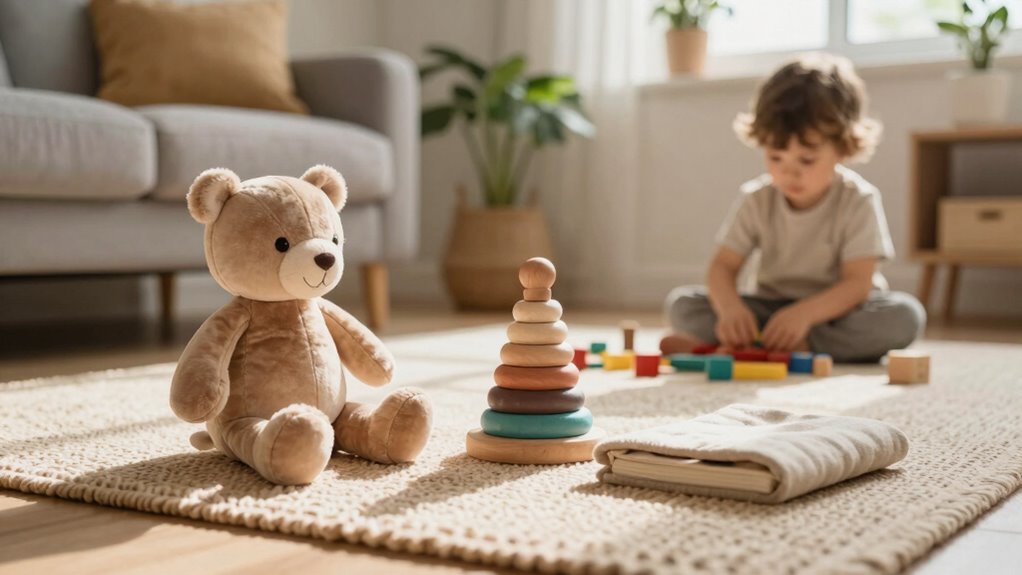

Quiet play toys matter in busy homes because they help your child stay calm and focused without creating extra noise or chaos. They support sensory engagement and encourage concentration, helping your little one develop important skills like patience, fine motor control, and problem-solving. These toys also create a peaceful environment, making it easier to manage household routines while fostering independence. Keep exploring to discover how these toys can bring harmony and growth to your home.

Turn the school run and nap time into listening time
- Thousands of audiobooks, podcasts and originals
- Listen on your phone, tablet or Echo — also offline
- Cancel anytime
Key Takeaways
- They promote calm, focused play without adding household noise or distractions.
- Support sensory development and fine motor skills in a peaceful environment.
- Enable independent, self-reliant play during busy household routines.
- Reduce sensory overload, creating a balanced atmosphere for children and adults.
- Foster environmental awareness by encouraging eco-friendly, non-toxic toy choices.

In busy homes where noise levels often run high, finding ways to keep children entertained without adding to the chaos can be a challenge. This is where quiet play toys become invaluable. Unlike loud, overstimulating toys, these products promote calm, focused activity, allowing your child to engage deeply without disturbing the household environment. They’re designed to foster sensory engagement, which is vital for your child’s development. When children manipulate textures, explore shapes, or focus on subtle movements, they stimulate their senses in a gentle way that encourages concentration and curiosity. This sensory engagement isn’t just enjoyable; it supports their fine motor skills, spatial awareness, and problem-solving abilities.
Quiet play toys foster calm, focused activity while supporting sensory development and essential skills in a peaceful household environment.
Quiet play toys also offer significant developmental benefits. Because these toys often require careful, deliberate interaction, they help your little one develop patience, attention span, and executive functioning skills. For example, puzzles and stacking toys challenge their cognitive abilities and teach perseverance. Meanwhile, tactile toys like squishy balls or textured fabric stimulate touch and help children learn about different textures and materials. When children engage with these toys, they’re not just passing time—they’re building foundational skills that will serve them in many areas of life. Plus, since these toys tend to be less noisy, they create a peaceful environment that allows for more meaningful interactions and bonding moments. Incorporating biodiversity-conscious toys can also promote awareness of nature and environmental responsibility from a young age. Understanding the importance of sustainable materials can further enhance their educational value and environmental consciousness. Additionally, choosing toys made from non-toxic, eco-friendly materials ensures safe play while reinforcing your commitment to sustainability.
You’ll find that quiet play toys are especially useful during times when your household needs to remain calm, such as during naps, early mornings, or when you’re trying to focus on work or chores. They enable your children to entertain themselves independently, reducing the constant need for your direct involvement. This independence fosters confidence and self-reliance, key components of healthy development. Additionally, because these toys don’t produce loud sounds or flashing lights, they’re less likely to overstimulate your child or lead to sensory overload. They help create a balanced atmosphere where learning and play coexist peacefully. Recognizing the importance of sensory development can guide you in selecting toys that are most beneficial for your child’s growth. Moreover, choosing toys made from eco-friendly materials can also teach children about sustainability and caring for the environment from a young age.
Ultimately, incorporating quiet play toys into your home isn’t just about reducing noise; it’s about nurturing your child’s growth in a way that’s mindful of your household’s rhythm. By encouraging sensory engagement and supporting developmental benefits, these toys help your child develop essential skills while keeping your home calm and harmonious. They’re a simple yet powerful way to promote healthy, focused play—even in the busiest of households.
As an affiliate, we earn on qualifying purchases.
Frequently Asked Questions
Are Quiet Play Toys Suitable for All Age Groups?
Quiet play toys are suitable for all age groups because they promote focus and creativity across different stages. For younger children, toys with music integration stimulate senses, while older kids can enjoy quiet outdoor activities like puzzle-solving or storytelling. These toys help maintain calmness in busy homes, allowing everyone to engage comfortably without disruption. Their versatility makes them an excellent choice for fostering growth and relaxation regardless of age.
How Do Quiet Toys Benefit Child’s Development?
You might be surprised how quiet toys boost your child’s growth. They foster sensory development by engaging different senses and encourage emotional regulation through calming, focused play. As your child explores these toys, they learn patience and self-control. Quiet toys subtly promote cognitive skills and emotional stability, making them essential tools in nurturing a well-rounded, confident child in even the busiest homes. Don’t underestimate their quiet power!
Can Quiet Toys Be Educational as Well as Silent?
Yes, quiet toys can be educational and silent at the same time. They often feature sound absorption qualities, which reduce noise, allowing your child to focus. These toys promote sensory stimulation through textures, colors, and shapes, encouraging exploration without overwhelming noise. This combination helps children develop concentration, fine motor skills, and sensory awareness, making quiet toys a valuable learning tool that also keeps the environment peaceful.
What Materials Are Best for Quiet Play Toys?
You should choose quiet play toys made from sustainable materials and non-toxic options. Opt for items crafted from bamboo, organic cotton, or recycled plastics, as they’re safe for your child and better for the environment. Avoid plastics with harmful chemicals. These materials guarantee your little one plays safely and quietly, giving you peace of mind while supporting eco-friendly choices. Always check labels to confirm the toys meet safety standards.
How to Encourage Children to Choose Quiet Toys Over Noisy Ones?
You can encourage children to choose quiet toys by introducing silent sensory and calming activities into their routines. Offer engaging, calming options like soft plush toys or sensory bins that promote focus without noise. Set an example by playing quietly yourself, and create designated quiet zones. Praise their choice of quiet toys, reinforcing that these activities are enjoyable and relaxing. Over time, children will naturally prefer these peaceful, silent sensory experiences.
Conclusion
Quiet play toys are like a gentle anchor in the chaos of busy homes, offering your little ones a peaceful sanctuary amidst the rush. They help foster creativity and focus without adding noise to your already lively environment. By choosing these toys, you’re creating a calm harbor where your child’s imagination can sail smoothly. In the whirlwind of daily life, quiet toys remind us that sometimes, stillness is the greatest gift we can give.
Halloween Picks
halloween
As an affiliate, we earn on qualifying purchases.