
To keep active kids warm and dry during winter, layer their clothes smartly. Start with a moisture-wicking base layer to manage sweat and keep them dry. Add an insulated mid-layer like fleece or a lightweight down jacket for warmth. Finish with a waterproof, breathable outer shell to protect against wind, rain, or snow. Proper layering guarantees comfort, mobility, and safety outside. Keep exploring to discover tips for selecting the best gear and layering techniques.
Key Takeaways
- Use moisture-wicking base layers like polyester or merino wool to keep kids dry during active winter play.
- Layer with insulated mid-layers such as fleece or down jackets for warmth without restricting movement.
- Choose waterproof, breathable outer shells to protect against snow, rain, and wind while allowing excess heat to escape.
- Ensure each layer fits well to promote comfort, mobility, and effective thermal regulation.
- Select lightweight, durable outerwear designed for active children to prevent overheating and allow full range of motion.
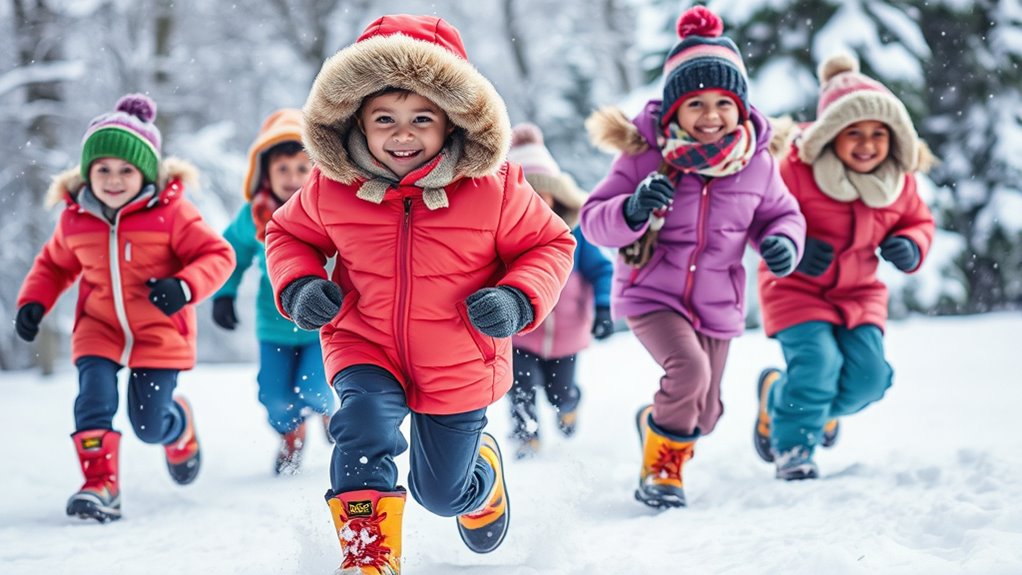
When temperatures drop, keeping active kids warm and comfortable becomes a top priority. You want to ensure they can enjoy outdoor activities without feeling cold or restricted, and the key lies in effective layering. The foundation of this is selecting the right base layer, which should incorporate moisture wicking fabrics. These fabrics are designed to pull sweat away from the skin, keeping your child dry and preventing chills caused by damp clothing. Opt for materials like polyester or merino wool, which excel at moisture management and dry quickly. When your child is moving, sweat can build up fast, so a good moisture-wicking base layer helps regulate body temperature and keeps discomfort at bay.
Next, focus on thermal insulation. This layer acts as the main barrier against the cold, trapping heat close to the body. Look for insulated mid-layers such as fleece or down jackets that provide excellent warmth without adding bulk. Fleece is lightweight, breathable, and dries quickly if it gets wet, making it ideal for active kids. Down jackets offer superior thermal insulation but require careful handling to stay dry. If your child tends to get sweaty during vigorous play, choose insulated layers with moisture-wicking properties or add a moisture-wicking outer shell to keep sweat away from the insulation, preserving its warmth. Proper layering techniques are essential to maximize warmth and comfort during outdoor winter play.
The outermost layer should serve as protection against wind, rain, and snow. A waterproof, breathable shell is essential to prevent moisture from penetrating while allowing excess heat and humidity to escape. This helps keep your child’s core dry and comfortable, especially during high-energy activities. When selecting outerwear, ensure it’s lightweight and flexible enough for your child’s movements so they don’t feel restricted.
Frequently Asked Questions
How Do I Choose the Right Base Layer for My Child’s Activity Level?
To choose the right base layer for your child’s activity level, focus on layering flexibility and activity-specific fabrics. Opt for moisture-wicking materials like merino wool or synthetic blends that keep sweat away and dry quickly. If your child is highly active, choose lightweight, breathable fabrics for easy movement. For low-intensity activities, thicker or insulated base layers work well. Adjust the fit so they’re comfortable without restricting movement.
What Are the Best Materials for Winter Kids’ Activewear?
Did you know that 85% of heat loss in kids comes from poor thermal insulation? For winter activewear, opt for materials like merino wool and synthetic fabrics that excel in thermal insulation and moisture wicking. These fabrics keep your child warm and dry by trapping heat and drawing sweat away from the skin. Selecting the right materials guarantees your kid stays comfortable and active, no matter how cold it gets outside.
How Can I Prevent My Child’s Clothes From Bunching During Play?
To prevent your child’s clothes from bunching during play, focus on proper layering techniques and clothing fit. Choose snug but comfortable base layers that stay close to the skin, and opt for slightly looser outer layers to allow movement. Make certain each layer fits well without excess fabric, which can bunch up. Encourage your child to move naturally and adjust layers as needed to keep everything smooth and comfortable during active play.
What Are Signs My Child Is Overheating in Winter Layers?
If your child is overheating in winter layers, you’ll notice signs like sweating, flushed cheeks, or excessive fussiness. Keep an eye on their dress code and outdoor safety by ensuring they’re dressed appropriately—not too many layers, but enough to stay warm. Encourage quick removal of layers if they get too hot, and always check for signs of discomfort. Maintaining a balance keeps your kid safe and comfortable during outdoor winter activities.
How Often Should Winter Layers Be Replaced for Active Kids?
You should replace your child’s winter layers every season or when they show signs of wear, like thinning fabric or persistent stains. Regular layer replacement frequency guarantees they stay warm and comfortable. Consider seasonal clothing updates to keep their gear fresh and functional. Check for proper fit and fabric integrity periodically, especially after outdoor play, to avoid overheating or discomfort. Staying attentive helps your active kid stay cozy all winter long.
Conclusion
Layering is key to keeping your active kids warm and comfortable all winter long. With the right mix of moisture-wicking, insulating, and waterproof layers, they can enjoy outdoor fun without worry. Are you ready to stock up on these essentials and make winter adventures safe and exciting? Remember, a well-layered child stays warmer, happier, and more active—so don’t skimp on the layers. Stay prepared, and watch them conquer winter with confidence!