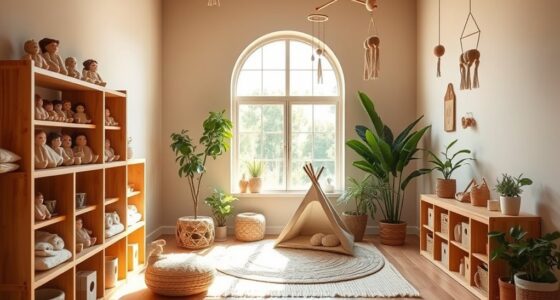
Waldorf play spaces feel calmer and simpler because they’re carefully designed with natural elements, open-ended activities, and minimal clutter that promote peace and focus. You’ll notice soft textures, gentle colors, and natural materials that create a soothing environment. These spaces encourage children to explore creatively, connect with nature, and engage quietly. By prioritizing intentional design and simplicity, Waldorf environments foster emotional balance and mindfulness—if you want to understand how these design choices work, keep exploring further.
Key Takeaways
- They utilize natural textures and materials that promote sensory calmness and reduce overstimulation.
- The design emphasizes open-ended activities that encourage reflection and independent exploration.
- Minimal clutter and simple tools create a peaceful, focused environment free from chaos.
- Connection to outdoor elements and natural rhythms fosters mindfulness and emotional stability.
- Intentional, mindful design guides attention toward calming, nature-inspired experiences.

Waldorf play spaces are thoughtfully designed environments that nurture a child’s natural curiosity and creativity. When you step into one, you immediately notice the calming simplicity and intentional design. These spaces incorporate outdoor natural elements, such as trees, rocks, and water features, which connect children to the natural world. This connection fosters a sense of peace and stability, making the environment feel grounded and less overwhelming. Instead of bright, artificial toys, the natural elements serve as a gentle backdrop that encourages children to explore and imagine freely.
Waldorf play spaces foster curiosity through natural, calming environments that inspire imaginative, open-ended exploration.
You’ll find that these spaces prioritize creative open-ended activities, which means children aren’t confined to specific outcomes or structured games. Instead, they’re encouraged to invent their own stories, manipulate natural materials, and engage in play that evolves with their interests. This open-ended approach reduces chaos and promotes calmness, as children aren’t pressured to perform or follow strict rules. The simplicity of these activities allows children to focus, reflect, and immerse themselves fully in their play, which naturally creates a more peaceful atmosphere. open-ended activities promote a sense of independence and curiosity that supports emotional well-being.
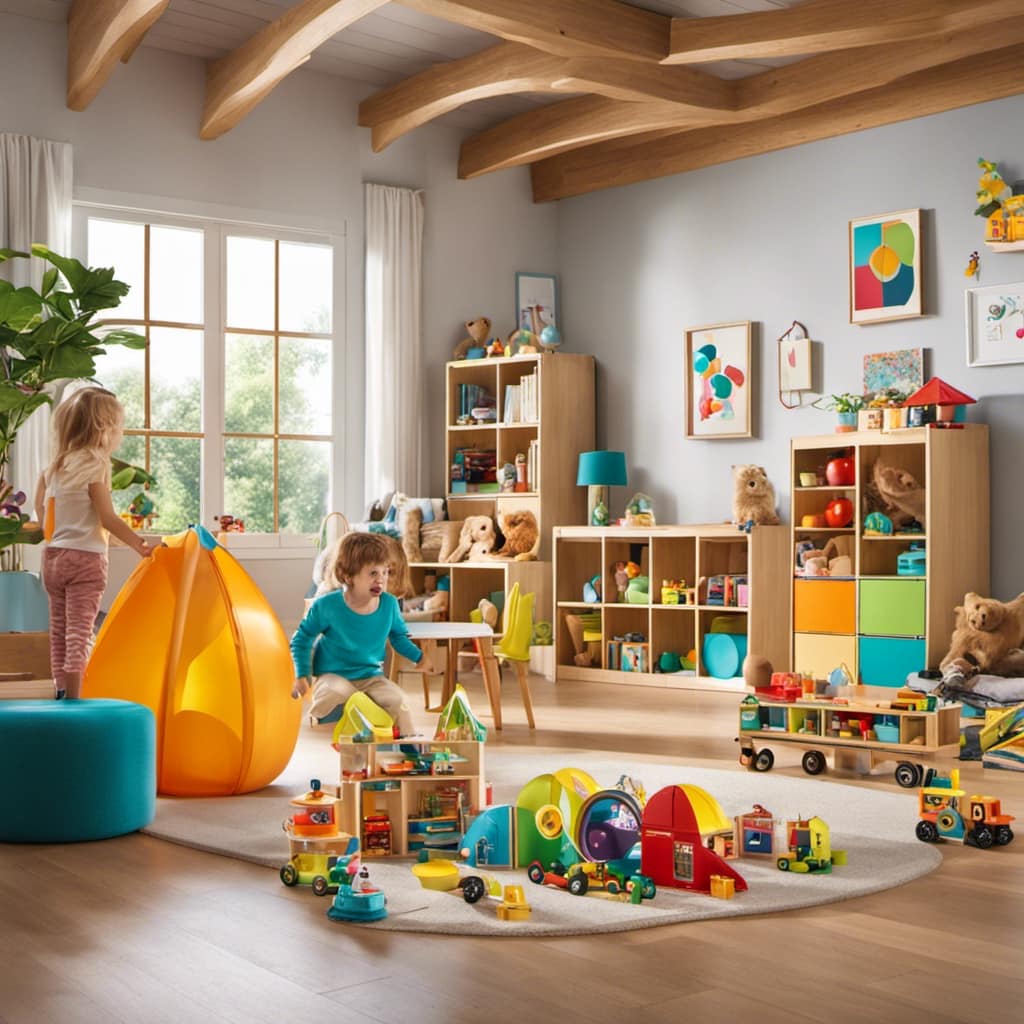
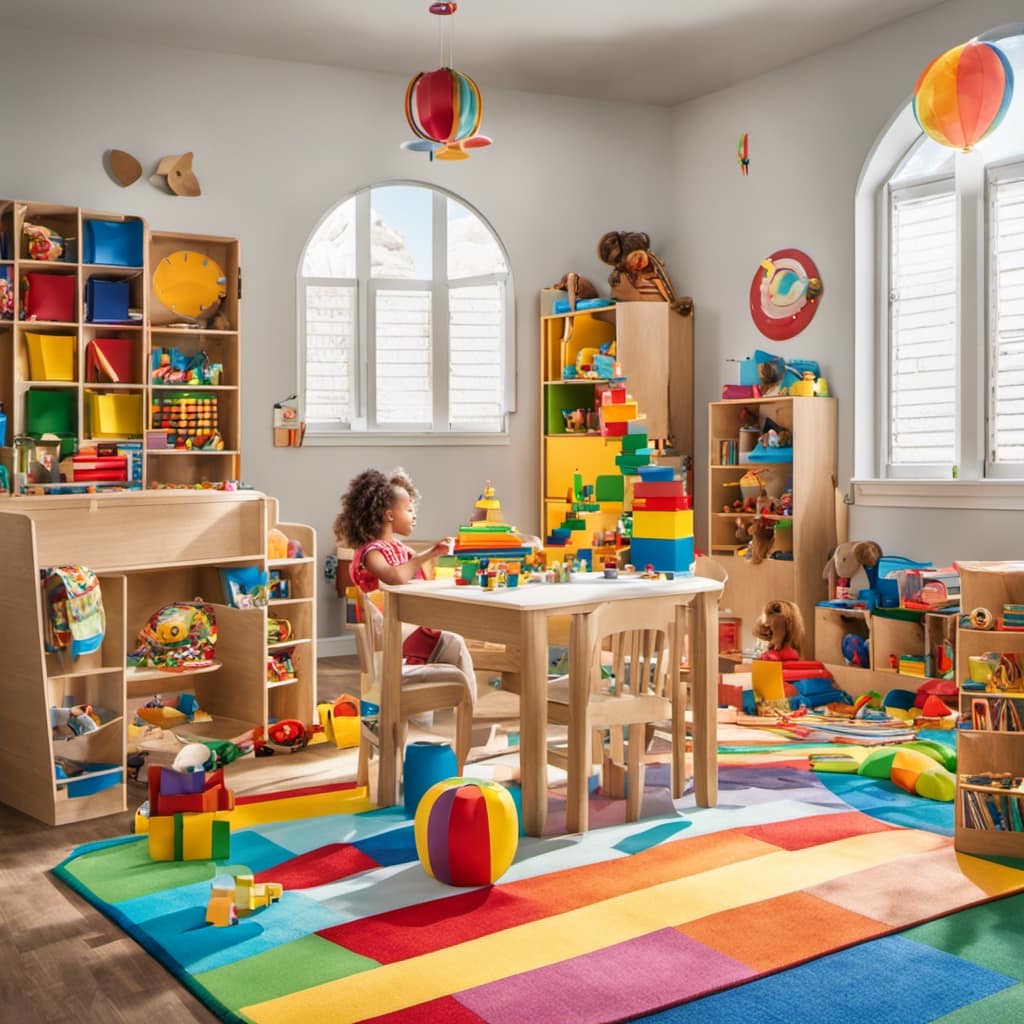
The design of Waldorf play spaces minimizes clutter and overstimulation. Instead of an abundance of plastic toys and flashy decorations, you see natural textures, soft colors, and simple tools that spark curiosity without overwhelming the senses. This simplicity helps children feel less anxious and more centered, enabling them to relax and enjoy their time outdoors. When children aren’t distracted by loud or busy environments, they tend to develop a greater appreciation for their surroundings and a calmer disposition overall. Natural materials also promote sensory development and a deeper connection to the environment. Additionally, the use of natural textures and materials can support sensory integration, fostering a balanced sensory experience for children. Creating environments with intentional design further enhances the calming effect by guiding children’s attention and encouraging mindful engagement.
In addition, the natural elements in these environments foster a sense of rhythm and continuity. The changing seasons, the sunlight filtering through trees, and the sounds of nature create a soothing backdrop that promotes mindfulness. As children engage with nature, they learn patience, observation, and respect for their environment, further contributing to a sense of calm. Incorporating outdoor natural elements into play spaces supports a deeper connection to nature and enhances emotional well-being, making the environment even more conducive to calm and focus. A peaceful environment encourages children to develop emotional resilience and self-regulation skills. The focus on natural materials and open-ended activities nurtures a quieter, more introspective form of play that feels more authentic and less hurried.
natural wooden toys for children
As an affiliate, we earn on qualifying purchases.
As an affiliate, we earn on qualifying purchases.
Frequently Asked Questions
How Do Waldorf Play Spaces Influence Children’s Emotional Development?
Waldorf play spaces help boost your child’s emotional resilience and social skills by providing a calm, simple environment that encourages focused, unstructured play. As they explore natural materials and engage with peers, they learn to manage their emotions and develop empathy. This nurturing setting allows children to build confidence, handle challenges better, and form meaningful relationships, ultimately fostering their emotional growth and social competence.
Are Waldorf Play Spaces Suitable for All Age Groups?
Yes, Waldorf play spaces suit all age groups, fostering a deep connection with nature and encouraging sensory exploration. While the environments are often designed for young children, their natural, adaptable elements invite older kids and even adults to engage meaningfully. This blend of simplicity and richness supports ongoing development, making Waldorf play spaces versatile and inclusive, nurturing curiosity, calmness, and connection for everyone who enters.
What Materials Are Typically Used in Waldorf Play Spaces?
In Waldorf play spaces, you’ll find materials like natural textures and wooden furnishings that create a warm, inviting atmosphere. These spaces typically use soft, organic fabrics, clay, wool, and silk to stimulate sensory development. Wooden furniture and natural elements encourage imaginative play while maintaining a simple, calming environment. This approach emphasizes connection with nature, helping children feel secure and focused as they explore and learn through tactile experiences.
How Do Waldorf Spaces Support Creativity and Imagination?
Ever wonder how Waldorf play spaces ignite your child’s creativity? By fostering a strong nature connection and offering rich sensory stimulation, these environments encourage open-ended play and imaginative thinking. You’ll notice your child transforming simple materials into fantastical worlds, guided by their own ideas. The natural elements and tactile experiences inspire storytelling, problem-solving, and exploration, helping your child develop a deep love for discovery and endless creative possibilities.
Can Waldorf Play Spaces Be Easily Adapted for Indoor Use?
Yes, Waldorf play spaces can be easily adapted for indoor use. You can enhance indoor flexibility by choosing natural, versatile materials that fit different spaces. Focus on space customization by arranging furniture and toys to encourage open-ended play and creativity. Keep the environment simple and calming, using soft lighting and neutral tones. This way, your indoor Waldorf space remains welcoming, adaptable, and conducive to imaginative exploration.
Conclusion
As you create Waldorf play spaces, you tap into a timeless harmony that echoes the simplicity of the Garden of Eden. By embracing natural materials and understated design, you invite children into a sanctuary where imagination flourishes and chaos recedes—much like a gentle stream flowing through a tranquil forest. In this sacred space, you nurture not just play, but a sense of peace that echoes the serenity of nature’s original design.