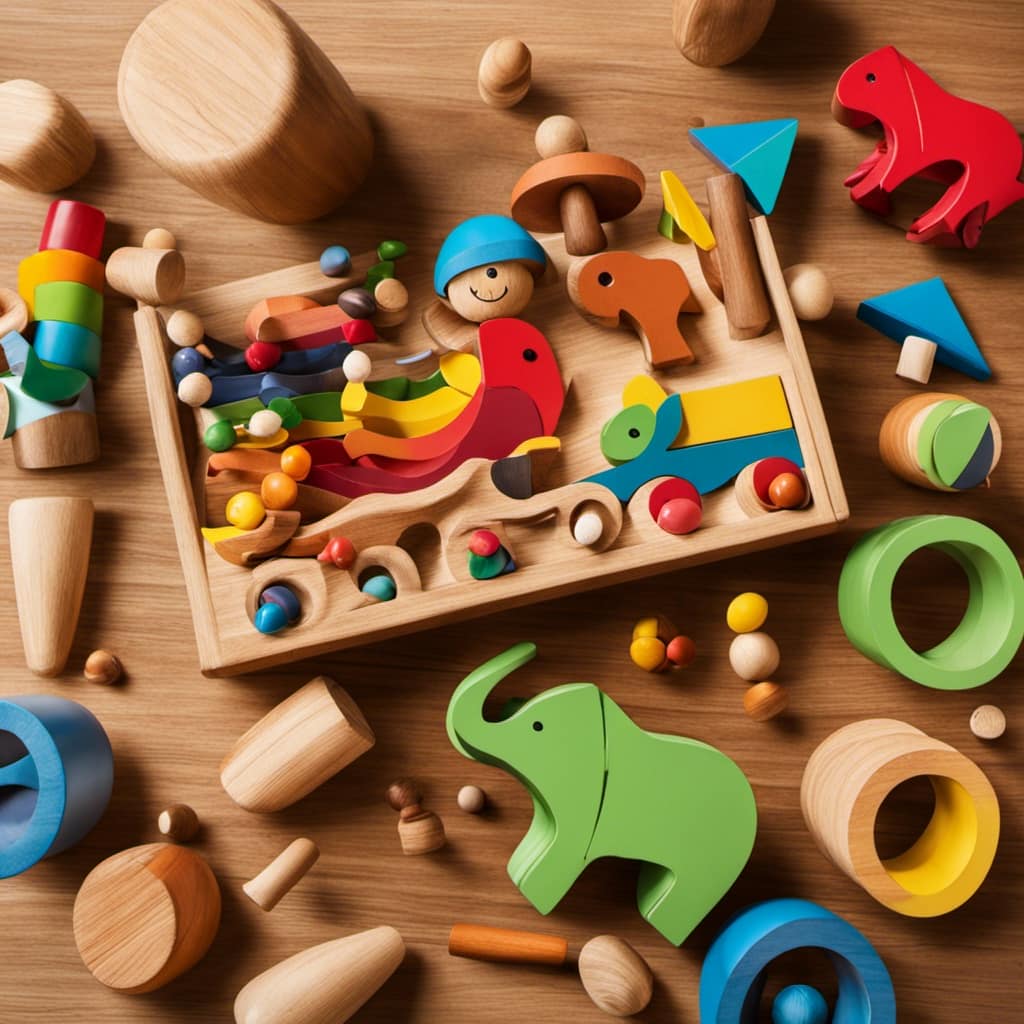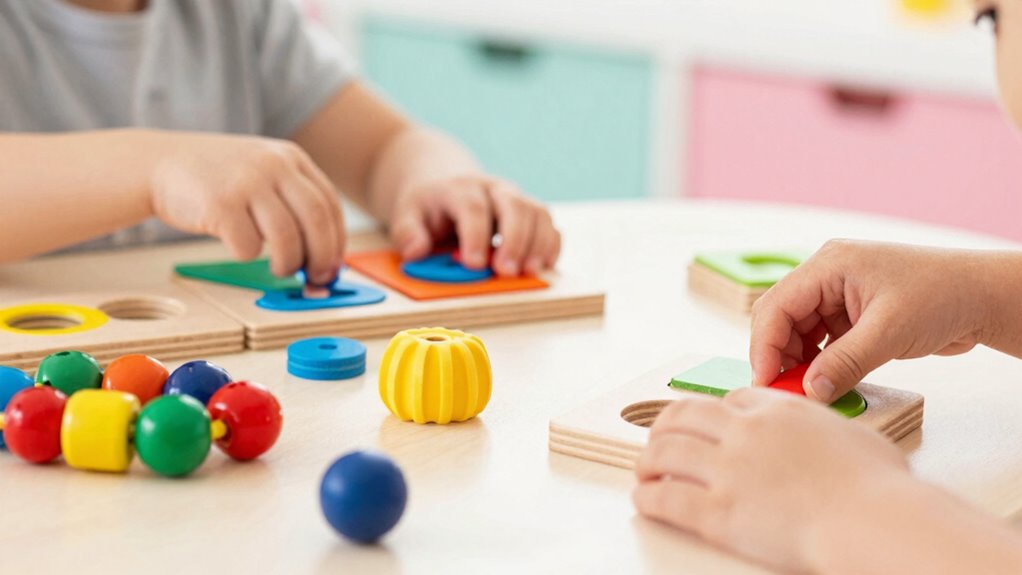

To support fine motor growth, choose preschool toys that encourage grasping, pinching, and manipulating small objects. Look for items like lacing boards, dress-up clothes, and sensory playsets that promote hand-eye coordination and finger strength. Toys that involve threading beads, fastening buttons, or squeezing clay also enhance dexterity. Incorporating a variety of these playthings can make skill development fun and engaging. Keep exploring to discover more ways to foster your child’s fine motor skills through play.

Turn the school run and nap time into listening time
- Thousands of audiobooks, podcasts and originals
- Listen on your phone, tablet or Echo — also offline
- Cancel anytime
Key Takeaways
- Toys with small, manipulative parts like lacing boards and dress-up clothes promote grasping, pinching, and fine control.
- Sensory play items such as textured bins and molding clay strengthen finger muscles and hand-eye coordination.
- Imaginative toys like pretend kitchens and blocks encourage controlled movements and sequencing skills.
- Toys combining sensory and creative elements, such as textured playsets, motivate exploration and dexterity.
- Activities involving fastening, threading, or shaping support precision and steady hand movements.
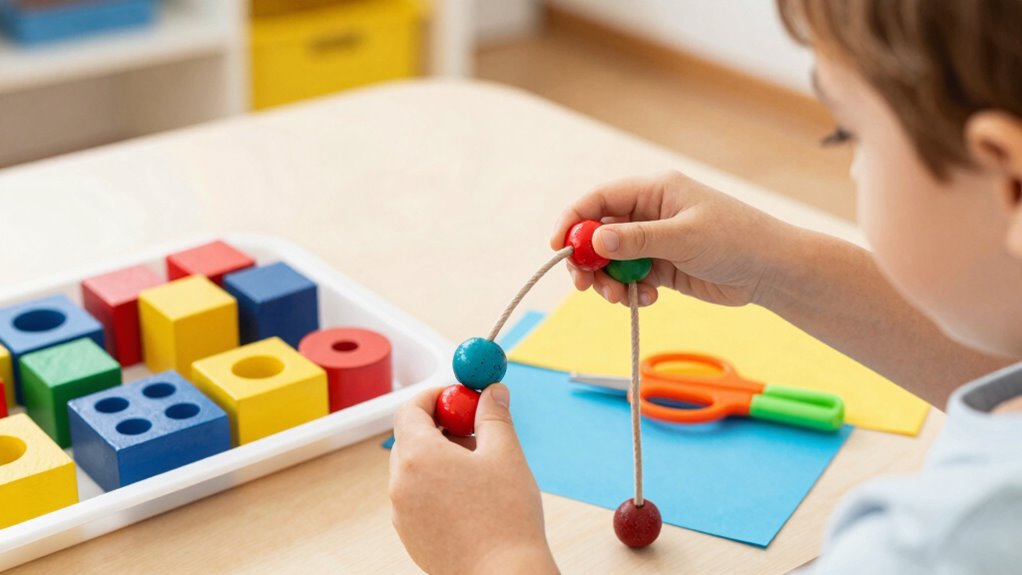
Fine motor skills are essential for preschoolers to develop independence and confidence in everyday tasks. When you choose the right toys, you help your child strengthen their ability to pick up small objects, use utensils, and tie shoelaces. These skills are foundational for more complex activities, and playful, engaging toys make the learning process enjoyable. Toys that promote sensory play are especially effective because they stimulate multiple senses, encouraging your child to explore textures, shapes, and colors. For instance, sensory bins filled with rice, beans, or water beads allow children to practice pinching, grasping, and scooping, all of which improve hand-eye coordination and finger strength. These activities also introduce a calming, focused environment where your child can develop precision with their movements.
Sensory play helps preschoolers develop fine motor skills through exploring textures, shapes, and colors.
Imaginative activities are another powerful way to nurture fine motor growth. When your child engages in pretend play—whether they’re cooking in a toy kitchen, dressing up, or building with blocks—they often manipulate small objects, fasten buttons, or thread beads. These actions require controlled, deliberate movements that refine fine motor control. Toys that encourage dressing skills, like snap-on clothes or lacing boards, enable your child to develop dexterity while exploring creative scenarios. Imaginative play often involves problem-solving and sequencing, which helps your child plan and execute precise movements. As they imitate real-life activities, they naturally practice the small motor skills needed for daily tasks. Additionally, integrating nature-inspired toys can further enhance their understanding of the natural environment while refining their motor skills. Incorporating educational toys that promote exploration and discovery can also boost their fine motor development through purposeful play. Using developmentally appropriate toys ensures that activities are tailored to your child’s current skill level, making learning both effective and enjoyable. Recognizing the importance of motor skill development in early childhood can guide you in selecting the most beneficial toys for your child’s growth.
Look for toys that combine sensory play with imaginative elements. For example, a playset with textured materials, movable parts, and accessories gives your child opportunities to grasp, pull, and manipulate objects. Playing with clay or dough also falls into this category, as it allows for squeezing, rolling, and shaping—activities that strengthen finger muscles and improve fine motor control. Plus, these toys foster creativity and storytelling, making the development process more engaging.
Ultimately, supporting fine motor growth through play isn’t about pushing your child but providing fun, developmentally appropriate toys that encourage exploration. Sensory play and imaginative activities naturally motivate your child to practice small movements, helping them master skills essential for independence. When you choose toys that combine these elements, you’re giving your child a solid foundation to succeed in everyday tasks and build confidence in their abilities.
As an affiliate, we earn on qualifying purchases.
Frequently Asked Questions
How Do I Choose Age-Appropriate Preschool Toys for Fine Motor Skills?
To choose age-appropriate preschool toys that support fine motor skills, focus on toys that encourage sensory exploration and enhance hand-eye coordination. Look for items like shape sorters, building blocks, or art supplies suitable for your child’s age. Make certain toys are safe, easy to handle, and promote active engagement. Observe your child’s interests and abilities, and select toys that challenge them just enough to foster growth without causing frustration.
Are There Specific Brands Recommended for Fine Motor Development?
Yes, some brands stand out for fine motor development, like Melissa & Doug and Hape, which prioritize toy safety guidelines and quality. When comparing brands, focus on durability, ease of handling, and non-toxic materials. You can rely on these brands to offer toys that promote precise hand movements and coordination. Always check for safety certifications and age recommendations to ensure the toys are suitable and safe for your child’s developmental stage.
How Often Should Children Use Fine Motor Toys for Optimal Growth?
You should incorporate fine motor toys into your child’s daily playtime routines, ideally for about 15 to 20 minutes multiple times a day. This consistency helps develop skills effectively. Always consider toy safety considerations by choosing age-appropriate, non-toxic options and supervising play. Regular use not only boosts fine motor growth but also makes learning fun and engaging, fostering steady progress in hand-eye coordination and dexterity.
Can Fine Motor Toys Help With Handwriting Skills?
Fine motor toys definitely help with handwriting skills by supporting pencil grip development and encouraging precise movements. As you incorporate these toys into your child’s play, they naturally practice hand-eye coordination and finger strength, which are essential for effective handwriting practice. Regular use makes their grip more comfortable and controlled, leading to improved writing fluency and confidence. So, including fine motor toys in daily activities benefits your child’s handwriting progress considerably.
What Are Signs of Delayed Fine Motor Development in Preschoolers?
If your child’s fine motor skills are a sluggish stream, you’ll notice signs like difficulty grasping objects, sloppy hand coordination, or trouble with simple tasks like drawing or buttoning. These signs suggest early intervention is necessary to help them reach developmental milestones. Addressing these issues early guarantees their skills blossom in time. Pay close attention, so you can nurture their growth before the current delays turn into lasting gaps.
Conclusion
As you explore the perfect toys for your child’s fine motor growth, remember that each choice shapes their development in unexpected ways. The right toy might seem simple now, but its impact could unlock skills they’ll rely on for years to come. So, as you pick and play, stay curious—because what seems small today could lead to a world of possibilities tomorrow. Are you ready to discover the toy that could change everything?
Halloween Picks
halloween
As an affiliate, we earn on qualifying purchases.