
Mud play is totally worth the mess because it boosts your child’s sensory development, encouraging them to explore textures and nature firsthand. It sparks curiosity, builds confidence, and enhances creativity as they shape and manipulate the mud into different forms. While it might seem chaotic, the benefits include improved motor skills, environmental appreciation, and emotional well-being. If you want to see how embracing the mess can lead to valuable growth, keep going—there’s plenty more to discover.

Get baby and family essentials delivered free — and shop member deals
- Fast, free delivery on millions of items
- Access to Prime Big Deal Days deals on October 6–7
- Prime Video, Amazon Music and more included
Key Takeaways
- Mud play enhances sensory development by stimulating nerve endings and refining tactile awareness.
- It promotes curiosity and outdoor exploration, fostering independence and resilience through hands-on discovery.
- Manipulating mud strengthens fine motor skills and boosts creativity by shaping various forms and sculptures.
- Engaging with natural messes fosters environmental appreciation and understanding of ecosystems.
- The benefits of sensory and outdoor play outweigh the cleanup, supporting overall growth and emotional well-being.

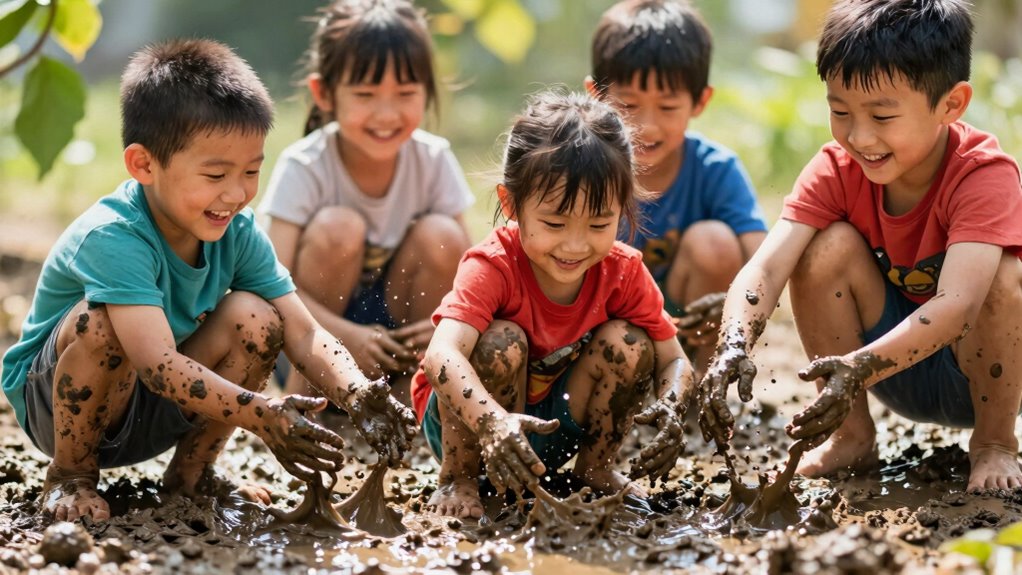
Mud play might seem messy, but it offers more benefits than just a fun, dirt-covered adventure. When your child dives into a muddy puddle or squishes mud between their fingers, they’re engaging in activities that boost their sensory development. Touching different textures—cool, wet, sticky mud—stimulates nerve endings in their skin, helping them understand how their bodies interact with the environment. This kind of sensory input is essential for their overall growth, helping them refine their tactile awareness and improve hand-eye coordination.
Mud play enhances sensory development, tactile awareness, and hand-eye coordination through engaging with wet, sticky textures.
As you watch your little one explore outdoors, you’ll notice how mud play encourages curiosity and confidence. Outdoor exploration becomes an unstructured, limitless experience where they can investigate nature firsthand. They might observe how mud changes shape when they press it or notice how it sticks to their clothes and skin. These spontaneous discoveries foster a sense of independence, resilience, and a natural curiosity about the world around them. Instead of limiting their exploration to a sanitized indoor environment, mud play invites them to learn through direct contact, making every outdoor outing a potential adventure.
Engaging in mud play also stimulates their creativity. As they mold and shape the mud into different forms—be it a pretend animal, a small sculpture, or just a messy pile—they’re practicing fine motor skills and spatial awareness. These activities help strengthen their hand muscles and improve their ability to focus on complex tasks. Plus, the open-ended nature of mud play means your child can use their imagination freely, transforming a simple patch of dirt into a castle, a volcano, or anything else their mind conjures up. Incorporating sensory development into outdoor activities can have long-lasting positive effects on their overall growth. Developing sensory processing skills through such activities is fundamental for their ongoing development. Additionally, engaging with natural elements like mud can foster a deeper appreciation for biodiversity and environmental health, encouraging a sense of stewardship from a young age. Exploring natural environments helps children understand the importance of ecosystems and conservation efforts. Creating opportunities for children to connect with nature can also support emotional well-being, promoting calmness and reducing stress. While cleanup might seem intimidating at first, it’s a small price to pay for the rich sensory experiences and outdoor exploration that mud play provides. In embracing the mess, you’re helping your child develop essential skills that will serve them well in many areas of life.
As an affiliate, we earn on qualifying purchases.
Frequently Asked Questions
How Can I Ensure Mud Play Is Safe for Children?
You can guarantee mud play is safe by practicing good mud safety and risk management. Always supervise children closely, making sure they don’t ingest mud or put dirty hands in their mouths. Check the play area for sharp objects or contaminants before starting, and encourage proper handwashing afterward. Using non-toxic, clean mud or creating a designated muddy area helps minimize risks, ensuring kids enjoy the fun without unnecessary hazards.
What Are Some Alternative Muddy Activities for Indoors?
You can try using indoor water tables or sensory bins filled with mud-like materials as alternatives. These setups allow children to explore textures and enjoy sensory play without the outdoor mess. Fill sensory bins with mud-sand mixtures, or use water tables with mud-colored water and small tools. These activities promote creativity and sensory development while keeping mess contained and manageable indoors.
How Do I Clean up Muddy Messes Effectively?
To clean up muddy messes effectively, start by removing excess mud with a spatula or dustpan. Use a hose or wet cloth to rinse surfaces, then wash with soap and water. Keep mud safety in mind—wear gloves and protect your flooring. For stubborn stains, apply a stain remover. Follow cleanup tips like ventilating the area and drying thoroughly to prevent mold. This approach keeps cleanup manageable and safe.
Are There Any Age Restrictions for Mud Play?
There are no strict age restrictions for mud play, but safety is key. Young children should be supervised closely to prevent ingestion and guarantee they avoid any sharp objects. For muddy adventures, encourage making mudpies in a safe, controlled area, emphasizing safety. Older kids and even adults can enjoy mud play, which boosts creativity and sensory development. Just always watch for potential hazards and keep the environment safe and fun for everyone involved.
Can Mud Play Improve Children’s Emotional Development?
You’ll be surprised to learn that children engaged in mud play often show increased emotional resilience, helping them better handle setbacks. Mud play fosters social skills as kids collaborate, share, and communicate in messy fun. This outdoor activity encourages emotional expression and self-confidence, making children more adaptable and emotionally balanced. By embracing the mess, you’re helping your child develop essential emotional and social skills that last a lifetime.
Conclusion
Think of mud play as planting seeds in a garden; the mess may look chaotic now, but it’s where growth begins. Each splash and smear nurtures your child’s creativity, resilience, and curiosity—like watering tender sprouts. Embrace the mess as part of the journey, knowing that, like a garden in full bloom, the lessons learned in muddy moments will flourish into confidence and joy. Sometimes, you have to get a little dirty to see your child’s brightest potential shine.
Halloween Picks
halloween
As an affiliate, we earn on qualifying purchases.