To make toy shelves more Montessori-friendly, you should design them to be low and open, within your child’s reach, so they can select and return toys independently. Use clear divisions like baskets or shelves to keep things organized and reduce clutter. Incorporate toys that stimulate multiple senses and arrange them beautifully to inspire curiosity. This encourages responsibility, fosters sensory exploration, and creates a nurturing space for confident, independent learners. Keep exploring to find out how to perfect your setup.

Turn the school run and nap time into listening time
- Thousands of audiobooks, podcasts and originals
- Listen on your phone, tablet or Echo — also offline
- Cancel anytime
Key Takeaways
- Designed at child’s eye level for easy access and independence.
- Divided into clear, manageable sections or baskets to promote organization.
- Uses durable, child-safe materials to ensure safety and longevity.
- Incorporates sensory-rich toys to stimulate exploration and development.
- Arranged aesthetically to foster pride, motivation, and a sense of order.
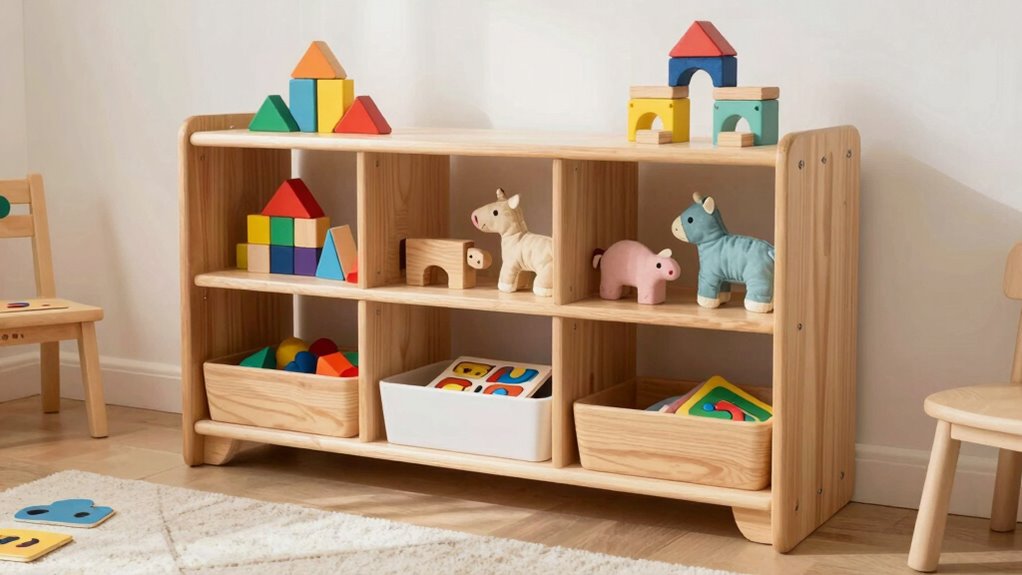
Creating a Montessori-friendly toy shelf is all about fostering independence and order in your child’s play space. The goal is to design a space where your child can easily choose, access, and put away toys without your constant help. You want a shelf that’s simple, accessible, and promotes self-directed play. When you select a toy shelf with these principles in mind, you’re encouraging your child to develop confidence in managing their belongings and making choices.
A Montessori toy shelf promotes independence, order, and self-directed play, empowering children to manage their belongings confidently.
A key feature of a Montessori-friendly toy shelf is its open, low design. You should pick a shelf that’s within your child’s reach, so they can independently select toys and put them back without adult assistance. This promotes a sense of responsibility and helps develop fine motor skills. The shelves should be divided into clear, manageable sections or baskets, each dedicated to a specific type of toy. This organization simplifies the process of finding and returning items, reinforcing a sense of order that’s crucial in Montessori philosophy. Additionally, choosing materials that are child-safe and durable ensures the shelf withstands daily use and promotes safety during play. Incorporating appropriate storage solutions can further enhance accessibility and organization. Maintaining a clutter-free environment is also important, as it helps your child focus on their designated toys and reduces distractions. An organized space also teaches children the importance of tidiness and respect for their environment.
Incorporating sensory exploration into the toy shelf is essential. Select toys that engage multiple senses—textures, sounds, colors—to stimulate your child’s curiosity and learning. When toys are displayed openly and within easy reach, your child can explore different materials and textures freely, fostering their sensory development. Avoid cluttered, overcrowded shelves. Instead, opt for a curated selection of engaging, high-quality toys that invite touch and discovery. This encourages your child to explore through their senses, enhancing their cognitive and emotional growth. Including sensory-rich toys can greatly elevate their engagement and learning experience.
An artistic display on the toy shelf is equally important. Arrange toys in a way that’s visually appealing and invites exploration. This doesn’t mean perfect symmetry, but a thoughtful organization that highlights your child’s interests. Displaying toys attractively can inspire creativity and make the play area more inviting. When toys are showcased as part of the overall aesthetic, it emphasizes the importance of beauty and order, key principles of Montessori education. A well-curated display not only fosters a sense of pride but also motivates your child to keep their space tidy. Incorporating visual aesthetics into the display can further cultivate an inviting environment that encourages your child’s engagement.
Ultimately, a Montessori-friendly toy shelf is more than just storage; it’s a tool for independence, sensory exploration, and artistic expression. It’s about creating a space where your child feels empowered to make choices, explore their senses, and appreciate beauty—all essential aspects of their development. Incorporating accessible furniture into your child’s environment ensures they can fully participate in their learning process and develop essential life skills. When you design with these principles in mind, you’re fostering a nurturing environment that supports your child’s growth into a confident, curious, and independent learner.
As an affiliate, we earn on qualifying purchases.
Frequently Asked Questions
How Do Montessori Toy Shelves Promote Independence?
Montessori toy shelves promote independence by allowing you to easily access and select toys, encouraging your child’s autonomy. They foster sensory exploration by displaying items at eye level, inviting curiosity. This setup also supports emotional development as children learn to choose and put away toys independently, gaining confidence and self-control. With organized shelves, you help your child develop decision-making skills, fostering a sense of responsibility and independence in their daily routines.
What Materials Are Best for Montessori-Friendly Toy Shelves?
You should choose natural, durable materials like wood or bamboo for Montessori-friendly toy shelves, as they evoke warmth and simplicity, encouraging independence. Use storage bins made from cloth or wicker to keep toys organized, allowing your child to easily access and put away items. Effective shelf organization emphasizes open space and accessibility, helping your child develop responsibility and fine motor skills while fostering a sense of order and calm in their environment.
How Should Toy Shelves Be Positioned for Optimal Use?
You should position toy shelves at your child’s eye level, making storage organization easy to access and encouraging independence. Keep the shelves simple and clutter-free, enhancing the aesthetic design to create a calming environment. Use open storage bins or baskets for easy cleanup and visibility. This setup fosters responsibility, allows your child to select toys independently, and maintains an organized, inviting space that supports their developmental needs.
Are There Specific Sizes Recommended for Montessori Toy Shelves?
Think of Montessori toy shelves like a well-organized toolbox—everything in easy reach promotes independence. For ideal storage organization and safety considerations, aim for shelves around 12-16 inches high, with open compartments no wider than 12 inches. This size encourages your child to select toys independently, reducing clutter and hazards. When shelves are appropriately sized, your little one learns to care for their space while developing essential life skills.
How Do Toy Shelves Support a Child’s Developmental Stages?
Toy shelves support your child’s developmental stages by encouraging independence and decision-making. You can enhance this by using color coordination, making it easier for your child to identify and select toys suited for their age. Decorative accessories add a pleasing touch and help create an inviting space. As your child grows, the organization fosters responsibility, fine motor skills, and cognitive development by allowing them to manage their toys independently.
Conclusion
By choosing a Montessori-friendly toy shelf, you create an organized, inviting space that encourages independence and responsibility. Imagine a child effortlessly selecting a toy from a low, accessible shelf, fostering decision-making skills. For instance, a parent in a busy household noticed her child spent more time engaged and learning when toys were neatly displayed and within reach. Ultimately, a thoughtfully designed shelf transforms play into a valuable learning experience, nurturing your child’s growth and curiosity.
Halloween Picks
halloween
As an affiliate, we earn on qualifying purchases.



![Every Parent Dreads That Call From School… 📞😱 [Litterbox Comics]](https://healthykidplay.com/wp-content/uploads/2026/10/every-parent-dreads-that-call-from-school-litterbox-comics-featured-260x140.jpg)