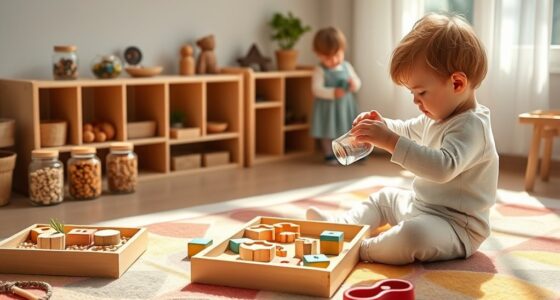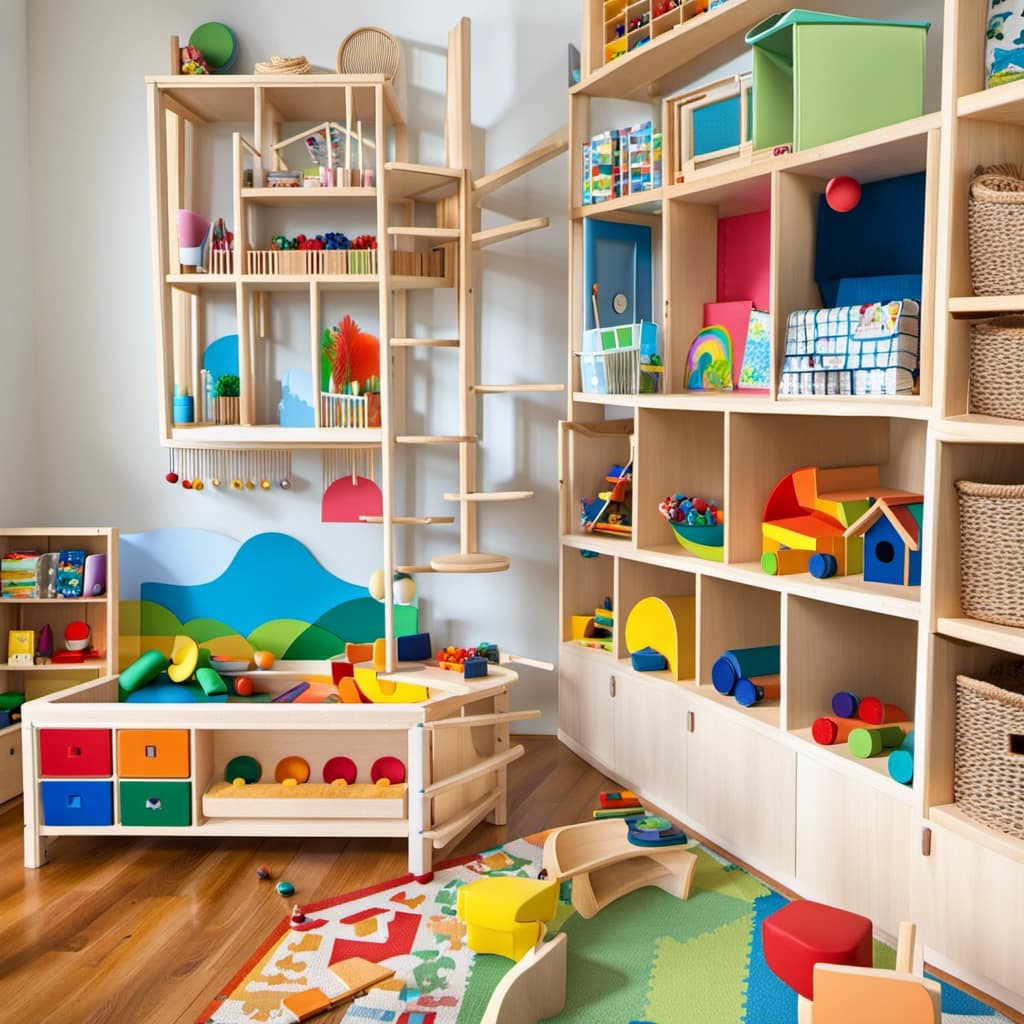

A Montessori toy is an educational tool designed to support your child’s hands-on learning, focusing on sensory engagement, independence, and skill development. These toys often include simple, natural materials like wood or organic cotton, encouraging exploration and creativity. They promote critical thinking, fine motor skills, and understanding of concepts like shape, size, and color. If you keep exploring, you’ll discover more about how these toys foster meaningful growth and joyful play.
Key Takeaways
- Montessori toys support child development through hands-on, self-directed, and meaningful play.
- They emphasize sensory engagement, including textures, sounds, and visual stimuli, to enhance learning.
- Made from eco-friendly, natural materials like wood and organic cotton, promoting safety and sustainability.
- Designed to be simple, open-ended, and durable, fostering creativity and exploration.
- Benefits include developing motor skills, understanding concepts, critical thinking, and building confidence.
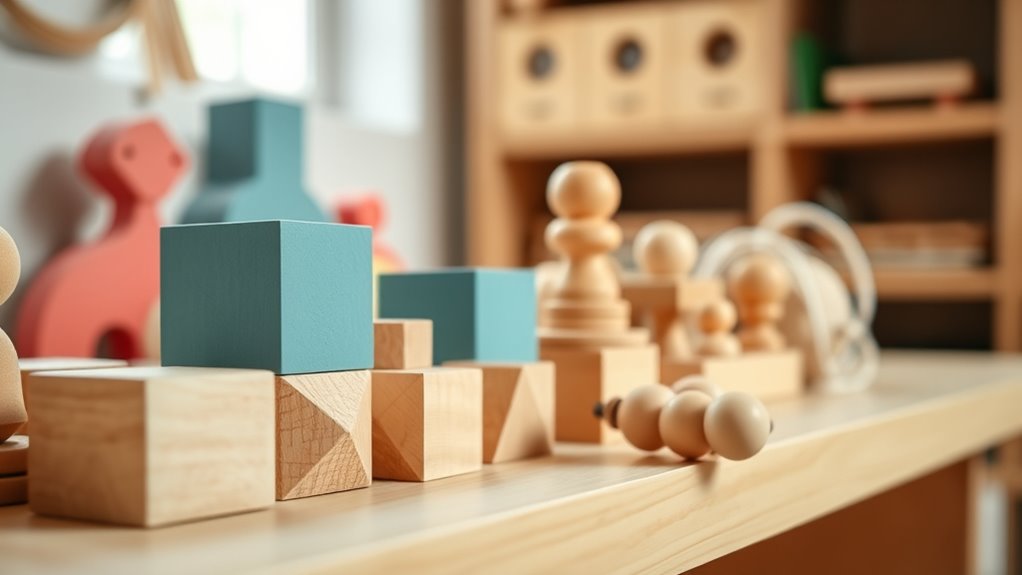
Have you ever wondered how toys can support your child’s development? It’s a good question, especially when you want to choose options that truly benefit their growth. Montessori toys are designed with this purpose in mind, emphasizing hands-on, engaging, and educational play. Unlike traditional toys, Montessori toys focus on nurturing your child’s independence, concentration, and problem-solving skills. They are carefully crafted to encourage exploration and learning at your child’s own pace, making playtime both meaningful and developmental.
One of the key principles of Montessori toys is their emphasis on sensor based learning. These toys are designed to stimulate your child’s senses—touch, sight, sound, and even taste—helping them make connections between what they see and feel and the world around them. For example, toys with different textures, weights, or sounds can enhance your child’s tactile and auditory experiences. This type of sensory engagement is essential for early brain development, as it helps your child understand and interpret their environment more effectively. By focusing on sensor based learning, Montessori toys foster curiosity and support your child’s natural desire to explore.
Another important aspect of Montessori toys is their use of eco friendly materials. You want to guarantee that the toys your child interacts with are safe, non-toxic, and environmentally sustainable. Many Montessori toys are made from natural materials like wood, bamboo, or organic cotton, which are not only safer but also more durable. Using eco friendly materials aligns with the Montessori philosophy of respecting nature and promoting sustainability. These materials often have a warm, inviting feel that encourages your child to handle the toys with care and curiosity. Plus, choosing eco friendly options helps reduce plastic waste and minimizes exposure to harmful chemicals, making playtime safer for your little one and better for the planet.
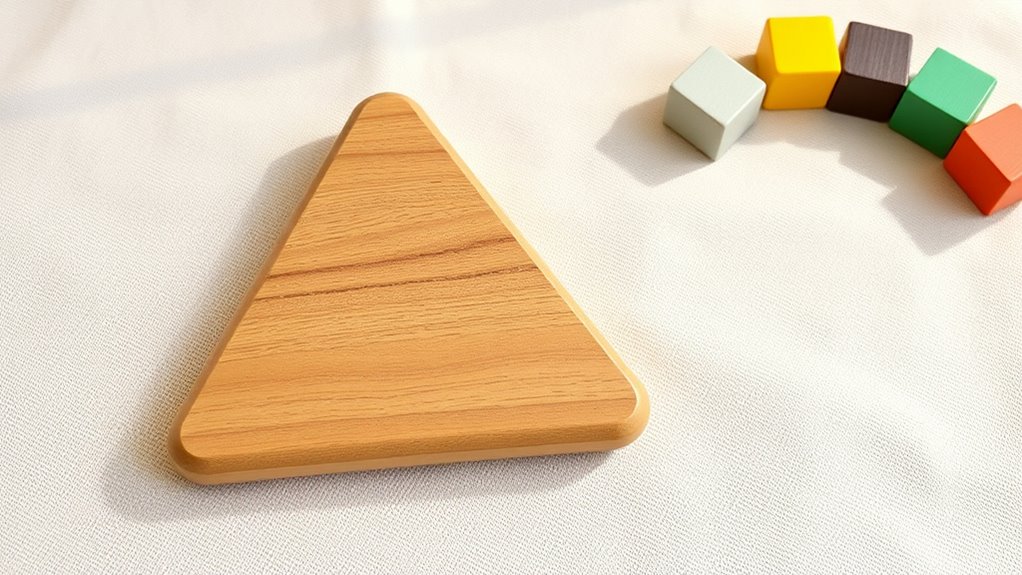
Montessori toys also tend to be simple in design, avoiding overstimulation and allowing your child to focus on the task at hand. Examples include stacking blocks, shape sorters, and puzzles made from natural wood or biodegradable materials. These toys are often open-ended, meaning they can be used in multiple ways, fostering creativity and critical thinking. Because they’re built to last and designed with your child’s developmental needs in mind, Montessori toys become tools for meaningful learning. They help your child build confidence, develop fine motor skills, and learn important concepts like size, shape, and color—all while enjoying the process of play.
Frequently Asked Questions
How Do Montessori Toys Differ From Traditional Toys?
Montessori toys differ from traditional toys by emphasizing sensory engagement and motor skill development. You’ll find that they’re designed to encourage exploration, helping your child develop independence and focus. Unlike traditional toys that often have loud sounds or flashy lights, Montessori toys are simple, natural, and open-ended, allowing your child to use their imagination and refine their fine and gross motor skills through hands-on play.
Are Montessori Toys Suitable for All Age Groups?
Yes, Montessori toys suit all age groups because they promote sensorial exploration and help develop fine motor skills at every stage. Younger children benefit from simple, tactile toys that enhance their senses, while older kids enjoy more complex tools that challenge their coordination and problem-solving. You’ll find that the toys grow with your child, encouraging curiosity and skill-building through hands-on, purposeful play tailored to their developmental needs.
Can Montessori Toys Be Homemade or DIY?
Yes, you can turn your home into a workshop of learning by creating DIY adaptations and homemade alternatives. Think of your child’s curiosity as a garden, ready to bloom with simple, thoughtful toys. Using everyday materials, you can craft Montessori-inspired toys that foster independence and exploration. With a little creativity, your homemade alternatives become more than just toys—they’re tools for nurturing your child’s innate desire to learn and grow.
How Do Montessori Toys Support Emotional Development?
Montessori toys support emotional development by fostering emotional awareness and social skills. When you use these toys, you encourage your child to recognize and express their feelings calmly. They learn to share, take turns, and empathize with others through guided play. This hands-on approach helps your child build confidence and self-regulation, creating a strong foundation for healthy emotional growth and positive social interactions.
What Safety Standards Should I Look for in Montessori Toys?
When choosing Montessori toys, you should look for those that meet child proofing guidelines, ensuring they’re free from small parts and sharp edges. Check that they’re made from non-toxic materials, like natural wood or BPA-free plastics, to keep your child safe. Always verify the labels for safety standards compliance, and regularly inspect toys for wear and tear. This way, you create a safe environment that encourages independent exploration.
Conclusion
In brief, Montessori toys foster focus, freedom, and fun by encouraging exploration and independence. They promote patience, precision, and practical skills through play, paving the way for purposeful learning. When you choose toys that challenge and charm, you cultivate curiosity, confidence, and creativity in your child. Remember, meaningful, Montessori-motivated moments make memorable milestones, merging mastery with mindfulness. Ultimately, these toys transform playtime into a purposeful, playful pathway towards a bright, balanced future.