

Waldorf toys are made from natural, eco-friendly materials like wood, wool, cotton, and silk, avoiding plastics and synthetics. They focus on encouraging sensory exploration and imaginative play through simple, minimalistic designs that allow for open-ended creativity. These toys promote emotional growth, calmness, and sustainability, emphasizing quality and craftsmanship. By choosing Waldorf toys, you support mindful play that nurtures your child’s development. Keep exploring to discover more about what truly makes a toy Waldorf.
Key Takeaways
- Made from natural, eco-friendly materials like wood, wool, cotton, and silk, avoiding plastics and synthetics.
- Designed with simplicity and minimalism to encourage open-ended, imaginative play.
- Focused on tactile qualities and sensory connection to promote calmness and emotional growth.
- Emphasizes sustainability, durability, and craftsmanship, supporting environmental values.
- Supports development of creativity, problem-solving, and emotional intelligence through free exploration.

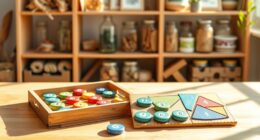
Have you ever wondered what sets a Waldorf toy apart from others? It’s all about the materials and the purpose behind their design. Waldorf toys are crafted from natural materials, like wood, wool, cotton, and silk, which give them a warm, inviting feel. Unlike plastic or synthetic toys that are mass-produced and often brightly colored, these natural materials encourage a different kind of interaction. They’re gentle to the touch, safe for little ones, and environmentally friendly. When children play with toys made from natural materials, they’re more likely to develop a sensory connection, feeling the textures, weight, and temperature of their toys. This tactile experience is vital for their sensory development and helps foster a sense of calm and mindfulness during playtime.
The focus on natural materials isn’t just about aesthetics; it’s about creating toys that grow with a child and can be used in multiple ways. Waldorf toys are intentionally simple, often unpainted or finished with natural oils, to avoid overstimulation. This simplicity invites open-ended play, where children aren’t limited by specific functions or predetermined ways to use the toy. Instead, they imagine, explore, and create their own stories, transforming a wooden block into a castle, a spoon into a magic wand, or a piece of cloth into a cape. This kind of open-ended play is fundamental to the Waldorf philosophy because it nurtures creativity, problem-solving, and emotional intelligence. It allows children to become active participants in their own learning process, rather than passive recipients of a fixed narrative.
Additionally, using natural, eco-friendly materials supports sustainability and teaches children to value the environment from an early age. When you choose a Waldorf toy, you’re supporting a style of play that emphasizes imagination over entertainment, and quality over quantity. These toys are designed to be versatile, durable, and timeless, meaning they can be handed down through generations. This approach fosters a sense of sustainability and appreciation for craftsmanship, aligning with the values of mindful consumption. By investing in natural, open-ended toys, you’re giving your child the freedom to invent, explore, and develop skills at their own pace. It’s not just about the toy itself, but about encouraging a way of playing that is enriching, calming, and deeply rooted in the natural world. In the end, what makes a Waldorf toy truly special is its ability to inspire genuine, imaginative, and meaningful play that supports your child’s growth and well-being.
Frequently Asked Questions
Are Waldorf Toys Suitable for All Age Groups?
Waldorf toys are suitable for all age groups because they promote sensory exploration and imaginative play, which are beneficial at any age. For infants, these toys help develop fine motor skills and sensory awareness. Older children and even adults can use them to spark creativity and relaxation. You’ll find that their simple, natural designs encourage open-ended play, making them versatile and engaging for everyone, no matter their age.
Can Waldorf Toys Be Customized or Personalized?
Yes, Waldorf toys can be customized or personalized to suit your child’s preferences. You can choose personalized designs that reflect their personality or interests, and many artisans offer custom craftsmanship to create one-of-a-kind pieces. By selecting these options, you guarantee that the toy resonates more deeply, fostering imagination and emotional connection. Remember to communicate your preferences clearly to achieve the best results in personalization.
How Do Waldorf Toys Compare in Price to Regular Toys?
You’ll find that Waldorf toys tend to be more expensive than regular toys due to their higher quality, natural materials, and craftsmanship. Pricing comparisons show they often cost more upfront, but their durability and eco-friendly materials can offer better long-term value. Cost factors like handmade details, organic finishes, and sustainable sourcing contribute to the price difference. While pricier, many parents see Waldorf toys as worthwhile investments for safe, enriching play.
Are Waldorf Toys Eco-Friendly and Sustainable?
They say “you are what you eat,” and the same applies to toys. Waldorf toys are eco-friendly and sustainable because they’re made from natural materials like wood and cotton, which are biodegradable and safe. Plus, they often come with minimal packaging, reducing waste. By choosing Waldorf toys, you support eco-conscious practices, helping to protect the environment for future generations.
How Do Waldorf Toys Support Child Development?
Waldorf toys support your child’s development by encouraging sensory stimulation and imaginative play. As your child explores textures, shapes, and colors, they enhance their sensory awareness and fine motor skills. These toys inspire creative thinking, allowing your child to invent stories and scenarios, which boosts cognitive and emotional growth. By fostering open-ended play, Waldorf toys help your child build confidence, empathy, and problem-solving abilities naturally.
Conclusion
When you choose a Waldorf toy, you’re selecting more than just a plaything—you’re inviting imagination and warmth into your child’s world. Like a gentle seed planted in fertile soil, these toys nurture creativity and emotional growth. They symbolize simplicity and connection, guiding your little one’s journey from wonder to wisdom. In embracing these natural, soulful creations, you help cultivate a future rooted in authenticity and gentle discovery, shaping a heart that grows strong and free.