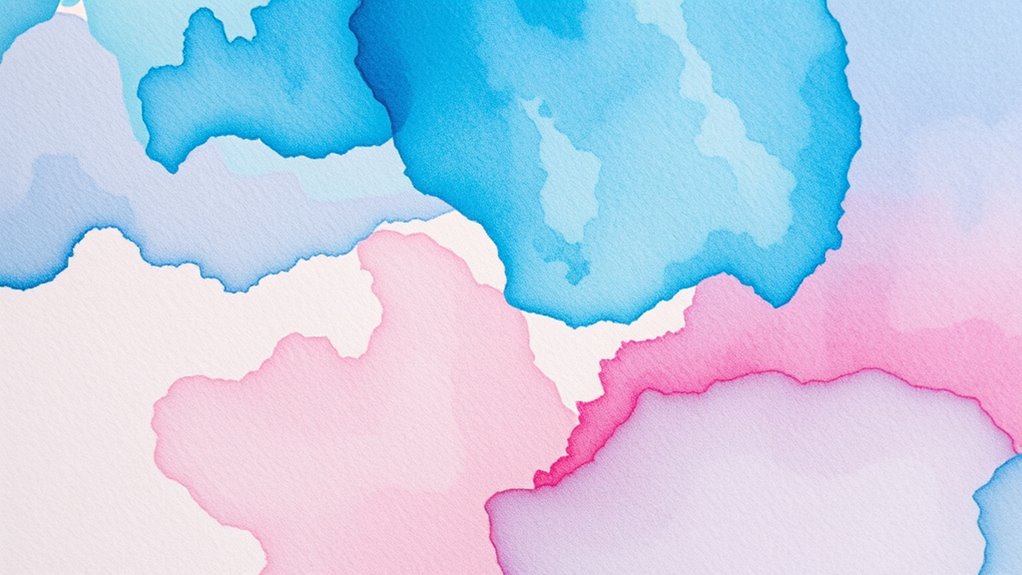
Wet-on-wet watercolor is a gentle and expressive technique that involves applying colors onto a damp surface, allowing for soft, flowing effects. You start by moistening your paper evenly, then drop in colors that naturally blend and create smooth transitions. This method offers spontaneity and atmospheric results, perfect for capturing mood and softness. Mastering the subtle interaction between paper texture, moisture, and pigment will help you unleash beautiful, organic paintings—continue exploring to discover even more!
Key Takeaways
- Wet-on-wet technique involves applying wet paint onto a wet surface for soft, flowing effects.
- Preparing moist, textured watercolor paper enhances blending and spontaneous color transitions.
- Controlling moisture levels and paper texture allows for gentle, organic blending and subtle color shifts.
- Dropping light washes onto wet areas creates natural gradations and seamless color diffusion.
- Practicing with different textures and water-pigment ratios develops a skilled, expressive watercolor approach.
Watercolor techniques open up a world of creative possibilities for artists of all skill levels. One of the most accessible and expressive methods is the wet-on-wet technique, which allows you to create soft, flowing effects that seem almost effortless. When you master this approach, you’ll discover how to harness the natural properties of watercolor to produce beautiful color blending and subtle transitions. The key lies in understanding how the paint interacts with the paper’s textures and how to manipulate moisture levels to achieve your desired outcome.
To start, you need to prepare your paper properly. Watercolor paper varies in texture, from smooth to rough, and each type influences how your colors blend and settle. For wet-on-wet work, a slightly textured or cold-pressed paper often works best because it holds water evenly and allows colors to flow smoothly. Before you begin painting, wet the paper with clean water using a brush or spray bottle, ensuring an even surface that’s moist but not dripping. This initial step sets the stage for seamless color blending, as the paint will spread and merge naturally on the wet surface. You’ll notice that the paper’s texture subtly influences how the colors diffuse, adding a layer of complexity and richness to your artwork.
Once your paper is ready, pick your colors and apply them while the surface remains wet. You can start by dropping in light washes of color, allowing them to expand and blend into each other. The magic of wet-on-wet lies in the spontaneous mixing that occurs when colors meet on the wet paper, creating soft gradations and harmonious transitions. You don’t need to be precise; instead, let the colors flow freely, guided by the moisture and the paper’s texture. As the paint interacts with the water, observe how different paper textures influence the spread—rougher paper may produce more textured, granular effects, while smoother paper yields more fluid, seamless blends. This interplay is what makes wet-on-wet so enthralling and forgiving.
Practicing with various paper textures and experimenting with different moisture levels will help you develop a sense of control and confidence. You’ll learn how to manipulate the water and pigment to emphasize or soften edges, create atmospheric effects, or develop subtle color shifts. Over time, you’ll find that this gentle, intuitive approach produces paintings that feel alive and vibrant, with colors seamlessly merging in a natural, organic way. By understanding how to leverage paper textures and color blending in wet-on-wet techniques, you reveal a rich palette of possibilities that can elevate your watercolor skills and inspire your creative expression.
Frequently Asked Questions
What Type of Paper Is Best for Wet-On-Wet Watercolor?
You should choose thick, 100% cotton paper with a rough or cold-press texture for wet-on-wet watercolor. Brands like Arches, Saunders, and Fabriano offer excellent options that absorb water well and allow for smooth blending. The textured surface helps hold the colors and prevents warping. Using high-quality watercolor paper guarantees your washes stay vibrant and your blending seamless, making your wet-on-wet technique more effective and enjoyable.
How Can I Prevent Colors From Becoming Muddy?
Think of your colors as dancers on a stage—keep them in harmony by choosing pigments with good transparency, so they don’t clash or turn muddy. To prevent this, layer colors subtly, allowing each hue to shine through, like a clear melody in a symphony. Focus on color harmony, use clean water, and work quickly to maintain vibrancy. This way, your painting stays fresh, luminous, and free of muddy chaos.
What Are Common Mistakes Beginners Make With Wet-On-Wet?
You often make mistakes like overworking your paper or rushing, which causes unwanted color bloom and muddy tones. To improve, let each layer dry slightly before adding new colors, respecting your paper’s texture. Avoid mixing too many pigments at once, and be mindful of how wet your paper is. This way, you control the flow, prevent muddiness, and achieve more vibrant, harmonious watercolor effects.
How Do I Control the Bleeding of Colors Effectively?
Did you know that controlling bleeding in wet-on-wet watercolor can considerably improve your color blending? To do this, keep your paper evenly moist and work quickly before colors spread uncontrollably. Use a clean, damp brush to lift excess pigment or gently guide bleeding. Practicing smooth, consistent water application helps you master bleeding control, so your colors blend beautifully without muddying or unwanted spreading.
Can I Combine Wet-On-Wet With Other Watercolor Techniques?
Yes, you can combine wet-on-wet with other watercolor techniques to enhance your artwork. Use it for layer blending to create smooth progressions and soft backgrounds. Then, add details with dry brush or glazing for color harmony and contrast. This blending of techniques allows you to achieve depth and richness, giving your paintings a dynamic, harmonious feel. Experiment to discover unique effects that elevate your artistic expression.
Conclusion
Remember, a gentle hand often creates the most beautiful art. Wet-on-wet watercolor invites you to embrace spontaneity and trust the process, allowing colors to blend naturally. As the saying goes, “Patience is a virtue,” and with patience, you’ll discover the magic in these soft, flowing techniques. Keep practicing, stay relaxed, and enjoy the journey of gentle artistry—your masterpieces will reflect the calm and confidence you pour into each stroke.