To create ethereal art with wet-on-wet watercolor, master controlling paint flow and timing your washes. Use wet surfaces to allow colors to merge seamlessly, creating soft transitions and vibrant gradients. Experiment with water-to-paint ratios to influence movement and diffusion, softening edges and avoiding harsh lines. Embrace spontaneity and quick work to capture glow and depth. Keep exploring these techniques further, and you’ll reveal even more secrets to stunning, dreamlike results.
Key Takeaways
- Master wet-on-wet techniques to create seamless color blends and soft transitions for ethereal watercolor effects.
- Control water-to-paint ratios and timing to enhance fluidity and spontaneous color interactions.
- Use soft edges and gentle diffusion to evoke depth, mystery, and a dreamlike atmosphere.
- Experiment with layering and lifting pigment to deepen hues and refine delicate, luminous qualities.
- Focus on capturing organic, spontaneous forms that emphasize watercolor’s fluid and translucent nature.
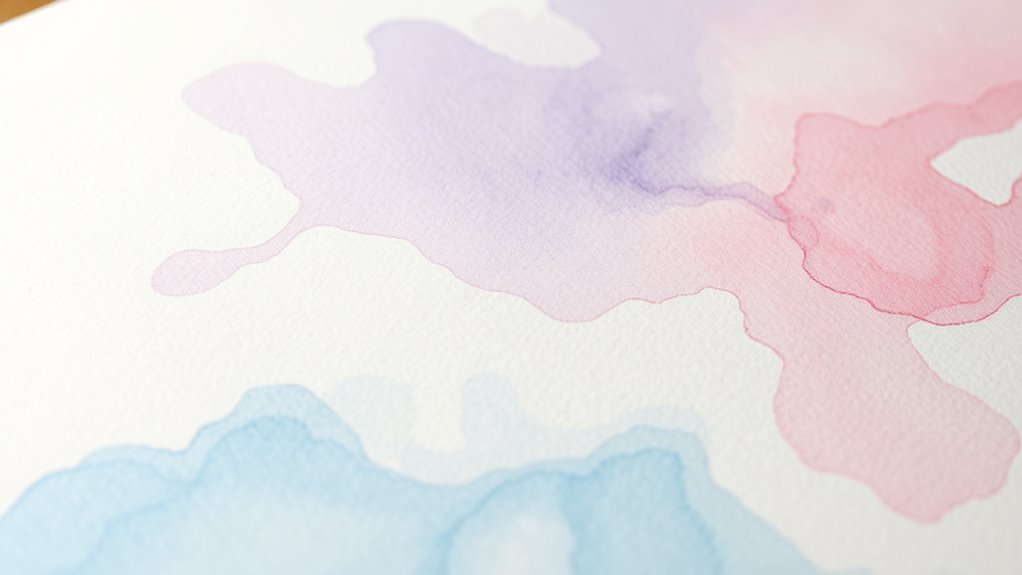
Wet-on-wet watercolor painting is a technique that reveals vibrant, fluid effects by applying wet paint onto a wet surface. As you master this method, you unlock a world of soft transitions and seamless color interactions that can elevate your artwork to new heights. The key is understanding how to control the flow of paint so that colors blend naturally, creating harmonious gradients and subtle shifts. When you lay down wet paint on a damp surface, the colors tend to merge effortlessly, producing beautiful, unpredictable variations. This is where color blending becomes your best friend—by carefully choosing your hues and timing your washes, you can achieve smooth transitions from one shade to another. It’s all about patience and precision; the wetter the surface, the more fluid your colors will be, and the more dramatic the blending effect.
Edge softening is another essential aspect of wet-on-wet painting. Unlike traditional methods where sharp edges are common, this technique allows you to soften lines and boundaries, giving your artwork an ethereal, dreamlike quality. When you apply paint to a wet surface, the edges naturally diffuse into the surrounding wet areas, creating a gentle gradient rather than a stark boundary. To enhance this effect, you can manipulate the amount of water on your brush or paper, or even lift some pigment if a line appears too harsh. Working with soft edges is especially effective for backgrounds or atmospheric scenes where you want to evoke a sense of depth and mystery. Embracing edge softening helps you move away from rigid forms, encouraging a more organic and spontaneous look.
Achieving successful color blending and edge softening requires practice and a keen sense of timing. You want to work quickly enough before the paper dries, but with enough control to guide the paint’s movement. Experiment with different water-to-paint ratios to see how the colors flow and merge. Sometimes, adding a second wash while the first is still damp can deepen the blends, while lifting excess pigment can create delicate highlights. When you master these subtleties, you’ll find your paintings radiate a luminous, almost translucent quality that’s hard to replicate with other techniques. Wet-on-wet isn’t just about applying paint—it’s about harnessing the fluidity of watercolor to craft captivating, atmospheric images that draw viewers into their dreamlike world.
Frequently Asked Questions
What Are the Best Types of Paper for Wet-On-Wet Watercolor?
You should choose watercolor paper with a medium to rough texture for wet-on-wet techniques. These textures help control paint absorption and prevent colors from bleeding too quickly, giving you more control. Cold-pressed paper is ideal because it balances texture and absorbency, allowing your colors to flow smoothly while maintaining some surface texture. Avoid very smooth paper, as it absorbs paint too quickly, making blending and soft effects harder to achieve.
How Do I Prevent Colors From Becoming Muddy?
To prevent colors from becoming muddy, focus on maintaining good color separation and proper pigment layering. You should apply your paints while the previous layer is still wet, but avoid over-blending. Use transparent colors and limit mixing on your palette. This way, you keep your colors vibrant and distinct, allowing each hue to stand out. Practice controlling your water and pigment ratios to achieve clean, luminous results without muddying your artwork.
Can Wet-On-Wet Techniques Be Used With Other Mediums?
Coincidences often lead you to explore new art forms, and yes, wet-on-wet techniques can blend seamlessly with other mediums. You can combine watercolor with acrylics, inks, or even pastels, creating stunning mixed media pieces. Layering techniques become essential here, allowing you to build depth and texture while maintaining fluidity. Experimenting with these combinations enhances your artistic expression and opens up endless possibilities for ethereal, dynamic art.
How Long Does It Take for Watercolor to Dry Completely?
Watercolors typically dry in 10 to 30 minutes, but it depends on your drying environment and paint thickness. If you’re in a warm, dry space, your paint dries faster. Thicker layers take longer to dry than thin washes. To speed up drying, increase airflow or use a hairdryer on low. Always check that the paint feels dry to the touch before adding new layers to prevent smudging or blending issues.
What Brushes Work Best for Wet-On-Wet Watercolor Effects?
For wet-on-wet effects, your brush selection is key. Opt for soft, round brushes with natural or synthetic bristles that hold plenty of water. Large, flat brushes work well for broad washes, while smaller round brushes help add subtle details. Use gentle, fluid brush techniques to blend colors seamlessly. You’ll find that experimenting with different brushes and techniques helps you achieve the ethereal, flowing qualities characteristic of wet-on-wet watercolor art.
Conclusion
Now that you’ve opened the wet-on-wet technique, imagine creating a dreamy landscape where colors blend seamlessly, like a misty morning. Picture yourself applying gentle washes that bleed into each other, capturing an ethereal glow. For example, you might paint a foggy forest scene where trees fade into soft, watercolor clouds. With practice, you’ll master this secret and bring a luminous, otherworldly quality to your artwork—making every piece feel alive with magic.