
Using simple figures and props in storytelling helps you create a vivid and engaging experience for your audience. They serve as visual focal points that clarify scenes and characters, making the story more memorable. Incorporate everyday objects or handcrafted figures to add tactile interest and keep props simple yet expressive. When combined with your voice and gestures, these tools can transform your storytelling into a multi-sensory adventure. Keep exploring for more ideas to make your stories truly compelling.
Key Takeaways
- Use small figures, drawings, or everyday objects to visually represent characters and scenes for clarity.
- Incorporate simple, expressive props that seamlessly integrate into the narration to enhance storytelling.
- Engage the audience by allowing them to handle or move props, creating a tactile and interactive experience.
- Ensure props are thematically consistent to reinforce the story’s mood and setting effectively.
- Combine visual props with voice and gestures to create a multi-sensory, memorable storytelling experience.
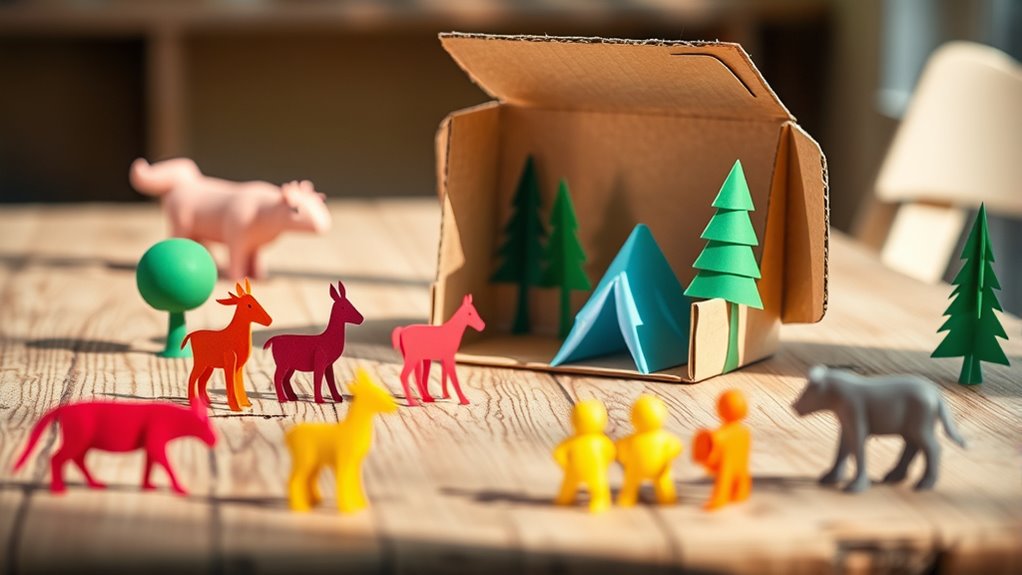
Have you ever wondered how to make storytelling more engaging without complex props? The secret lies in using simple figures and props effectively. You don’t need fancy gadgets or elaborate sets to capture your audience’s attention. Instead, focus on incorporating interactive techniques and visual aids that bring your story to life. When you use visual aids, like small figures, drawn images, or everyday objects, you create a visual connection that makes your story more memorable. These aids serve as focal points, helping your audience visualize scenes and characters clearly. The key is to keep these props simple yet expressive, so they complement your narration without overwhelming it. Incorporating thematic consistency into your props can also enhance the storytelling experience by reinforcing the narrative’s mood and setting.
Interactive techniques are also essential. Instead of passively delivering your story, involve your audience. Ask questions, encourage participation, or even let them handle some of the props. For example, you might give a small figure to a child to hold or move around as part of the story. This tactile involvement keeps their attention sharp and makes the storytelling experience more immersive. The use of simple props paired with interactive techniques turns storytelling into a dynamic exchange, rather than a one-sided monologue. This approach fosters engagement and makes each listener feel like they’re part of the story.
Visual aids don’t have to be elaborate or expensive. Think about everyday items that can double as storytelling tools—paper cutouts, hand-drawn illustrations, or even household objects like a spoon or a toy car. These elements are easy to manipulate and can be quickly integrated into your narrative. For instance, a paper cutout of a tree can become a pivotal scene, or a small toy animal can represent a character. When you combine these visual aids with your voice and gestures, you create a multi-sensory experience that keeps your audience involved. They start to anticipate what’s coming next, making the story more compelling.
Frequently Asked Questions
What Are the Best Materials for Making Simple Storytelling Props?
You should use everyday materials like paper, felt, and cardboard for your storytelling props because they’re easy to manipulate and perfect for DIY craft ideas. You can also incorporate clay or foam for more durable figures. These materials enhance your storytelling techniques by making props engaging and interactive. Plus, they’re affordable and simple to customize, helping you create vivid visuals that bring your stories to life effectively.
How Can I Encourage Shy Children to Participate Using Figures?
Encourage shy children to participate using figures as if you’re opening a quiet flower bud. Use interactive techniques like inviting them to choose or move figures, making the activity feel safe and playful. Gently ask questions related to the figures, helping shy children build confidence step by step. By creating a supportive environment, you help them feel comfortable sharing their ideas and gradually become more engaged in storytelling.
What Age Group Benefits Most From Storytelling With Simple Props?
You’ll find that preschoolers’ development benefits most from storytelling with simple props, as it effectively engages their growing imagination and attention span. At this age, children love to interact with visual aids, which help them grasp stories better and stay focused. Using simple figures and props makes storytelling more dynamic, encouraging shy children to participate more confidently and fostering early language and social skills through active involvement.
How Do I Create Stories That Are Both Engaging and Easy to Follow?
To create stories that are both engaging and easy to follow, focus on clear visual storytelling and a strong narrative structure. Use simple figures and props to illustrate key moments, making your story visually appealing. Keep your plot straightforward, with a beginning, middle, and end. Use repetition and familiar themes to reinforce understanding, ensuring your audience stays captivated and easily follows along, making the story memorable and enjoyable for all.
Are There Cultural Considerations When Using Figures in Storytelling?
Yes, you should consider cultural symbolism and respectful representation when using figures in storytelling. Be mindful of symbols, colors, and attire that may hold specific meanings in different cultures. To prevent misunderstandings or offense, research cultural backgrounds and choose figures that accurately reflect and honor those traditions. This approach ensures your storytelling remains inclusive, respectful, and engaging for diverse audiences.
Conclusion
Using simple figures and props makes storytelling more engaging and memorable. Did you know that visuals can increase audience retention by up to 65%? By incorporating easy-to-handle objects, you create a more interactive experience that captures attention and sparks imagination. So, don’t overlook the power of simple props—they’re your secret to transforming ordinary stories into enthralling moments that stick with your audience long after the story ends.