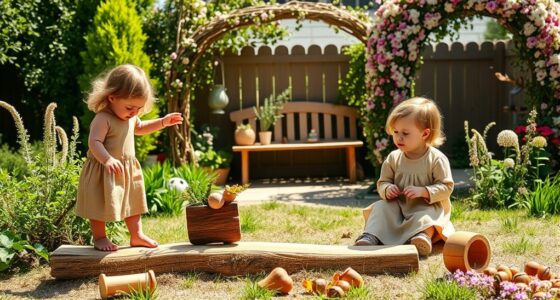
To create a Waldorf seasonal nature table, choose a dedicated, accessible space where you can display natural treasures that reflect the current season, like leaves, shells, or branches. Incorporate seasonal crafts and decorations, and include stories or cultural symbols related to the time of year. Involve children in updating and caring for the display to deepen their connection with nature’s rhythms. Keep exploring to discover more ideas for nurturing curiosity and reverence in children through this beautiful practice.
Key Takeaways
- Select a dedicated, accessible space for displaying seasonal natural elements and crafts.
- Gather objects reflective of the current season, like leaves, flowers, stones, or shells.
- Incorporate seasonal crafts and decorations to enhance the visual and tactile appeal.
- Use storytelling and cultural elements to deepen children’s understanding and connection to the season.
- Regularly update the table with new items and involve children in its maintenance and redesign.

A Waldorf seasonal nature table is a beautiful way to connect children with the changing cycles of the year. It creates a visual and tactile reminder of nature’s rhythms, fostering a sense of wonder and reverence for the seasons. To start, choose a dedicated space that’s accessible to children, where they can easily add and rearrange objects. The table itself doesn’t need to be elaborate; a simple shelf or a sturdy tray works well. The key is to incorporate natural elements that reflect the current season—think leaves, flowers, stones, shells, and branches. These natural treasures can be collected during outdoor excursions, turning the process into a meaningful activity for children to engage with nature firsthand.
As you set up the table, consider adding handcrafted items that are inspired by the season. Nature inspired crafts, such as woven nests for eggs or painted stones to mimic seasonal fruits, deepen children’s understanding of the cycle of life. These crafts can be created collectively, encouraging teamwork and creativity. For example, during spring, children might craft tiny nests from twigs and wool, symbolizing new life and fertility. During autumn, they might make leaf collages or decorate gourds, highlighting harvest time. Incorporating these crafts into the table makes it dynamic and personal, constantly evolving with each season.
Seasonal storytelling is another powerful element to include on the nature table. Use stories from various cultures that celebrate the season, or create your own tales inspired by the objects on display. As children gather around the table, you can tell stories about the changing landscape, mythological figures associated with the season, or animal behaviors. This practice enriches their emotional connection to nature and helps them understand the significance of the cycles they observe. Encourage children to share their own stories and observations, fostering language development and a deeper appreciation for the environment. Incorporating natural elements that reflect the current season enhances the sensory experience and reinforces the connection to the environment.
Maintaining the seasonal nature table is an ongoing process. As the seasons shift, you can refresh the display with new natural items and crafts, always involving children in the process. This continuous interaction reinforces their understanding of seasonal changes and nurtures mindfulness and observation skills. By blending nature inspired crafts with seasonal storytelling, you create a living, breathing reflection of the year’s passage that invites children to explore, imagine, and connect with the world around them. The result is a meaningful, hands-on experience that celebrates the beauty and rhythm of nature, helping children develop a lifelong respect for the natural world.
Frequently Asked Questions
How Often Should I Update the Seasonal Nature Table?
You should update your seasonal display and nature collection weekly or as the seasons change. This keeps the table fresh and reflective of the current time of year. Regularly changing the items helps children connect with nature’s cycles and fosters a sense of rhythm. Keep an eye on the weather and season shifts, and swap out or add new elements to maintain an engaging and meaningful Waldorf seasonal nature table.
What Materials Are Safest for Young Children?
You should prioritize child-safe materials and non-toxic supplies to guarantee safety. Look for natural woods, unglazed clay, and pure wool, avoiding plastics and synthetic dyes. Choose items labeled non-toxic and free from harmful chemicals. Always inspect materials for sharp edges or small parts that could pose choking hazards. Using these safe, natural materials helps create an inviting, secure environment for children to explore and enjoy the seasonal nature table.
How Can I Incorporate Cultural or Regional Variations?
You can incorporate cultural or regional variations by selecting regional plant materials that reflect your community’s flora, making the display more meaningful. Integrate cultural symbolism through items like traditional crafts or symbols that resonate locally. This approach enriches the seasonal table, fostering a deeper connection to your environment and heritage. By thoughtfully choosing regional plant selection and cultural symbolism, you create a more personalized and educational experience for children.
Is It Necessary to Include All Four Seasons?
You don’t need to include all four seasons on your Waldorf Seasonal Nature Table. Focus on the seasonal symbols that resonate with your region and cultural traditions. Incorporate regional adaptations to make it meaningful and reflective of your environment. If some seasons aren’t distinct, highlight the most prominent ones. This approach keeps your table relevant, inspiring, and personalized, fostering a deeper connection to nature’s cycles.
How Do I Store and Maintain the Nature Items?
Think of your nature items as precious treasures that need gentle care. To store them, use breathable containers like baskets or linen bags to prevent mold, and keep them in a cool, dry place. Regular maintenance tips include gently cleaning items with a soft brush or cloth and replacing any that break. This way, your nature treasures stay vibrant and ready to inspire, just like cherished keepsakes in a storybook.
Conclusion
As you arrange the natural treasures on your Waldorf seasonal nature table, you’ll notice how each item seems to find its perfect place, almost as if the season itself guides you. The gentle rhythm of changing leaves, smooth stones, and blooming flowers echoes the cycle of nature, reminding you that these moments are fleeting yet beautifully connected. By embracing this dance of seasons, you’ll nurture a deeper appreciation for the world’s endless, harmonious flow.