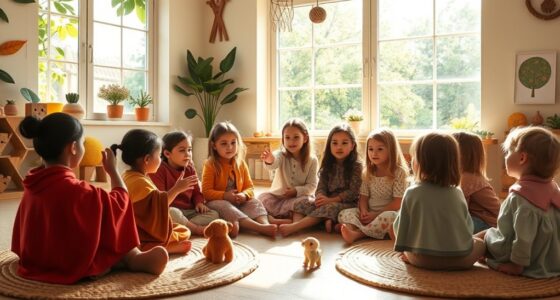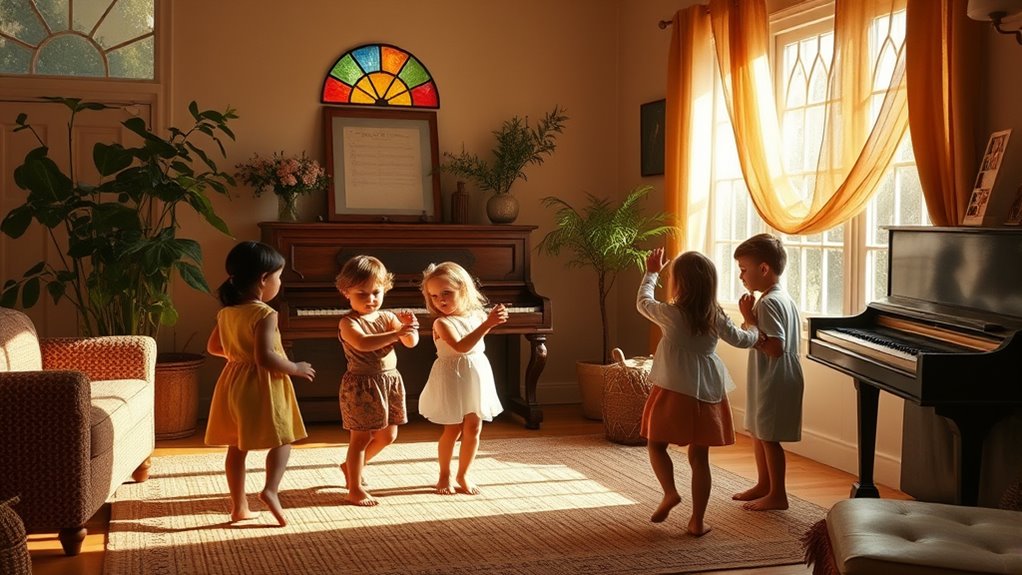

In a Waldorf home, incorporating music and movement nurtures your child’s emotional, physical, and cognitive growth through joyful, purposeful activities. You can engage in singing, dancing, and rhythm games that support emotional well-being, coordination, and sensory development. Soft melodies during quiet moments or bedtime create a calm atmosphere, helping your child feel secure and centered. Exploring these practices further will reveal simple ways to weave harmony and connection into your daily routine.
Key Takeaways
- Incorporate natural, traditional music and gentle movements to reflect Waldorf principles and promote emotional and sensory harmony.
- Use active musical engagement like singing, rhythmic instruments, and dance to support development and connection.
- Create calming routines with soft melodies and flowing movements during quiet times or bedtime to foster security.
- Integrate simple movement games and folk-inspired music to enhance neurological growth and sensory processing.
- Use music and movement intentionally to nurture emotional well-being, mindfulness, and inner harmony within the home environment.
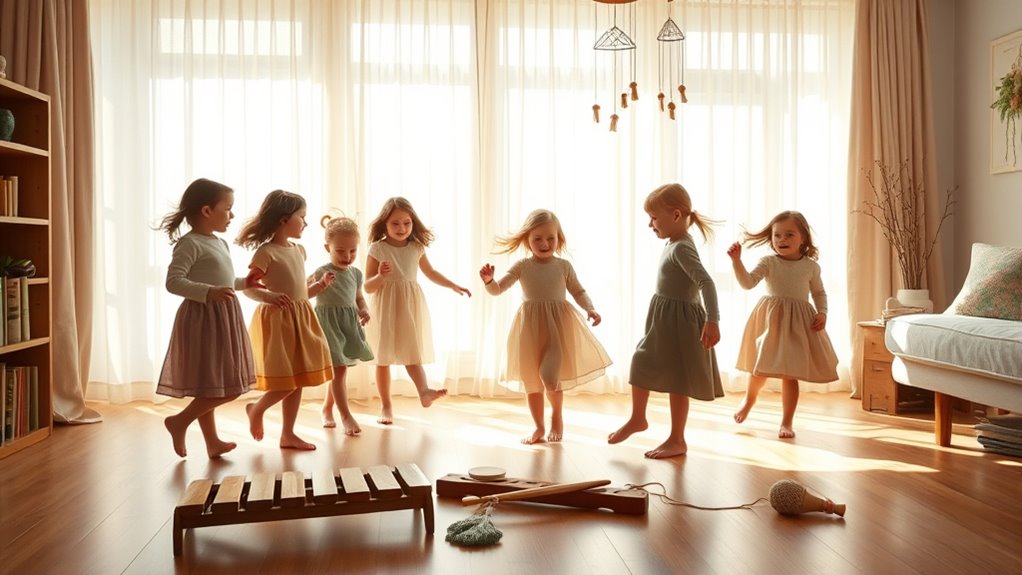
In the Waldorf home, music and movement are more than just activities—they’re essential tools for nurturing your child’s development and fostering a harmonious environment. Incorporating music therapy and dance exercises into daily routines can considerably support your child’s emotional, cognitive, and physical growth. Music therapy isn’t limited to listening; it involves engaging your child actively through singing, rhythm, and movement, helping them process feelings and develop self-awareness. For young children, simple instruments like drums, maracas, or bells can be used to explore sound and rhythm, creating a sense of joy and connection. These activities also help improve coordination and foster a sense of rhythm, which benefits language development and overall motor skills.
Dance exercises, in particular, serve as a joyful way to integrate movement into your daily life. When your child moves to music, they’re not just having fun—they’re strengthening their muscles, improving balance, and developing spatial awareness. You can encourage free dance, where your child expresses themselves spontaneously, or introduce structured movement games that promote coordination and listening skills. For example, guiding your child through gentle stretching or slow, flowing movements set to calming melodies helps them connect body and mind, cultivating mindfulness and emotional regulation. The rhythmic patterns found in dance exercises also support neurological development, helping your child process sensory input more effectively.
Additionally, understanding the importance of musical rhythm and its influence on brain development can enrich your approach and deepen your child’s learning experience. Music and movement are also powerful tools for creating a peaceful atmosphere in your home. Playing soft, melodic tunes during quiet times or before bedtime can help your child settle down and feel secure. Incorporate natural, folk-inspired music that aligns with Waldorf principles—music rooted in tradition and simplicity—to deepen the sensory experience. As your child responds to these melodies, they learn to tune into their feelings and surroundings, fostering inner harmony. Movement can be gentle and flowing, mirroring the natural rhythms of life, and reinforcing a sense of stability. These practices are more than just entertainment—they’re intentional acts that support your child’s overall well-being and sense of connection to the world around them.
Frequently Asked Questions
How Can I Incorporate Music Into Daily Waldorf Routines?
You can incorporate music into your daily rhythm by integrating simple songs and melodies into morning routines, meal times, and bedtime. Use music for shifts, like singing a lullaby or a cheerful tune to signal change. Encourage spontaneous music-making, such as clapping or dancing, to strengthen music integration naturally. By weaving music into everyday moments, you create a harmonious environment that supports your child’s development and enhances your daily rhythm.
What Are the Best Instruments for Young Children at Home?
You should choose age-appropriate options for young children, like small drums, xylophones, and simple tambourines. These instruments are easy to handle and encourage active participation. Focus on instrument selection that fosters rhythm and movement, helping your child develop coordination and a love for music. Avoid overly complex instruments to make sure they stay engaged and safe. Keep the choices simple, fun, and suitable for your child’s developmental stage.
How Does Movement Support Emotional Development in Children?
Movement helps children express their emotions and build social bonds, turning feelings into physical action. When you encourage active play, children learn to channel their emotions positively, fostering emotional expression. It also promotes social bonding as they move together, share space, and coordinate with others. This active engagement boosts their confidence and empathy, creating a safe space for emotional growth and strengthening their connections with peers and family alike.
Can Music and Movement Aid Children With Special Needs?
Yes, music and movement can greatly aid children with special needs. You can use music therapy to address emotional and behavioral challenges, while movement activities support sensory integration. Engaging children in rhythmic movements or singing helps improve coordination, focus, and emotional regulation. By incorporating these practices, you create a calming and stimulating environment that fosters growth and development tailored to each child’s unique needs.
How Do I Create a Waldorf-Inspired Music and Movement Space at Home?
Imagine your home transforms into a gentle forest where every leaf whispers a tune and every branch sways in rhythm. To create a Waldorf-inspired music and movement space, set aside a cozy corner with natural instruments like drums, bells, and scarves. Encourage your child to explore sensorial experiences and engage in rhythmic activities, letting them move freely and feel the music’s flow. This nurtures joy, creativity, and harmony in everyday life.
Conclusion
As you nurture music and movement in your home, you plant seeds of harmony that blossom in your child’s heart. These simple acts become the gentle rhythm guiding their growth, like a melody woven into the fabric of everyday life. With each shared moment, you create a sanctuary where their spirit can dance freely and bloom beautifully. In this sacred space, your love becomes the song that echoes through their journey, forever shaping their soul.