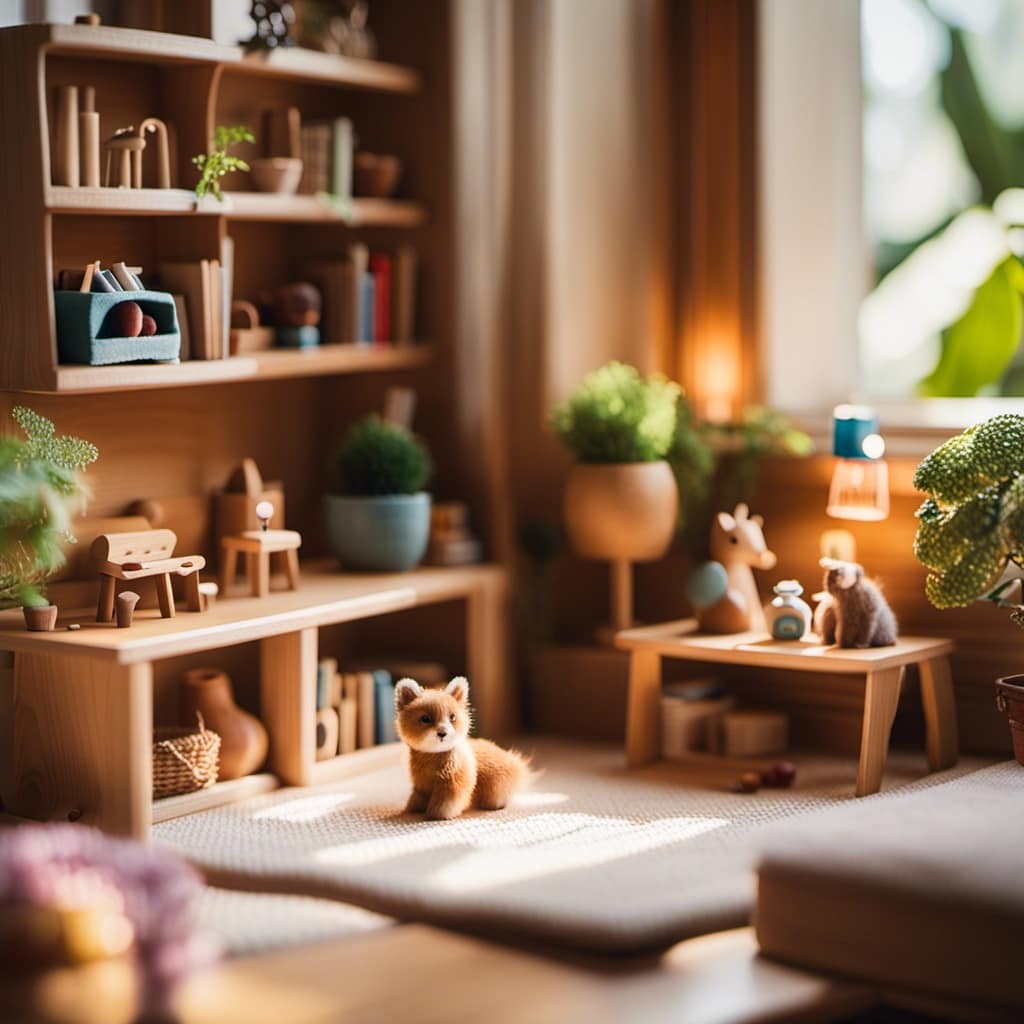
A Waldorf kindergarten at home focuses on playful, outdoor exploration and sensory experiences rather than early academics. You encourage your child to connect with nature, use natural materials for art and play, and engage their senses through activities like collecting leaves, listening to birds, or molding clay. This approach nurtures curiosity, creativity, and emotional growth. If you keep exploring, you’ll discover how to seamlessly integrate these joyful, natural routines into your daily life.
Key Takeaways
- Prioritize outdoor play and nature exploration to foster curiosity and a deep connection with the natural world.
- Use natural materials like leaves, stones, and wood to inspire creative, sensory-rich activities.
- Incorporate simple art supplies such as beeswax, clay, and watercolors for open-ended artistic expression.
- Create a home environment that encourages slow, mindful activities centered around nature and play.
- Emphasize joyful, play-based learning to build emotional, cognitive, and sensory development before academics.
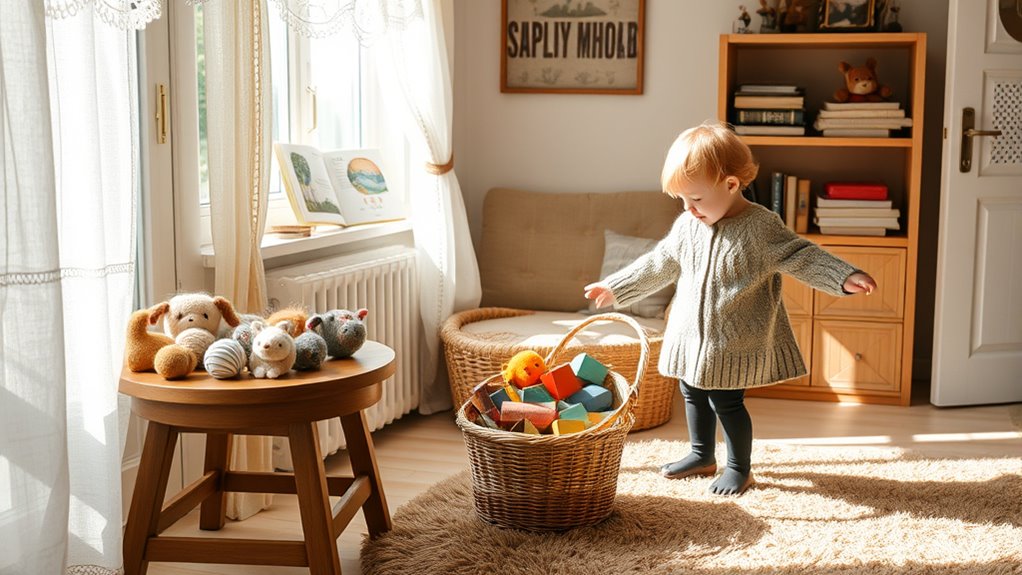
Creating a Waldorf kindergarten at home allows you to nurture your child’s natural curiosity and creativity in a warm, developmentally appropriate environment. One of the core principles of Waldorf education is fostering a deep connection with nature. You can do this by integrating outdoor play into your daily routine, encouraging your child to observe the changing seasons, listen to birds, or collect natural materials like leaves, stones, and flowers. These activities help your child develop a sense of wonder and respect for the natural world, laying a foundation for lifelong environmental awareness. Nature connection isn’t just about observation; it’s about engaging all senses—feeling the texture of bark, smelling the earth after rain, or watching clouds drift across the sky. These sensory experiences are essential in early childhood, supporting emotional and cognitive growth while cultivating a love for the outdoors. Incorporating natural materials into daily activities can also enhance sensory development and inspire creativity.
Artistic exploration is another fundamental part of the Waldorf approach. You can nurture this by providing simple, natural materials such as beeswax, clay, watercolors, and fabric. Encourage your child to create freely, without rigid rules or expectations. Artistic activities help develop fine motor skills, concentration, and emotional expression, all while fostering joy and confidence. You might set up an art corner with accessible supplies, or incorporate craft projects inspired by nature, like leaf rubbings or flower pressing. These activities are not just about producing a finished product but about the process of creation itself. Artistic exploration allows your child to experiment, problem-solve, and express their inner world, which is fundamental in early development.
Integrating nature connection and artistic exploration into your home isn’t complicated; it’s about making space for these experiences in everyday life. Spend time outdoors, give your child opportunities to freely interact with natural materials, and provide varied art supplies that invite open-ended play. Focus on slow, mindful activities rather than rushing through tasks or emphasizing academic achievement early on. This approach nurtures a love of learning rooted in joy and discovery. By prioritizing these foundational elements, you create an environment where your child’s natural curiosity flourishes, laying the groundwork for a balanced, holistic education that values play as much as academics. In doing so, you’re not only supporting your child’s development but also helping them build a meaningful, lifelong connection with both nature and their own creative potential. Incorporating natural materials into daily routines can further deepen their sensory experience and engagement.
Frequently Asked Questions
How Can I Adapt Waldorf Principles for Different Home Environments?
You can adapt Waldorf principles by incorporating indoor gardening and nature walks into your routine. Use simple, natural materials for play and encourage outdoor exploration to connect your child with nature. Adjust activities to your space, whether it’s a small garden or nearby park. Focus on hands-on, imaginative play rather than structured lessons, fostering creativity and a deep appreciation for the natural world, regardless of your home environment.
What Are the Essential Materials for Waldorf-Inspired Play at Home?
You need natural materials and open-ended toys for Waldorf-inspired play at home. These materials support imaginative exploration and connect children to nature, fostering creativity and sensory development. You might gather wooden blocks, silk scarves, clay, or simple fabric dolls. Research shows open-ended toys encourage deeper play, allowing children to invent stories and scenarios. By choosing these adaptable, natural items, you create a nurturing environment aligned with Waldorf principles.
How Do I Balance Free Play and Structured Activities in Waldorf Homeschooling?
You should balance free play and structured activities by dedicating ample time to nature exploration and artistic expression. Let your child freely explore outdoors, fostering curiosity and connection to nature, while also scheduling intentional, creative projects that encourage artistic skills. This way, you nurture their natural instincts and creativity without overwhelming them with rigid routines, creating a harmonious environment that values both spontaneous play and guided learning.
What Are Common Challenges When Starting Waldorf Kindergarten at Home?
When starting Waldorf kindergarten at home, you might face challenges like managing parental expectations and resource limitations. You could feel overwhelmed trying to meet ideal standards or lack specialized materials. To overcome this, focus on nurturing your child’s natural curiosity through simple, nature-inspired activities and embrace flexibility. Remember, it’s about creating a warm, engaging environment, not perfection. Your patience and adaptability will help you and your child thrive in this journey.
How Can I Assess My Child’s Developmental Progress Through Waldorf Play?
You can assess your child’s developmental progress through careful play observation, noting their engagement, creativity, and social interactions. Watch for reaching developmental milestones like fine motor skills, language use, and emotional regulation during play. By paying close attention to these behaviors, you gain insight into their growth, allowing you to adapt activities to support their ongoing development while celebrating their unique progress at each stage.
Conclusion
By embracing Waldorf principles at home, you’re nurturing your child’s natural curiosity and creativity before rushing into academics. This gentle approach fosters a love for learning that lasts a lifetime. Why rush through childhood when you can allow play to be your child’s most meaningful teacher? Trust in the process, and watch your child blossom through simple, intentional activities that honor their developmental pace. Isn’t nurturing joy and wonder what childhood is truly about?