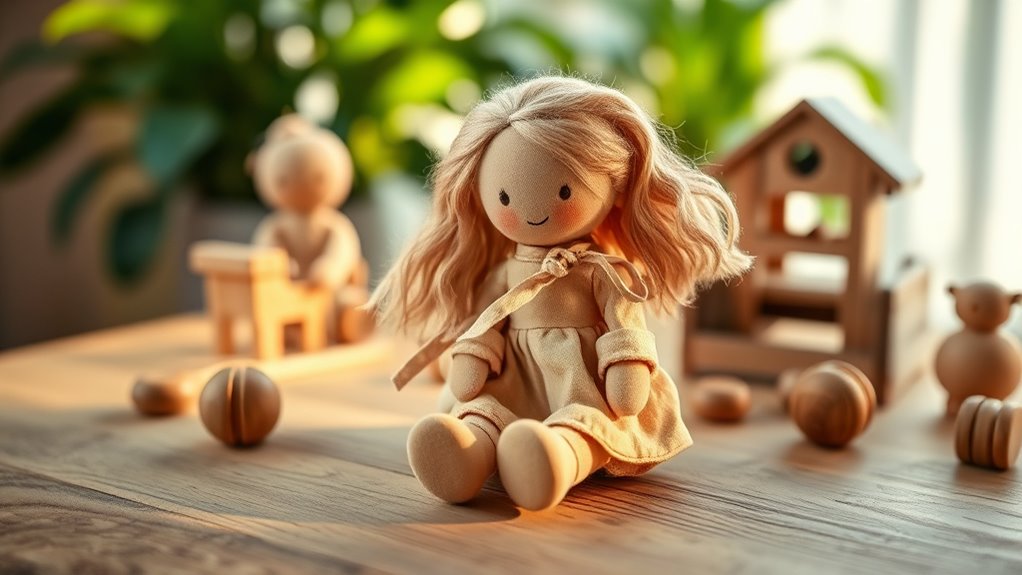

In Waldorf education, doll play plays a crucial role in nurturing your child’s emotional, social, and imaginative skills. You’ll notice that natural, handcrafted dolls encourage your child to engage sincerely, helping them process feelings, develop empathy, and practice caring. These simple toys foster creativity and emotional awareness while promoting respect for craftsmanship and sustainability. To understand how this gentle, meaningful play supports your child’s growth, keep exploring the benefits it offers.
Key Takeaways
- Doll play fosters imagination, emotional growth, and social skills through nurturing activities with natural, handcrafted dolls.
- It helps children process emotions and build empathy by caring for dolls, mirroring real relationships.
- Waldorf dolls’ simple, natural materials promote calming play and emotional regulation.
- Engaging with handcrafted dolls encourages appreciation of craftsmanship, authenticity, and sustainability.
- Doll play supports emotional awareness, resilience, and social understanding essential for healthy development.
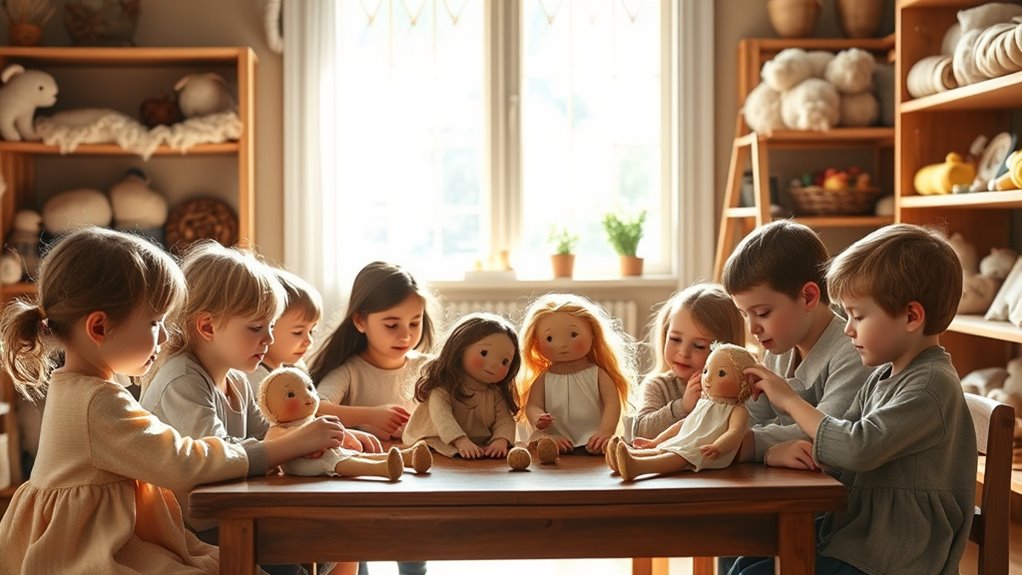
Doll play holds a special place in Waldorf education because it nurtures children’s imagination, emotional development, and social skills. When you choose dolls crafted with care, you’re giving your child more than just a toy—you’re providing a tool that encourages creative storytelling and emotional growth. Waldorf teachers emphasize the importance of using simple, natural dolls made from high-quality materials, often emphasizing doll craftsmanship that highlights softness, durability, and a gentle appearance. These dolls often have minimal features, allowing your child’s imagination to fill in the details, fostering a deep connection between the child and the doll.
Choosing simple, natural dolls nurtures imagination and emotional connection in children.
As your child engages in doll play, they begin to process and understand their emotions more effectively. The act of caring for a doll—feeding, dressing, comforting—mirrors real-life relationships, helping your child develop empathy and emotional awareness. The simplicity of Waldorf dolls, often lacking harsh colors or synthetic elements, helps children focus on genuine feelings rather than distractions. Through this play, they learn to identify and express their own emotions, making doll play a crucial part of their emotional development.
You’ll notice that when your child interacts with these dolls, they often project their feelings and experiences onto them. This projection isn’t just play; it’s a form of emotional regulation. By nurturing their dolls, children practice kindness, patience, and understanding. They may also work through fears or conflicts by acting out scenarios, gaining insight into their own emotional worlds. The natural materials and thoughtful craftsmanship of Waldorf dolls create a calming, inviting environment that supports this emotional exploration. The tactile experience of soft wool, cotton, or silk helps children feel grounded and secure during these moments.
Furthermore, doll craftsmanship plays a role in how your child perceives beauty and simplicity. The gentle, handcrafted appearance of Waldorf dolls helps children appreciate the value of careful work and authentic materials. This appreciation can foster a sense of respect and gratitude, enriching their emotional intelligence. Additionally, the use of sustainable materials in doll making aligns with the values of eco-conscious education, promoting awareness of environmental impact from an early age. As they develop attachments to their dolls, they learn to nurture and care, building foundational social skills that will serve them well in relationships later on.
Ultimately, doll play in Waldorf education isn’t just about having fun; it’s a meaningful activity that promotes emotional development and social understanding. When you introduce well-crafted, natural dolls into your child’s playtime, you’re supporting their growth in empathy, resilience, and self-awareness—all essential skills that will benefit them throughout their lives.
Frequently Asked Questions
How Do Waldorf Dolls Differ From Commercial Dolls?
Waldorf dolls differ from commercial dolls because they are handmade with craftsmanship and use natural materials like wool and cotton. You’ll notice they have simple, soft features that encourage imaginative play, unlike mass-produced dolls with bright, plastic parts. These dolls promote a gentle, nurturing experience and are designed to be safe and eco-friendly, helping children develop creativity and emotional connection through their natural, high-quality construction.
Can Children With Special Needs Benefit From Waldorf Doll Play?
Imagine a child’s world as a garden, where each doll helps nurture growth. Children with special needs can truly benefit from Waldorf doll play, as it supports sensory integration and encourages social interaction. I once watched a shy child open up as she gently cradled a soft doll, illustrating how these dolls foster emotional understanding and connection, making play a healing, inclusive experience for every child.
Are Waldorf Dolls Suitable for All Age Groups?
Waldorf dolls are suitable for all age groups because they promote age-appropriate play and support developmental benefits. Young children use them for imaginative and nurturing activities, helping develop social skills and emotional awareness. Older kids and adults can use these dolls for creative storytelling or therapeutic purposes. Their simple design encourages open-ended play, making them versatile tools that grow with you and adapt to various developmental needs.
How Do Waldorf Dolls Influence Children’s Emotional Development?
Think of Waldorf dolls as gentle bridges to your child’s heart. They nurture emotional empathy by inviting your child to imagine, care, and connect deeply. Playing with these dolls helps develop nurturing skills as children learn to understand and respect feelings, building a foundation for healthy relationships. As your child engages with the dolls, they grow more emotionally aware and compassionate, shaping their ability to empathize with others.
What Materials Are Traditionally Used in Making Waldorf Dolls?
You’ll find that traditional Waldorf dolls are made from natural materials like cotton or wool for the body and hair, and often wool or silk for clothing. These dolls are crafted using handcraft techniques such as hand-sewing and knitting, which give each doll a unique, gentle feel. The use of natural materials and careful craftsmanship encourages a nurturing, imaginative play experience that supports emotional development in children.
Conclusion
So, next time you see a child lovingly cradling a doll, remember—they’re not just playing; they’re building empathy, nurturing imagination, and practicing life’s grandest roles. It’s like watching tiny actors preparing for life’s big stage—minus the spotlight, of course. In Waldorf education, doll play isn’t just a game; it’s a masterclass in emotional intelligence, all wrapped in a cozy blanket of childhood wonder. Who knew playing house could be so profoundly educational?