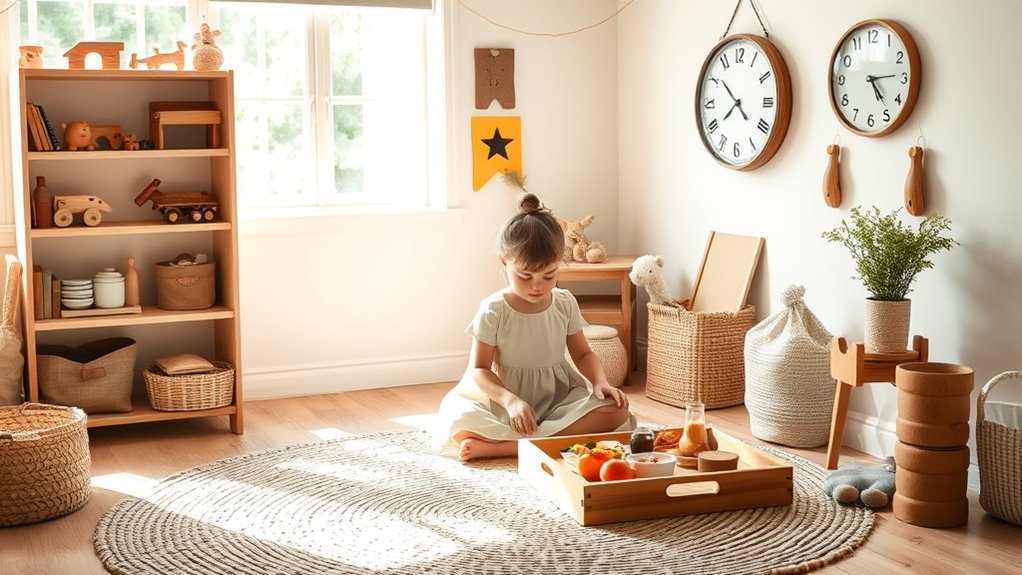

Establishing a gentle, consistent rhythm and routine at home creates a peaceful environment that nurtures your child’s natural development. Start with calming morning activities like shared breakfast and simple routines to set a stable tone for the day. Incorporate outdoor explorations and creative crafts to foster curiosity and connection with nature. Keeping these practices steady helps your child feel secure and calm. To explore how to weave these rhythms into your day, keep going and discover more ways to create harmony at home.
Key Takeaways
- Establish consistent daily routines to create stability, security, and a gentle start aligned with Waldorf principles.
- Incorporate grounding activities like shared breakfast and calming transitions to set a peaceful tone for the day.
- Include outdoor nature walks to foster mindfulness, observation, and connection with the environment.
- Integrate relaxed, unstructured creative crafts using natural materials to nurture artistic expression and inner growth.
- Maintain a predictable rhythm that balances learning, play, rest, and creative activities for holistic development.
Have you ever wondered how establishing a consistent rhythm and routine at home can transform your daily life? When you create a predictable structure, your days feel smoother, and your children know what to expect, which fosters a sense of security and calm. One way to do this is by incorporating intentional activities that balance learning, play, and rest, much like the Waldorf approach. Think about starting your mornings with simple, grounding routines—perhaps a shared breakfast followed by some calming moments. This sets a gentle tone for the day and helps everyone settle into a rhythm.
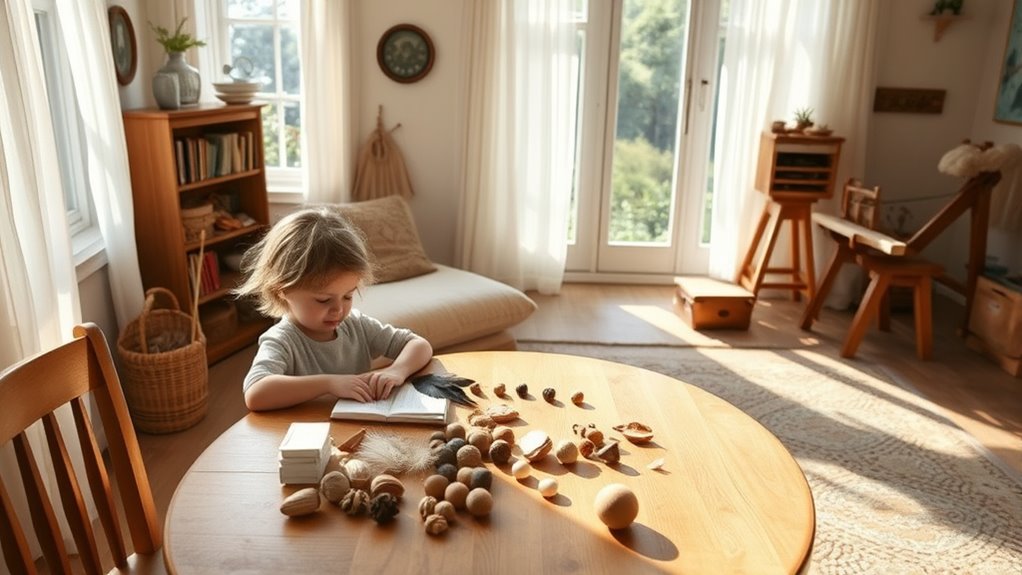
In the afternoons, you might engage in nature walks, which serve as both a physical activity and a time to connect with the environment. During these walks, you can encourage your children to observe the changing seasons, listen to the sounds of birds, or collect natural objects like leaves and stones. These outings don’t have to be lengthy; even a short stroll around your neighborhood or a nearby park can refresh everyone’s mind and body. Nature walks help cultivate mindfulness and appreciation for the world around you, reinforcing a peaceful rhythm that becomes a natural part of your day.
Following outdoor time, shifting into creative crafts can deepen the day’s routine. Creative crafts allow your children to express themselves and develop fine motor skills while also winding down from more active pursuits. You might gather simple supplies like paper, paints, natural materials from your walks, or clay, and set aside dedicated craft time. The key is to keep it relaxed and unstructured enough for your kids to explore freely, but with enough consistency to become a cherished part of your daily rhythm. These crafts don’t need to be perfect; they’re about the process, not the product, which aligns with the Waldorf philosophy of nurturing creativity and inner development. Incorporating color accuracy considerations into your craft choices can enhance the visual experience and inspire your children’s artistic expression.
Frequently Asked Questions
How Can I Adapt Waldorf Routines for Different Ages?
You can adapt Waldorf routines for different ages by selecting age-appropriate activities that match each child’s developmental stage. Incorporate seasonal adjustments to keep activities relevant and engaging, like outdoor play in spring or cozy crafts in winter. For younger children, focus on simple, sensory experiences, while older kids can handle more complex projects. Flexibility is key—adjust routines as your children grow to nurture their natural curiosity and creativity.
What Are Some Common Challenges in Establishing a Waldorf Rhythm?
Like steering a gentle stream, establishing a Waldorf rhythm can face challenges. You might struggle with setting realistic expectations, feeling overwhelmed as the flow isn’t as smooth as you’d like. Balancing chores while maintaining a peaceful routine often feels like walking a tightrope. Staying flexible, patient, and mindful helps you adapt, allowing your daily rhythm to flourish naturally, much like a garden blossoming with care and gentle guidance.
How Flexible Should the Daily Schedule Be?
You should aim for a balance of flexibility and routine adaptation in your daily schedule. While having a consistent rhythm helps children feel secure, being flexible allows you to respond to their needs and natural energy levels. Adjust activities when necessary, keeping core elements in place. This approach fosters a nurturing environment where routines support growth, but adaptability keeps the day enjoyable and responsive to your child’s changing interests.
How Do I Incorporate Outdoor Activities Into the Routine?
A stitch in time saves nine—so, make outdoor activities a regular part of your day. You can incorporate nature walks and garden play by setting aside specific times for these activities, allowing your child to explore freely. Keep it simple and joyful, letting them connect with nature at their own pace. This will enrich their routine and foster a love for the outdoors while keeping daily rhythm balanced.
What Materials Are Essential for a Waldorf-Inspired Home Environment?
You need natural fibers like wool, cotton, and silk to create a warm, inviting Waldorf-inspired home environment. Incorporate handcrafts such as simple woodworking, knitting, or felting to foster creativity and mindfulness. Use open-ended, timeless toys made from natural materials, and choose soft, earthy colors to promote calmness. These essentials help nurture your child’s imagination, sensory development, and connection to nature in a cozy, nurturing space.
Conclusion
By establishing a steady rhythm and routine at home, you create a nurturing environment where your child can thrive. Consistency helps everything run smoothly, like clockwork, and provides a comforting sense of security. Remember, while plans are important, flexibility is key—sometimes you need to roll with the punches. With patience and intention, your daily flow will become second nature, turning chaos into harmony and making the journey more enjoyable for both of you.