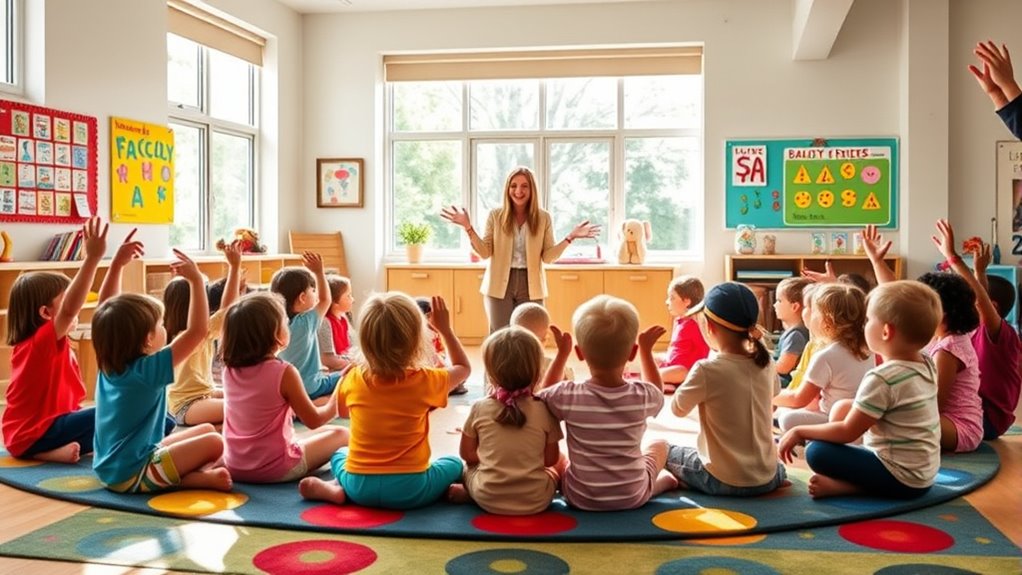

Circle time songs and verses are powerful tools to engage children and create a lively, interactive environment. They help capture attention through music, movement, and storytelling, which support social and emotional growth. Using familiar tunes or introducing new ones related to lesson themes makes learning fun and memorable. Incorporating gestures and participation encourages active involvement. Keep exploring how these activities can enrich your circle time and make lessons more meaningful for children.
Key Takeaways
- Circle time songs and verses create an engaging, interactive environment that captures children’s attention and encourages participation.
- Incorporating music enhances social, emotional, and language development through storytelling and expressive activities.
- Using familiar tunes with added verses supports learning of concepts like numbers, colors, and social skills subtly.
- Storytelling techniques in songs make lessons memorable, fostering emotional connections and better understanding.
- Data-driven insights can personalize song choices, increasing relevance and effectiveness for children’s developmental needs.
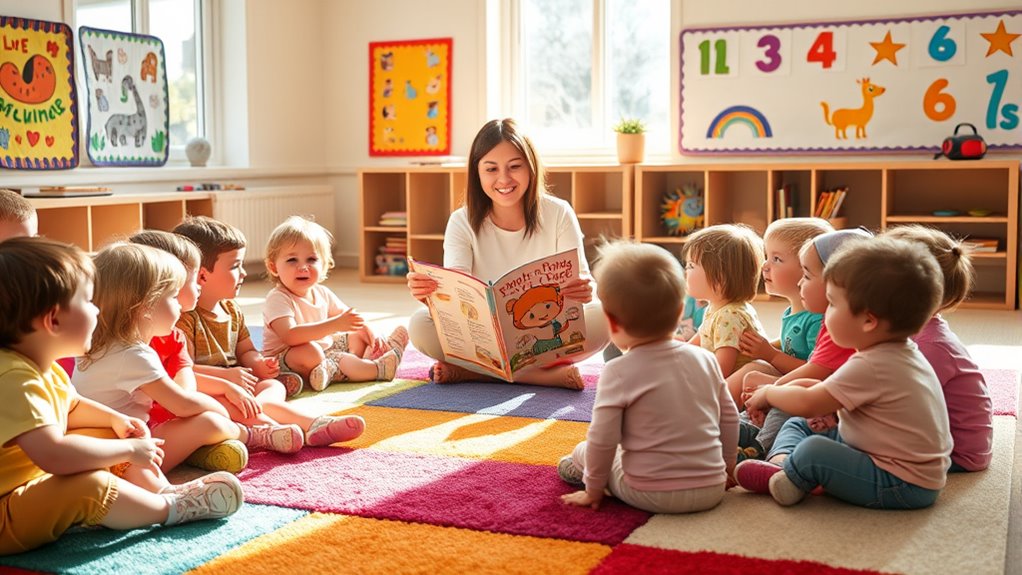
Circle time songs and verses are essential tools for engaging young children and creating a lively, interactive learning environment. When you incorporate music activities into your circle time, you instantly capture their attention and foster a sense of excitement. These activities aren’t just about singing; they’re about weaving rhythm, melody, and movement into your daily routine to enhance learning and social development. Using storytelling techniques through songs and verses can help children connect emotionally with the content, making lessons memorable and meaningful. Songs often tell stories or convey messages in a way that words alone can’t achieve, helping children develop language skills, comprehension, and imagination.
When you plan your circle time, think of it as a stage where music activities serve as both entertainment and education. You might start with a familiar song that children already love, then gradually introduce new verses or melodies related to your lesson theme. This approach keeps children engaged while subtly reinforcing concepts like numbers, colors, or social skills. As you introduce storytelling techniques within your songs, you can add expressive gestures, facial expressions, and pauses to emphasize important parts of the story. This makes the experience dynamic and encourages children to participate actively. They learn not only through listening but also by mimicking expressions and movements, which boosts their understanding and retention.
Using storytelling techniques in your music activities can also help children process complex ideas or emotions. For example, a song about sharing can include characters facing conflicts and resolutions, making the lesson relatable. When you incorporate storytelling elements into your singing, it transforms simple melodies into engaging narratives that children can follow and remember. This method also promotes language development, as children pick up new vocabulary and sentence structures naturally through context. The key is to keep the storytelling simple, lively, and interactive—encouraging children to sing along, act out parts, or share their own ideas related to the story.
Additionally, integrating predictive analytics insights into your song choices and storytelling themes can help tailor activities to better meet the needs of your children, making learning even more effective. Ultimately, the power of circle time songs and verses lies in their ability to create a warm, inclusive atmosphere. When children feel involved and entertained, they’re more receptive to learning. Combining music activities with storytelling techniques makes the experience richer and more impactful. You’ll find that children not only enjoy their time in the circle but also develop vital skills such as listening, cooperation, and expressive language. The more you incorporate engaging songs and stories into your routine, the more you foster a love for learning that can last a lifetime.
Frequently Asked Questions
How Can Songs Enhance Children’s Social Skills During Circle Time?
Songs boost children’s social skills during circle time by encouraging musical interactions that promote teamwork and cooperation. As you sing together, kids learn to take turns, listen, and respond, which strengthens their emotional development. These shared experiences help children build friendships, develop empathy, and feel more connected to their peers, making circle time a lively, nurturing environment where social skills flourish naturally through the joy of music.
What Are Some Culturally Diverse Songs Suitable for Circle Time?
Imagine a world woven with diverse melodies—this is what multicultural lyrics bring to your circle time. You can incorporate songs from different cultures, featuring lively rhythms and meaningful words, to celebrate diversity. Songs with multicultural lyrics not only teach children about various traditions but also foster inclusion. By choosing these songs, you turn your circle time into a vibrant tapestry of shared stories, making every child’s background a valued part of the learning journey.
How Often Should Circle Time Songs Be Rotated or Updated?
You should rotate your circle time songs every few weeks to keep children engaged and introduce new cultural elements. Updating frequency depends on your class’s interests and diversity, but generally, every 3 to 4 weeks works well. This approach helps prevent boredom, encourages curiosity, and provides opportunities to explore different traditions. Regular song rotation also allows you to incorporate new songs that reflect your classroom’s evolving cultural and developmental needs.
Are There Specific Songs Recommended for Children With Special Needs?
Think of adaptive melodies as gentle rivers flowing to meet every child’s unique needs. For children with special needs, choose songs that promote sensory integration, like those with soft rhythms and repetitive lyrics. Look for tunes that encourage participation and comfort, such as familiar lullabies or simple, melodic chants. These songs help create a welcoming environment, allowing every child to feel included and engaged in the circle, like pieces of a puzzle fitting perfectly together.
How Can Parents Incorporate Circle Time Songs at Home Effectively?
You can incorporate circle time songs at home by making music integration fun and consistent. Start with simple, familiar tunes to reinforce routines and create a sense of familiarity. Sing along during daily activities like mealtime or cleanup to boost engagement. Use hand gestures or movements to enhance interaction, and encourage your child to participate actively. This approach helps reinforce routines and makes learning enjoyable, strengthening your bond through shared musical moments.
Conclusion
Incorporating circle time songs and verses creates a joyful, engaging environment where children feel connected and enthusiastic to participate. These moments foster social skills, language development, and a sense of community. Remember, a song a day keeps boredom away, and it’s true—music is the universal language that brings everyone together. So, keep singing, keep sharing, and watch your little ones blossom in the warmth of each shared rhyme.