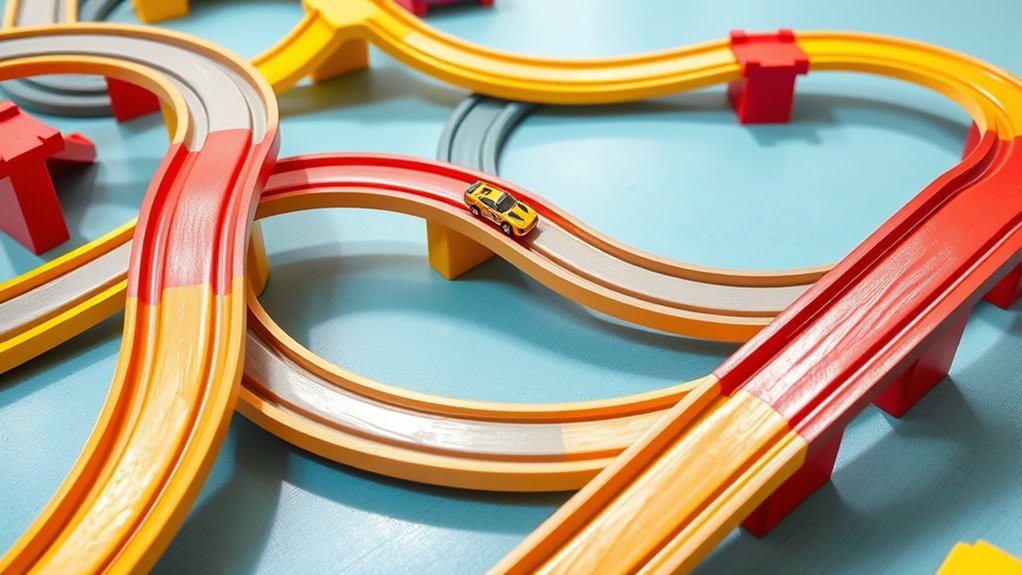

Vehicle play with tracks, ramps, and cause-and-effect concepts helps you boost your child’s coordination, critical thinking, and understanding of physics. As they experiment with different track setups and ramps, they learn how speed, gravity, and direction work, all while enjoying realistic engine sounds that make play more immersive. This hands-on approach fosters curiosity and safe exploration, turning fun into educational moments. Keep exploring to discover more ways to make play both exciting and instructive.
Key Takeaways
- Building and adjusting tracks and ramps promotes problem-solving and understanding of physics principles like speed and gravity.
- Manipulating ramps demonstrates cause-and-effect relationships, enhancing critical thinking during vehicle play.
- Realistic engine sounds increase engagement and help children learn about vehicle mechanics and motion.
- Ensuring safety and supervision allows children to explore track configurations confidently without risk.
- Experimenting with different track setups fosters curiosity, creativity, and educational exploration of vehicle behavior.

Have you ever wondered how vehicles can turn playtime into an exciting adventure? When your child manipulates toy cars on tracks and ramps, they’re not just having fun; they’re also developing essential skills like coordination, problem-solving, and understanding cause and effect. As you watch them race cars along winding tracks or send them flying down ramps, you might notice the engine sounds of their toy vehicles. These sounds add a layer of realism, making the play experience more immersive and engaging. The engine noise mimics real vehicles, capturing your child’s attention and encouraging imaginative play. It’s important, though, to keep safety precautions in mind. Ensure that the toys are age-appropriate, with no small parts that could pose choking hazards. Regularly inspect tracks and ramps for stability and wear to prevent accidents. When children are actively involved in setting up tracks or adjusting ramps, supervise them closely to avoid injuries, especially if they’re using miniature vehicles with moving parts.
Creating a safe environment means keeping small parts out of reach of younger siblings and making sure the play area is free of obstacles that could cause trips or falls. Additionally, when kids are excitedly pushing toy cars around, remind them to be cautious about loud engine sounds that might be startling or overwhelming, especially for younger children or those with sensitivities. If the toy vehicles have realistic engine noises, consider playing soft background music or providing a quiet space nearby to help balance the sensory experience. The sounds can also serve as a tool for teaching your child about the different types of engines and how they work, turning playtime into an educational moment. Understanding engine sounds can enhance your child’s learning about vehicle mechanics and physics.
As your child experiments with various tracks, ramps, and cause-effect scenarios, they learn how different actions produce different results. For example, changing the angle of a ramp might make a car go faster or slower, or adding a curve can change the direction. These experiences help develop critical thinking and understanding of physical principles. Remember, the goal is to encourage safe, imaginative play that sparks curiosity and learning. By incorporating safety precautions and being attentive to engine sounds, you make sure their playtime remains both fun and secure. So, set up those tracks, supervise play, and watch as every race and crash becomes a memorable, educational adventure.
Frequently Asked Questions
What Are the Best Materials for Durable Vehicle Tracks?
You should choose durable vehicle tracks made from sturdy plastics like ABS or polypropylene, which excel in durability testing and resist wear. These materials are lightweight, safe, and withstand rough play, ensuring longevity. Avoid materials that crack or splinter easily to maintain safety and durability. Always check for proper material safety certifications to ensure your child’s play environment stays secure and durable over time.
How Can Ramps Help Develop Fine Motor Skills?
Ramps act like little bridges, helping you develop fine motor skills by offering balance challenges that boost coordination. As you grasp and position vehicles on ramps, you refine your hand-eye coordination and spatial awareness, making your movements more precise. Traveling on ramps encourages steady control and patience, turning play into a journey of skill-building. This active engagement strengthens your ability to manage small, delicate movements with confidence and finesse.
What Safety Considerations Are Important for Vehicle Play?
When engaging in vehicle play, guarantee safety by using appropriate safety gear like helmets and pads. Keep a close eye on children with active supervision, especially around ramps and tracks. Supervision tips include setting clear boundaries, checking equipment for damage, and teaching kids to play gently. These precautions help prevent accidents, ensuring a fun and safe experience as they explore cause-and-effect through vehicle play.
How Does Vehicle Play Promote Problem-Solving Skills?
Vehicle play promotes problem-solving skills by encouraging you to engage in creative engineering, designing tracks and ramps that work together. As you experiment with different setups, you develop spatial reasoning, understanding how parts fit and move. You learn to troubleshoot when things don’t work, fostering critical thinking. This hands-on activity pushes you to think creatively and logically, strengthening your ability to solve complex challenges through trial, error, and innovative solutions.
Are There Age-Specific Recommendations for Vehicle Play Sets?
Yes, there are age-specific recommendations for vehicle play sets. You should choose age-appropriate toys that match your child’s developmental milestones, ensuring safety and engagement. For younger children, look for simple ramps and large vehicles to develop motor skills and coordination. As they grow, opt for more complex tracks and cause-and-effect toys to challenge their problem-solving abilities and fine motor skills, supporting their ongoing growth and learning.
Conclusion
As you watch your little one explore vehicle play, remember it’s like planting seeds in a garden. Each track, ramp, and cause-and-effect moment helps their imagination grow stronger and their understanding deepen. Keep encouraging these adventures, and you’ll witness their confidence and creativity blossom like a vibrant flower. So, continue nurturing their curiosity—because every turn and drop is a step toward a world of endless possibilities.