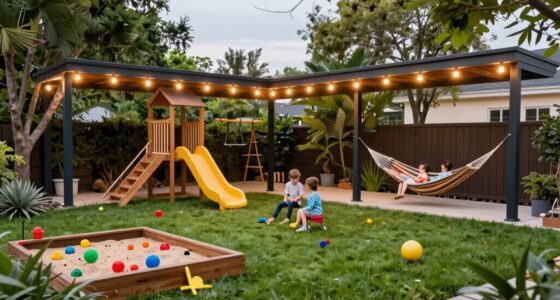

To use parks more intentionally for child development, plan visits with diverse features like wooded areas and water for exploration. Encourage children to observe insects, plants, and animals, using tools like magnifiers or binoculars. Foster social skills by guiding them to share, take turns, and greet peers. Set purposeful goals, such as finding specific items or introducing themselves. Involve kids in park chores to teach responsibility and community engagement. Keep exploring these strategies to maximize your child’s growth.

Turn the school run and nap time into listening time
- Thousands of audiobooks, podcasts and originals
- Listen on your phone, tablet or Echo — also offline
- Cancel anytime
Key Takeaways
- Plan visits to parks with diverse features to promote exploration and observation skills.
- Set specific goals, like finding natural items or introducing peers, to encourage purposeful engagement.
- Incorporate nature-based activities and guided questions to foster curiosity and critical thinking.
- Engage children in park chores to teach responsibility and community involvement.
- Model positive social behaviors and facilitate interactions to develop social skills intentionally.
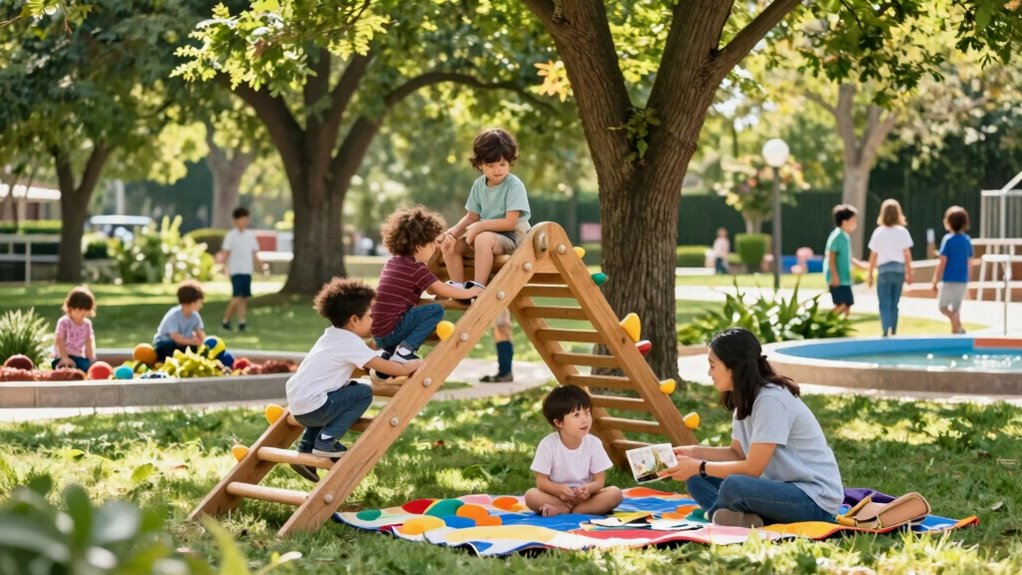
Parks offer a valuable space for fostering your child’s development, providing opportunities for physical activity, social interaction, and creativity. When you visit regularly, you can intentionally use these outings to encourage nature exploration and social skill building. Start by planning visits to diverse parks with different features, such as wooded areas, open fields, or water bodies. These environments naturally invite your child to explore and discover, sparking curiosity about nature. Encourage them to look for insects, plants, or animals, asking questions that prompt observation and critical thinking. This kind of nature exploration helps your child develop a deeper understanding of their environment and nurtures their sense of wonder.
As your child interacts with others in the park, you have a chance to support their social skill building. Instead of simply watching, engage actively by encouraging sharing, taking turns, and cooperative play. For example, if your child wants to swing or use the slide, suggest taking turns or inviting another child to join in a game. Use these moments to model positive social behaviors and guide your child in understanding social cues, like greeting new friends or responding to others’ feelings. Over time, these small interactions become foundational for your child’s ability to navigate social situations confidently.
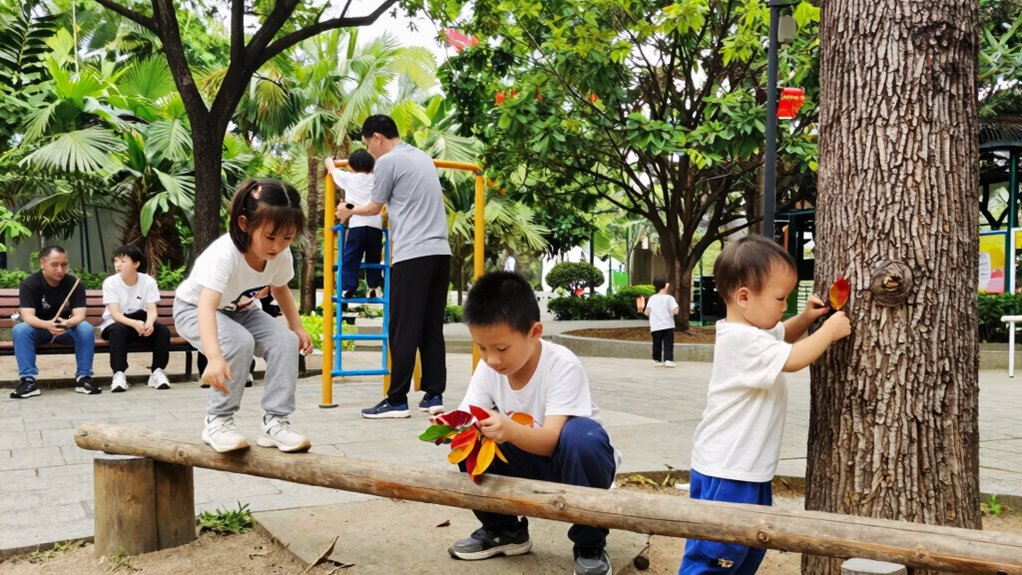
To make your park visits more purposeful, set small goals related to nature exploration and social skills. For instance, challenge your child to find three different types of leaves or to introduce themselves to at least one new friend. When they succeed, celebrate their efforts to reinforce positive behavior. Additionally, bring tools like magnifying glasses or binoculars to deepen their engagement with nature. These tools not only make exploration more exciting but also encourage patience and focus. Incorporating nature-based activities into your outings can further enrich their learning experience. Engaging your child in guided observation and reflection can deepen their understanding and appreciation of nature’s intricacies.
Involving your child in simple park chores, like picking up litter or watering plants, can further instill responsibility and teamwork. These activities promote cooperation and a sense of community, strengthening their social skills in a real-world context. Remember, the key is consistency and intentionality. By making your park outings purposeful—focused on exploring nature and building social skills—you’re creating meaningful opportunities for your child’s growth. Over time, these experiences will become valuable building blocks for their emotional, social, and cognitive development.
children's magnifying glass for nature exploration
As an affiliate, we earn on qualifying purchases.
As an affiliate, we earn on qualifying purchases.
Frequently Asked Questions
How Can Parks Support Children With Special Needs?
You can support children with special needs in parks by choosing places with inclusive equipment and sensory-friendly features. These adaptations allow children to explore and play comfortably, regardless of their abilities. By engaging with parks that prioritize accessibility and sensory considerations, you help create an inclusive environment where all children can develop social skills, confidence, and physical strength. Your proactive approach fosters a sense of belonging and promotes positive growth for every child.
What Safety Precautions Should Parents Take in Parks?
You should prioritize supervision strategies, constantly watching your child and staying close. Research suggests that active supervision reduces accidents considerably. Be aware of potential hazards like uneven surfaces, sharp objects, or playground equipment risks. Teach your child about safe play, stay within sight, and avoid distractions like phones. By staying vigilant and aware of hazards, you guarantee a safer park experience, helping your child explore confidently while minimizing injury risks.
How Do Parks Influence Social Skills Development?
Parks foster social interaction by providing a natural setting for your child to engage with peers, encouraging sharing, cooperation, and communication. These interactions boost emotional growth as your child learns to navigate conflicts, build friendships, and develop empathy. When you actively encourage outdoor play and group activities, you help your child strengthen social skills, fostering confidence and resilience that benefit them well beyond the park.
Are There Specific Parks Designed for Child Development?
Yes, some parks are specifically designed for child development, featuring specialized playground design and sensory experiences. These parks include equipment that promotes motor skills, creativity, and sensory exploration, such as textured surfaces, interactive elements, and varied heights. By visiting these parks, you give your child opportunities to develop essential skills through play, making their outdoor experience both fun and growth-oriented. Look for parks labeled as developmental or sensory-focused for the best benefits.
How Can Parents Encourage Unstructured Play in Parks?
You can encourage unstructured play in parks by giving your child space for nature exploration and creative improvisation. Let them wander freely, climb trees, or build with natural materials. Offer minimal guidance, so their imagination sparks naturally. Bring along simple tools like sticks or rocks to inspire creative improvisation. Stay nearby to guarantee safety, but give them freedom to explore, experiment, and connect with nature on their own terms.
Conclusion
So, next time you’re at the park, remember it’s more than just a playground. It’s a natural classroom where your child can learn resilience, creativity, and social skills—if you let them. Ironically, the best lessons often come from simply watching them stumble, explore, and get a little dirty. So, step back, breathe, and embrace the chaos. After all, the greatest growth happens when you least expect it—usually right in the middle of a muddy puddle.
Halloween Picks
halloween
As an affiliate, we earn on qualifying purchases.