
Cash register play may look simple, but it actually promotes a range of skills. You help children develop digital literacy by familiarizing them with screens and tools. It enhances their social abilities through interactions like greeting and taking turns. Kids also boost problem-solving, critical thinking, and numeracy by managing transactions and setting prices. Plus, this play builds confidence and independence as they simulate real-life roles. Keep exploring, and you’ll see how these activities support overall growth in a fun way.

Turn the school run and nap time into listening time
- Thousands of audiobooks, podcasts and originals
- Listen on your phone, tablet or Echo — also offline
- Cancel anytime
Key Takeaways
- It develops digital literacy by familiarizing children with screens and digital device functions.
- It enhances social skills like communication, turn-taking, and conflict resolution through role-play.
- It promotes cognitive skills such as problem-solving, decision-making, and basic math through sales activities.
- It boosts confidence and independence as children manage transactions and explore social roles.
- It offers a multi-faceted learning experience that combines technological, social, and cognitive development.
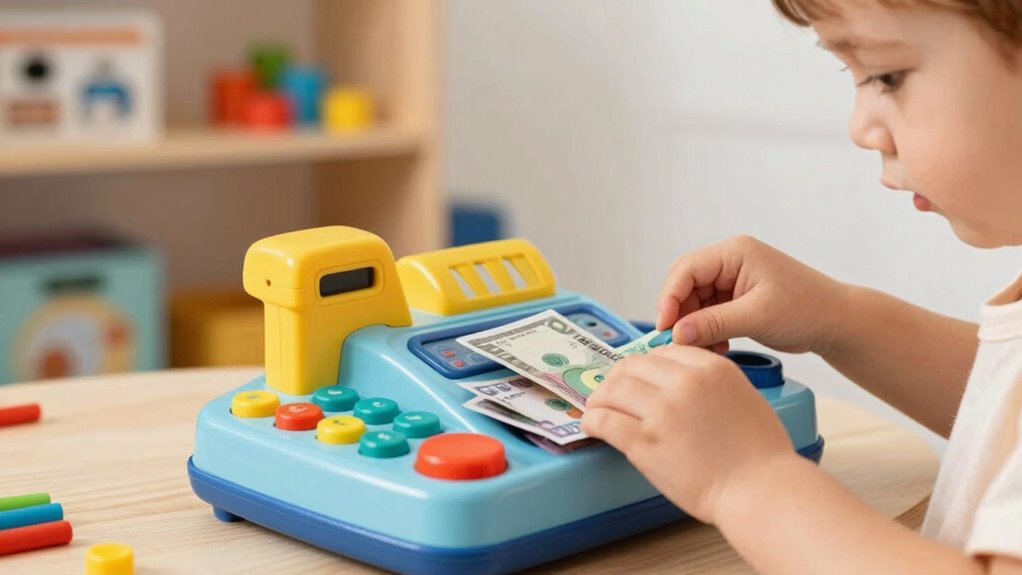
Cash register play offers more than just fun; it helps children develop essential skills that benefit their overall growth. When you watch kids engage with a toy cash register, it might look like simple role-playing, but beneath the surface, they’re building key abilities like digital literacy and social skills. They learn to recognize symbols, follow digital processes, and understand how digital tools work, which is indispensable in today’s tech-driven world. This early exposure helps them understand how digital devices operate, setting a foundation for future technological competence. They learn to navigate screens, recognize symbols, and follow digital processes, making them more comfortable with technology as they grow.
Playing with a toy cash register builds digital skills and confidence through fun role-playing experiences.
Beyond the technical side, cash register play fosters social skills that are essential for personal development. When children pretend to be shopkeepers or customers, they practice communication, turn-taking, and empathy. They learn how to greet others, ask questions, and respond appropriately. These interactions help them understand social cues and develop patience, especially when they wait for their turn or negotiate during play. If they’re playing with friends or family, they’re also learning collaboration and conflict resolution, which are necessary for healthy relationships. Engaging with digital devices during play also encourages children to develop digital literacy, an important skill for navigating modern life. Developing comfort with digital tools early on can significantly ease their transition into more complex technological environments in the future.
This type of play encourages imaginative thinking and problem-solving too. As children decide what to sell, set prices, or handle pretend money, they develop critical thinking skills. They consider different scenarios, make decisions, and adapt their strategies, all of which boost their cognitive flexibility. The act of counting money or giving change strengthens their numeracy skills, making math feel more engaging and meaningful. Additionally, this play can inspire an interest in entrepreneurship, fostering creativity and initiative from a young age.
Furthermore, cash register play nurtures independence and confidence. When kids run their own shop, they take on responsibilities and see their ideas come to life. Successfully managing transactions or creating their own sales strategies gives them a sense of achievement that boosts self-esteem. It’s also a safe space for experimenting with social roles, where they can explore different behaviors and learn from mistakes without real-world consequences. Play-based learning, as seen in these activities, is a powerful way to support multiple areas of development simultaneously.
In essence, what seems like simple toy play actually offers a rich learning environment. It combines the development of digital literacy, social skills, cognitive abilities, and emotional growth. So next time you see your child engaged with a cash register, remember that they’re not just playing—they’re preparing for future success in many areas of life.
toy cash register with digital features
As an affiliate, we earn on qualifying purchases.
As an affiliate, we earn on qualifying purchases.
Frequently Asked Questions
What Age Is Best for Cash Register Play?
You’ll find that children around ages 3 to 6 benefit most from cash register play. During this stage, they enjoy pretend shopping and learn about money, numbers, and social skills. To support their growth, organize your playroom to encourage easy access to the cash register and pretend money. Engaging in pretend shopping helps develop their math skills and creativity, making playtime both fun and educational.
Are There Any Safety Concerns With Toy Cash Registers?
Think of toy cash registers as a double-edged sword—fun and educational but with safety concerns. You should check for safety standards to guarantee the toy is non-toxic and sturdy. Be cautious of choking hazards from small parts or batteries, especially with younger children. Always supervise playtime, and choose age-appropriate models. Safety is the key to making cash register play both enjoyable and secure for your little shopper.
How Can Parents Encourage Educational Play?
You can encourage educational play by actively engaging in your child’s pretend role of a cashier, which promotes social development and understanding of real-world scenarios. Ask questions, introduce new vocabulary, and simulate transactions to make play more interactive. Provide diverse props and encourage your child to take on different roles, fostering creativity and social skills. Your involvement helps turn simple play into valuable learning experiences that develop communication and problem-solving skills.
Do Different Brands Offer Varied Learning Opportunities?
Yes, different brands definitely offer varied learning opportunities through their cash register playsets. You’ll find brand diversity that caters to different ages and skill levels, enhancing your child’s learning potential. Some brands focus on math skills, while others emphasize social interaction or creativity. By exploring various options, you can select a set that best supports your child’s developmental needs, making playtime both fun and educational.
Can Cash Register Play Support Early Math Skills?
Yes, cash register play supports early math skills by encouraging role playing and understanding financial literacy. As you let your child simulate shopping and transactions, they practice counting, addition, and subtraction. This hands-on experience helps them grasp basic money concepts, making math fun and relatable. Plus, role playing boosts social skills and confidence, laying a strong foundation for future learning in math and financial literacy.
Conclusion
So, next time you see a child at the cash register, remember they’re not just playing—they’re building a future. Like tiny architects shaping their world, they’re developing skills that will serve as the foundation of their dreams. This simple game is a seed of confidence, creativity, and understanding, growing silently beneath the surface. Embrace those moments; they’re more than play—they’re the spark that lights the path to tomorrow.
Halloween Picks
halloween
As an affiliate, we earn on qualifying purchases.