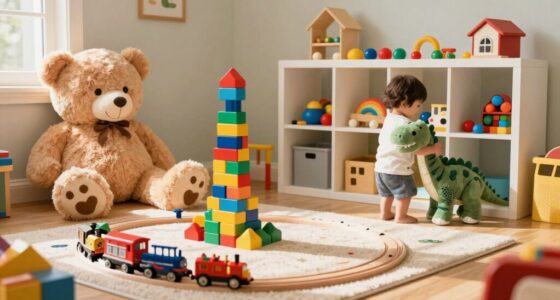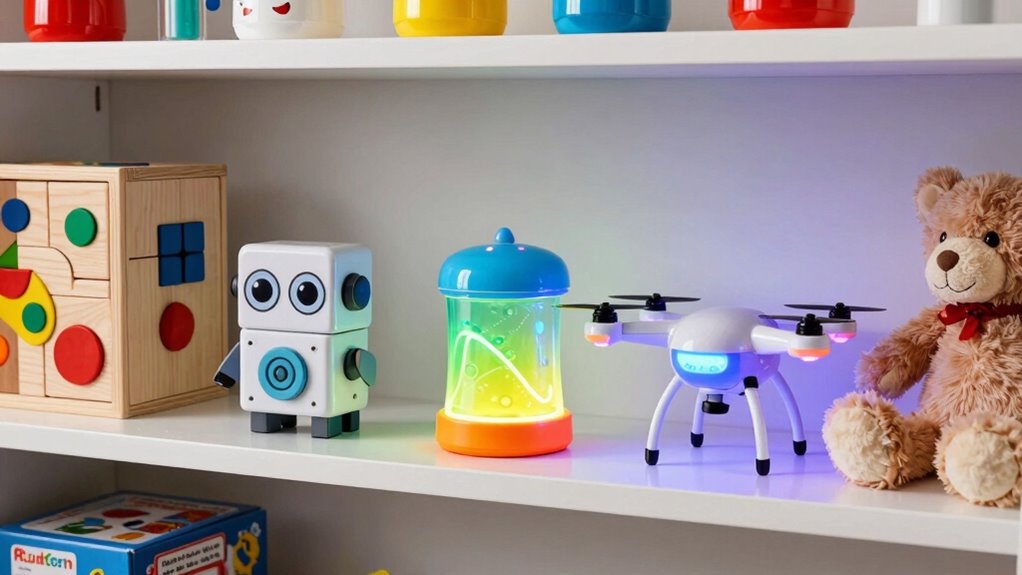

To avoid mistaking trendy toys for truly useful ones, focus on safety standards and developmental benefits over flashy features. Check labels for certifications and steer clear of toys that seem fragile or overly complicated. Look for simple, educational options like puzzles or building blocks that promote problem-solving and creativity. Remember, the most valuable toys support growth without causing frustration. If you want to learn how to spot genuine educational value, keep exploring these helpful tips.

Turn the school run and nap time into listening time
- Thousands of audiobooks, podcasts and originals
- Listen on your phone, tablet or Echo — also offline
- Cancel anytime
Key Takeaways
- Research toy safety standards and certifications to ensure reliability beyond trendy appearances.
- Prioritize toys that promote learning, problem-solving, and creativity over high-tech or flashy features.
- Evaluate if the toy aligns with your child’s developmental stage and interests, not just current fads.
- Avoid impulse buys; choose simple, purpose-driven toys that encourage meaningful play.
- Be skeptical of high price tags or popularity cues, focusing instead on educational and safety value.
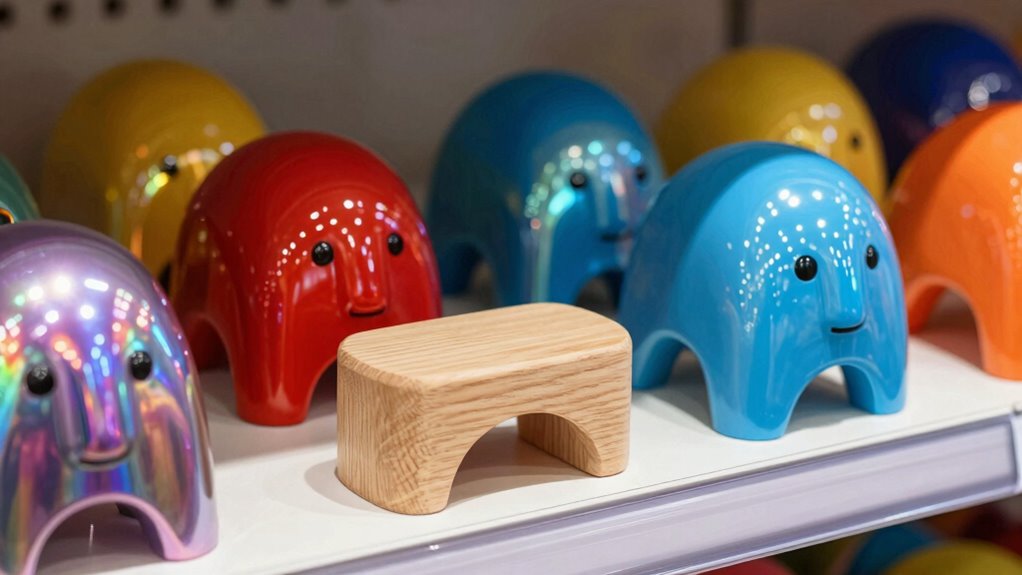
In a market flooded with eye-catching toys that often prioritize trends over actual value, it’s easy to be fooled into thinking that the most popular or flashy options are the most useful. Toy companies often capitalize on current trends, creating products that look exciting but don’t necessarily promote development or safety. As a parent, it’s vital to look beyond the surface and evaluate toys based on their real benefits and adherence to safety standards. One common mistake is falling prey to parenting myths that suggest all brightly colored or high-tech toys are automatically good for your child. These myths can lead you to overlook the importance of age-appropriate and educational toys, which are proven to support learning and growth better than just flashy gadgets.
To avoid this trap, you need to do your homework. Start by researching toy safety standards set by recognized organizations such as the Consumer Product Safety Commission (CPSC). These standards guarantee that toys are free from hazardous chemicals, have no small parts that could cause choking, and are durable enough to withstand typical play. Don’t assume that just because a toy looks safe or is marketed as “child-safe,” it automatically meets these standards. Always check labels and certifications, and be skeptical of toys that seem overly complicated or too fragile. Incorporating safety standards into your toy choices further ensures your child’s well-being during play. Additionally, understanding regulatory compliance can help you distinguish between genuinely safe toys and those that merely appear safe on the surface.
Understanding the difference between trendy toys and genuinely educational ones is another key step. Trendy toys often focus on fleeting fads or high-tech features, which might entertain for a moment but don’t foster critical skills. Useful toys, on the other hand, are those that encourage imagination, problem-solving, and fine motor skills. For example, simple building blocks or puzzles tend to be more beneficial than the latest electronic gadget, even if the gadget is more visually appealing. Remember, children learn best through play that challenges them just enough to grow without causing frustration. Additionally, choosing toys that promote biodiversity awareness can help instill early environmental consciousness, making playtime both educational and meaningful. Recognizing the importance of developmental appropriateness can help you select toys that truly support your child’s growth and learning.
It’s also wise to question the parenting myths that equate expensive or popular toys with better developmental value. Often, the most effective toys are affordable and straightforward, providing endless opportunities for creativity and learning. Focus on your child’s interests and developmental stage rather than what’s trending on social media or what’s heavily advertised. This way, you’re making informed choices, ensuring your child’s safety and enriching their playtime with tools that truly support their growth. In the end, being a discerning parent means prioritizing safety, purpose, and developmental value over fleeting trends.
educational wooden building blocks for toddlers
As an affiliate, we earn on qualifying purchases.
As an affiliate, we earn on qualifying purchases.
Frequently Asked Questions
Are Expensive Toys Always More Useful Than Affordable Ones?
No, expensive toys aren’t always more useful than affordable ones. You should consider the play value, which shows how engaging and educational a toy is, regardless of price. Also, check the brand reputation; trusted brands often produce quality toys that last longer and offer better developmental benefits. Sometimes, affordable toys with high play value and good reputation can be more beneficial for your child’s growth than pricey, trendy options.
How Can I Tell if a Toy Promotes Real Development?
You can tell if a toy promotes real development by observing its impact on sensory stimulation and motor skills development. Did you know that children who engage in sensory-rich activities tend to have better cognitive growth? Look for toys that encourage hands-on exploration, problem-solving, and physical movement. These foster essential skills, making the toy truly beneficial. Avoid trendy toys that focus solely on appearance or entertainment without fostering active learning.
Do Trendy Toys Have Hidden Safety Risks?
Trendy toys can pose hidden safety risks if they haven’t been thoroughly tested for toy safety. To avoid this, you should conduct a trend assessment, checking if the toy meets safety standards and has appropriate age labels. Be cautious of toys with small parts, sharp edges, or toxic materials. Always read reviews and verify certifications to make certain your child’s safety isn’t compromised by fleeting trends.
Should I Prioritize Educational Value Over Entertainment?
You should prioritize educational value over entertainment, especially since studies show children learn best when they engage with toys that balance fun and learning. A strong educational balance fosters development and curiosity. While entertainment keeps kids engaged, focusing on toys that promote skills and creativity guarantees they gain lasting benefits. By choosing toys that blend fun with learning, you help your child thrive both socially and intellectually.
How Often Should I Update My Child’s Toy Collection?
You should update your child’s toy collection every few months, especially as they grow and develop new skills. Focus on age-appropriate choices that promote sensory stimulation and learning. Regular updates keep their interests engaged and help introduce new concepts. Look for toys that challenge their abilities and spark curiosity, rather than just trendy items. This approach guarantees your child benefits from both entertainment and developmental growth.
Conclusion
So, next time you’re tempted by the shiny, trendy toy, remember—true usefulness often isn’t flashy. While a popular toy might catch your eye, it’s the ones that foster creativity, learning, and growth that truly stand out. Don’t let the hype distract you from what really matters. Because in the end, a toy’s value isn’t measured by its trendiness, but by the joy and development it brings. Choose wisely, and watch your child thrive beyond the latest fads.
Fall Picks
fall essentials
As an affiliate, we earn on qualifying purchases.