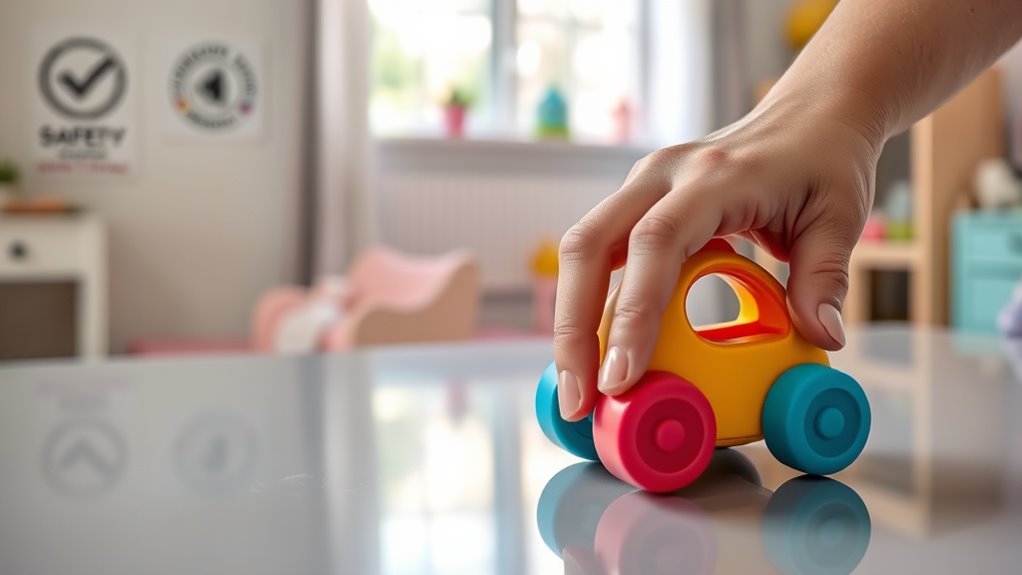

To keep your child safe, focus on toy safety standards by checking labels for age guidance, safety warnings, and hazard symbols. Always inspect toys regularly for damage or loose parts, and avoid giving toys that aren’t suitable for your child’s age. Supervise playtime and create a safe environment to prevent accidents. By understanding these standards, you can better protect your child and choose safer toys—learn more to guarantee every play session is secure.
Key Takeaways
- Always check toy labels for age recommendations and safety warnings to ensure suitability and prevent hazards.
- Look for hazard symbols indicating risks like choking, sharp edges, or toxic materials.
- Regularly inspect toys for damage, loose parts, or broken components before allowing play.
- Follow manufacturer guidance and safety standards to select high-quality, compliant toys.
- Supervise children during play and maintain a safe environment to reduce injury risks.
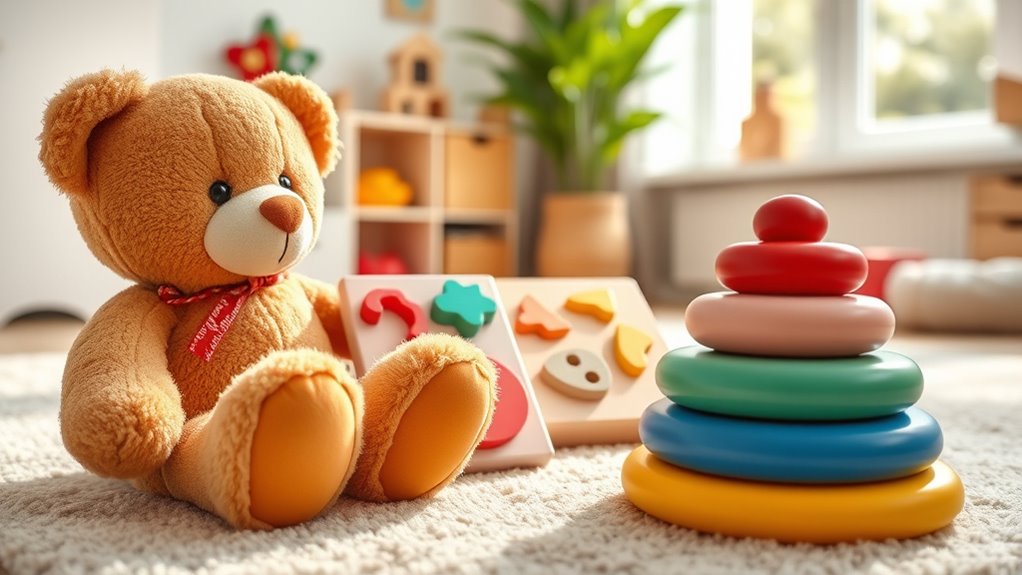
Toy labeling plays a crucial role in guiding you toward safe choices. Manufacturers are required to include clear labels on their products, indicating the appropriate age range, safety warnings, and other important information. These labels help you determine whether a toy is suitable for your child’s age and developmental stage. Pay close attention to age recommendations, as toys designed for older children may contain small parts that are unsafe for younger kids. Conversely, toys labeled for younger children should meet strict safety standards that prevent choking hazards. Always read and follow the labeling instructions carefully, and avoid giving children toys that are not suitable for their age. Labels also often include safety warnings about potential hazards, such as sharp edges or toxic materials, which you should heed to prevent accidents. Incorporating wall organization solutions can help keep play areas safe and clutter-free, reducing the risk of tripping or accidents during playtime.
Additionally, be vigilant about the quality of the toys you buy. Even if a toy has the correct labeling, it’s essential to examine it for any damage or loose parts before giving it to your child. Broken toys with jagged edges or missing pieces can pose safety risks. Regularly inspecting toys helps you identify potential hazards early. Remember, just because a toy is labeled as safe doesn’t mean it’s free from risks; your active supervision and assessment are essential.
Frequently Asked Questions
Are Imported Toys Subject to the Same Safety Standards?
Imported toys are generally subject to the same safety standards as domestically produced ones, but it’s essential to verify for compliance with imported toy regulations and international safety standards. You should look for labels or certifications indicating they meet these standards, such as ASTM or EN71. Always verify that imported toys have been tested and approved to ensure your child’s safety, regardless of where they’re made.
How Do I Identify Recalled Toys in Stores?
You might stumble upon recall notices posted near toys or during store inspections, making it easier to spot recalled toys. Always check for these notices on shelves or displays before purchasing. Stores are required to remove recalled toys promptly, but it’s smart to stay vigilant. Before buying, ask staff or look online for official recall notices to guarantee you’re not bringing home a toy that’s been safety-flagged.
What Age-Specific Safety Guidelines Should I Follow?
You should follow age-specific safety guidelines by choosing age-appropriate toys for your child. Check the packaging for recommended age ranges and avoid toys with small parts for young children to prevent choking hazards. Always supervise play, especially with toys that have sharp edges or batteries. Regularly inspect toys for damage, and follow safety guidelines to make certain your child’s playtime stays safe and enjoyable.
Are There Eco-Friendly Safety Standards for Toys?
Think of eco-friendly safety standards as a gentle shield around your child’s playtime. You should look for toys made from eco-friendly materials and produced through sustainable manufacturing practices. These standards guarantee that toys are free from harmful chemicals and reduce environmental impact. By choosing such toys, you’re nurturing a safer, greener world for your little one, turning play into a responsible and joyful adventure that respects both health and the planet.
How Often Are Toy Safety Standards Updated?
Toy safety standards are typically updated every few years to keep up with new safety research and industry practices. You should check for recent safety certifications and toy testing results to guarantee toys meet the latest standards. Manufacturers often update labels and packaging when standards change, so staying informed helps you choose safe, certified toys for your children. Regularly reviewing updates ensures you’re making the best safety choices.
Conclusion
By keeping these toy safety standards in mind, you gently steer your little one towards joyful, worry-free play. When you choose age-appropriate toys that meet safety guidelines, you’re creating a world where curiosity blossoms without unnecessary risks. Think of it as planting seeds for confident exploration, knowing you’re nurturing their growth with care and vigilance. After all, a safe toy is the quiet guardian of countless happy moments and treasured memories.