
To manage toy rotation efficiently, start by categorizing toys by type or theme and using sturdy, visible storage bins or shelves. Regularly declutter with your child’s input, discarding broken or unused items, and donate others to teach sharing. Store non-current toys out of sight but within easy reach for quick swaps, making rotations seamless. By maintaining a routine and using simple storage solutions, you can keep play areas organized and engaging—learn more to make it even easier.
Key Takeaways
- Categorize toys by type or theme to streamline rotation and maintain order.
- Store non-current toys out of sight but easily accessible for quick switching.
- Schedule regular, brief decluttering sessions involving children to keep toy collections manageable.
- Use clear, labeled containers and color coding to simplify toy identification and rotation.
- Incorporate toy rotation into daily routines to foster responsibility and reduce clutter efficiently.
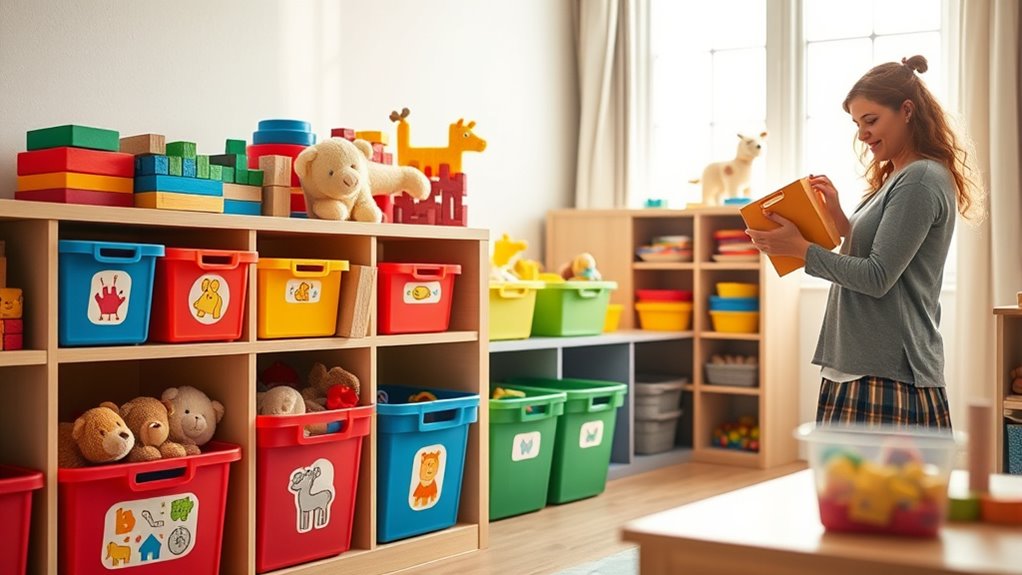
Managing your child’s toy collection can feel overwhelming, especially with a busy schedule. Toys seem to multiply overnight, cluttering every corner of your home and making it hard to keep things organized. To tackle this, finding effective storage solutions is key. Invest in versatile bins, shelves, and clear containers that make it easy for your child to see and access their toys. Labeling bins or using color-coded storage can help your little one know exactly where each type of toy belongs, encouraging independence and reducing clutter. When considering storage options, look for solutions that are sturdy, easy to clean, and fit your available space. This way, you can maintain a tidy environment without sacrificing accessibility.
Once you’ve sorted your storage solutions, it’s time for decluttering tips. Start by setting aside a specific day to go through your child’s toys. Encourage your child to participate in deciding which toys they want to keep, donate, or discard. This not only reduces clutter but also teaches valuable lessons about sharing and organization. Be honest about toys that are broken, missing pieces, or no longer interest your child. Group similar toys together—action figures, puzzles, stuffed animals—and assess if they’re still being played with regularly. If certain toys haven’t been touched in months, consider donating them to a local charity or giving them to friends. Regular decluttering prevents toy overload, making your toy rotation more manageable and your space more organized. Implementing affiliate marketing disclosures and privacy policies can help you stay transparent with your efforts, especially if you share your organization tips online.
After decluttering, categorize the remaining toys based on type or theme. This will make it easier to rotate toys periodically, keeping your child’s interest alive and preventing boredom. When you’re ready to implement toy rotation, store the non-current toys out of sight but within easy reach when it’s time to switch. Use your storage solutions to keep everything neat and accessible, so switching out toys becomes a quick and simple task. Remember, the goal isn’t just to hide clutter but to create a system that works for your busy lifestyle. By regularly decluttering and maintaining your storage solutions, you’ll find it easier to manage your child’s toy collection without feeling overwhelmed. Toy rotation then becomes an effortless part of your routine, helping your home stay organized and your child engaged with fresh, interesting toys.
Frequently Asked Questions
How Do I Start a Toy Rotation System Quickly?
Start a toy rotation system quickly by first organizing your child’s toys into manageable groups. Use clear containers or bins for easy access and label them for quick identification. Select a few toys from each group to keep out, and store the rest in a designated spot. Parent tips include setting a schedule for swapping toys and involving your child in the process to make it fun and engaging.
What if My Child Resists Switching Toys?
You might notice your child resisting toy shifts, which is common. Imagine gently guiding them through the process, like a calming river flow. Use toy transition strategies such as involving your child in choosing which toys to rotate or giving them a special preview. Be patient and consistent, reinforcing positive feelings about new toys. Over time, your child will likely embrace the changes, making toy rotation smoother and more enjoyable.
How Often Should I Rotate Toys?
You should rotate toys every 1 to 2 weeks to keep your child’s interest high and maintain effective toy organization. Regular rotation prevents boredom and encourages child engagement with different toys. Keep an eye on your child’s reactions—if they seem uninterested, try changing the frequency. A consistent schedule makes it easier to manage toy organization and guarantees your child stays engaged with fresh, exciting options.
Can Toy Rotation Reduce Clutter Effectively?
Yes, toy rotation can effectively reduce clutter by keeping toy organization manageable. When you limit the number of toys available at one time, your child focuses on fewer items, making it easier to keep things tidy. Plus, rotating toys keeps playtime fresh and engaging, encouraging better organization habits. By regularly swapping toys, you prevent accumulation and maintain a clutter-free space that’s easier to clean and enjoy.
What Are Budget-Friendly Toy Storage Options?
You can save money by using DIY storage solutions like repurposed bins, crates, or old furniture for toy storage. Budget organizers such as plastic containers, hanging baskets, or stackable boxes work well too. Get creative with inexpensive materials, and you’ll create an organized, clutter-free space without overspending. These options make toy rotation easier and help keep your home tidy, all while staying within your budget.
Conclusion
By rotating toys like a skilled gardener tending to a vibrant garden, you’ll keep your child’s curiosity blooming and their playtime fresh. With each switch, imagine revealing a hidden treasure chest of wonder, sparking their imagination anew. Just as a gentle breeze stirs the leaves, your thoughtful toy rotation breathes life into their world. Embrace this simple rhythm, and watch their joy blossom like a radiant sunrise, brightening every moment you share.