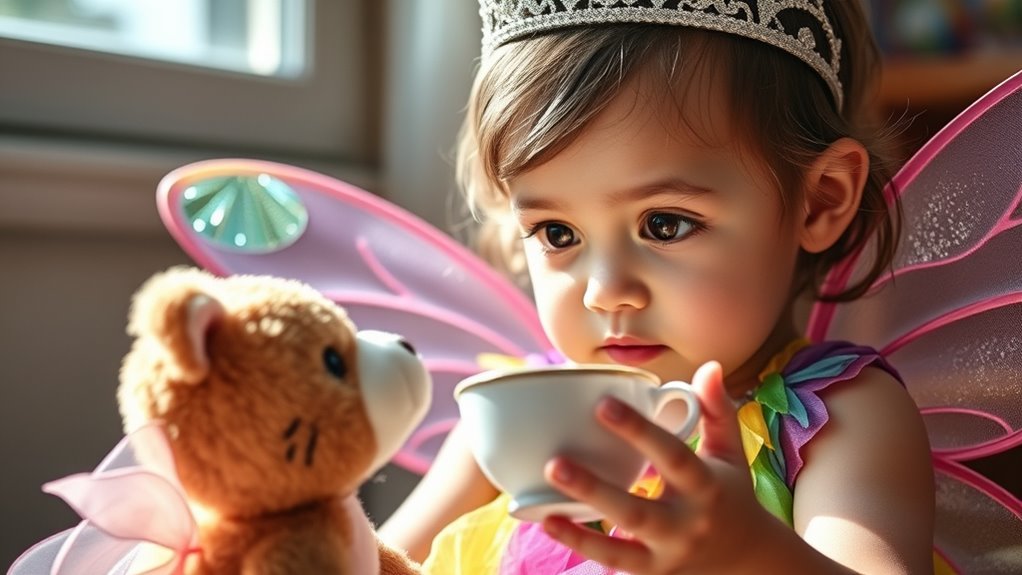

In pretend play, you notice children adopting roles and imagining scenarios, which helps them develop the ability to understand others’ thoughts and feelings. Through this imaginative process, kids practice seeing the world from different perspectives, building their Theory of Mind. They learn to anticipate reactions and recognize that feelings and beliefs can differ from their own. Keep exploring, and you’ll discover how pretend play plays a crucial role in nurturing social understanding and empathy.
Key Takeaways
- Pretend play allows children to simulate scenarios, helping them practice recognizing and understanding others’ mental states.
- Engaging in role enactment enhances children’s ability to consider different perspectives and mental intentions.
- Through pretend scenarios, children learn to interpret social cues, like facial expressions and tone, tied to thoughts and feelings.
- Pretend play fosters emotional understanding, enabling kids to grasp that others may hold different beliefs or desires.
- Regular pretend interactions strengthen cognitive flexibility, improving the ability to read and respond to others’ thoughts during real social situations.
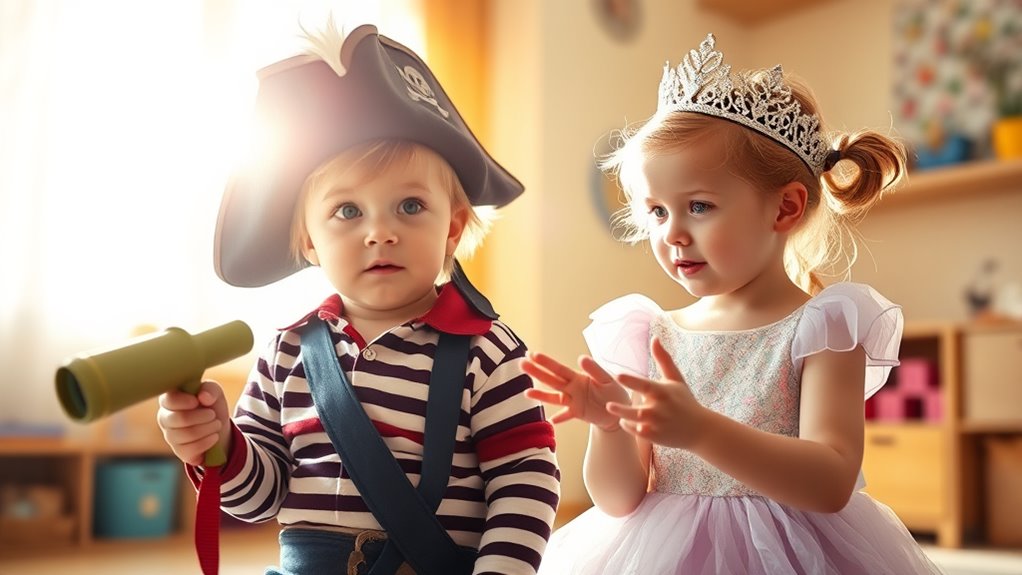
Have you ever wondered how we comprehend that other people have their own thoughts, feelings, and perspectives? It’s a fascinating question that sits at the core of understanding human interaction. When you watch children engage in pretend play, you might notice how naturally they adopt roles, imagine scenarios, and respond as if they truly believe in their make-believe worlds. This ability is closely tied to the development of what psychologists call the theory of mind. Essentially, it’s the capacity to understand that others have their own mental states—beliefs, desires, intentions—that may differ from your own. During early childhood, this skill begins to take shape through a variety of developmental processes, especially social cognition and empathy development.
In pretend play, children actively practice reading others’ thoughts. They might pretend to be a doctor, a teacher, or a superhero, and in doing so, they learn to anticipate how others might react or what they might be thinking. This isn’t just acting out roles; it’s a complex form of social cognition that involves recognizing that friends or siblings have their own perspectives. As children navigate these imaginary worlds, they start to grasp that feelings and beliefs can be different from their own, which is a vital step in developing empathy. Empathy development is about more than just feeling sorry for someone; it’s about understanding their emotional state and responding appropriately. Pretend play provides a safe space for children to experiment with this understanding, allowing them to see the world through others’ eyes without real-world consequences.
Through these role-playing scenarios, children also refine their ability to interpret social cues and context. They learn that someone’s facial expression or tone of voice can reveal what they’re truly thinking or feeling, even if words don’t explicitly say so. This deepens their social cognition, enabling more nuanced interactions as they grow older. As they engage in pretend play, they practice predicting others’ responses, which enhances their overall social understanding. Additionally, engaging in pretend play has been linked to the development of theory of mind, as it encourages children to consider multiple perspectives simultaneously.
Frequently Asked Questions
How Does Pretend Play Develop in Infants?
You’ll notice that pretend play develops in infants as they engage in imaginative play, starting around 12 months. During this time, they begin to mimic actions and assign roles, which helps build social understanding. As they grow, their pretend scenarios become more complex, fostering empathy and theory of mind. This development supports their ability to interpret others’ thoughts and feelings, laying the foundation for richer social interactions.
Can Adults Improve Their Theory of Mind Skills?
Yes, you can improve your theory of mind skills as an adult. Engaging in empathy enhancement activities and perspective-taking exercises helps you better understand others’ thoughts and feelings. Practice listening actively, asking questions, and imagining situations from different viewpoints. These techniques strengthen your ability to read social cues and foster deeper connections, making you more empathetic and socially aware in everyday interactions.
How Is Theory of Mind Different Across Cultures?
You’ll notice that theory of mind varies across cultures due to cultural variations in social norms and communication styles. Cross-cultural differences influence how people interpret intentions, emotions, and beliefs. In some cultures, understanding others’ thoughts is emphasized more, while in others, indirect communication limits explicit mental state recognition. These differences shape how individuals develop and express theory of mind skills, making it a culturally nuanced aspect of social cognition.
What Are Common Signs of Theory of Mind Deficits?
You might notice theory of mind deficits if you see empathy gaps, where you struggle to understand others’ feelings or perspectives. It can also affect social awareness, making it hard to interpret social cues or respond appropriately in conversations. These signs show you may find it difficult to imagine what others think or feel, which can hinder your relationships and social interactions. Recognizing these signs helps you seek support or strategies to improve social understanding.
Does Language Ability Influence Theory of Mind Development?
Language ability is like the bridge that connects you to understanding others’ thoughts, so it definitely influences theory of mind development. As you hit language milestones, you develop stronger cognitive empathy, allowing you to see things from others’ perspectives. When your vocabulary and communication skills grow, you become better at recognizing emotions and intentions, which are essential for reading thoughts during pretend play and social interactions.
Conclusion
Just as Sherlock uncovers hidden clues, you can see how children’s pretend play reveals their developing theory of mind. By understanding others’ thoughts and feelings, they navigate the world with empathy and insight. Remember, nurturing this skill is like planting a seed that blossoms into genuine connection. As in the stories of old, where understanding others led to wisdom, fostering theory of mind helps your child discover the mysteries of human nature, guiding them toward a more compassionate future.