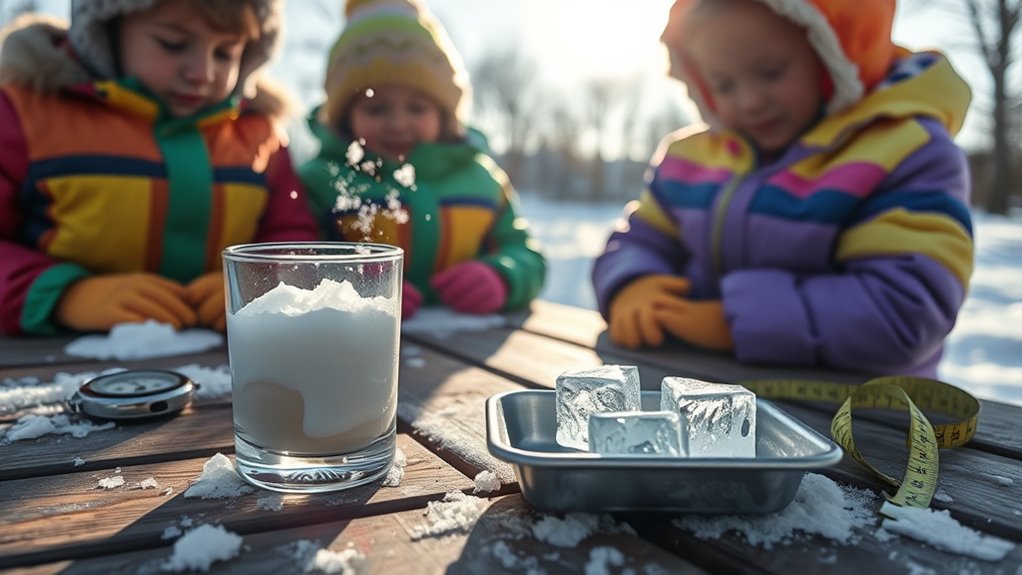

When snow melts, it absorbs heat and turns into water, while freezing releases heat as water becomes ice. You can measure these phase changes by observing temperature, timing how long melting or freezing takes, and using tools like thermometers or simple experiments with snow and ice. Understanding these processes connects to how snow forms and changes naturally. Keep exploring to discover how environmental factors influence snow’s behavior and the amazing science behind it.
Key Takeaways
- Melting snow absorbs heat, changing from solid to liquid, illustrating phase transition and energy transfer principles.
- Freezing releases heat as water turns back into ice, demonstrating the reverse phase change.
- Measuring snow’s temperature and properties helps understand how environmental conditions influence melting and freezing.
- Observing snow’s behavior during melting and freezing explains real-world applications of thermodynamics.
- Scientific experiments with snow illustrate phase changes, energy transfer, and the impact of temperature on ice formation.
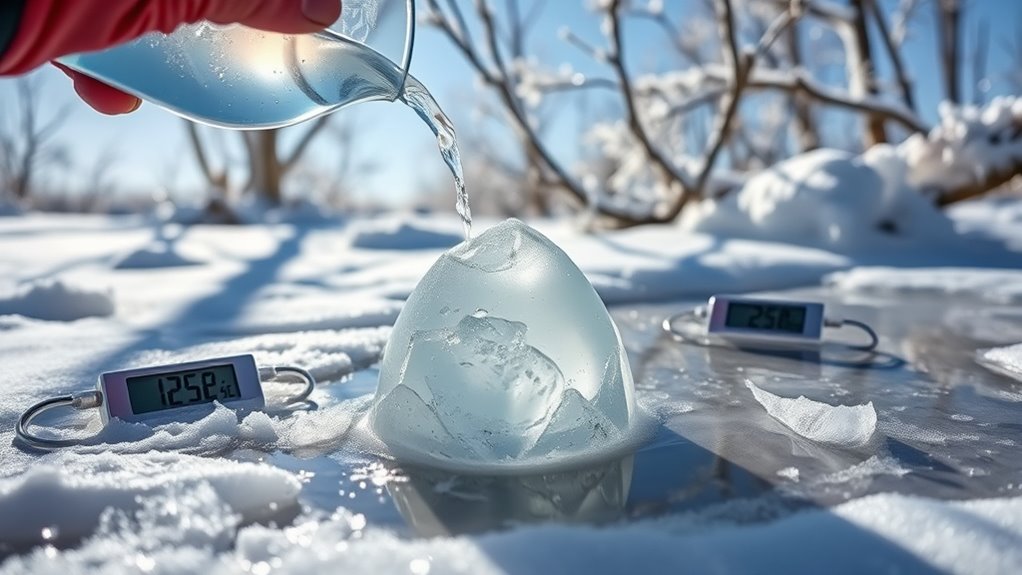
Snow play isn’t just fun—it’s a perfect way to explore the science behind winter. When you catch snowflakes on your glove or watch them fall, you’re witnessing the fascinating world of ice crystal formation. Each snowflake forms from water vapor in the cold air, transforming directly into ice crystals through a process called sublimation. These crystals develop into unique snowflake shapes, with patterns determined by temperature and humidity at the moment of formation. No two snowflakes are exactly alike, because slight differences in conditions create intricate, varying structures. As you observe these delicate shapes, you’re really looking at the complex science of crystal growth in action. Understanding ice crystal formation isn’t just about appreciating their beauty; it helps explain why snow falls in the first place. When water vapor condenses around tiny particles in the air, it forms ice nuclei, which then grow into snowflakes as more water vapor freezes onto them. The specific shape of each snowflake depends on the temperature and humidity during this process, which influences how the ice crystals branch and develop their intricate arms. By paying attention to snowflake shapes, you start to see how environmental factors influence crystal formation. You might notice that colder temperatures tend to produce simpler, more symmetrical snowflakes, while slightly warmer conditions lead to more complex, elaborate designs. Exploring these patterns gives you insight into how atmospheric conditions shape winter weather. You can even experiment by observing snow under a magnifying glass or microscope to see the detailed structures up close. This hands-on approach helps you grasp the connection between temperature, humidity, and ice crystal growth. As the snowflakes grow, they continue to develop their unique shapes, reflecting the specific conditions they experienced during formation. When you gather snow, you’re collecting a tiny sample of this ongoing process, which you can measure or melt to learn about the snow’s properties. The way snow melts, freezes, and refreezes also ties into the broader science of phase changes and energy transfer. Melting snow absorbs heat, turning from solid to liquid, while freezing releases heat as water turns back into ice. Understanding the refrigeration cycle and heat transfer principles involved can help explain these phase changes more thoroughly. Measuring these processes can reveal how heat moves through the environment during winter. Snow play becomes a gateway to understanding how water changes states and how nature’s chemistry creates the snowflakes we enjoy. So next time you’re playing in the snow, remember that you’re engaging with a remarkable natural phenomenon rooted in complex scientific principles. From the delicate geometry of snowflake shapes to the freezing and melting cycles, every snowflake tells a story about the atmospheric conditions that shaped it. Your winter fun is, in fact, a hands-on lesson in the amazing science of ice crystal formation.
Frequently Asked Questions
How Does Salt Affect Snow Melting Rates?
Salt effects snow melting rates by lowering the freezing point of water, causing the snow to melt faster. When you spread salt on snow, it accelerates melting because it disrupts the formation of ice crystals. This melting acceleration happens because the salt dissolves into the thin layer of water on snow, making it easier for the snow to turn into liquid. So, salt makes snow melt quicker, especially in colder temperatures.
What Materials Are Best for Measuring Snow Temperature?
Think of measuring snow temperature as finding the hidden heartbeat of winter. You want reliable measurement tools like digital thermometers, alcohol or mercury thermometers, or thermocouples, which read accurately even in cold conditions. For snow temperature, choose tools with fast response times and sturdy probes, ensuring you get precise readings. These materials help you uncover the secret temperature of snow and understand its icy mysteries better.
Can Snow Be Artificially Created for Experiments?
Yes, you can create artificial snow for experiments using snowmaking techniques. These methods typically involve forcing water and compressed air through a nozzle, which cools the water rapidly, turning it into snow. You might also use synthetic snow materials like foam or powder designed for science experiments. By controlling temperature and humidity, you can produce snow that mimics natural conditions for your scientific studies or educational activities.
How Does Sunlight Influence Snow Melt Speed?
Sunlight speeds up snow melt because solar radiation heats the snow directly. When sunlight hits the snow, it’s absorbed depending on the snow’s opacity; darker snow absorbs more energy, melting faster. Lighter, more opaque snow reflects more sunlight, slowing melting. So, the less opaque your snow, the quicker it will melt under sunlight, as it absorbs more solar radiation, accelerating the process.
What Safety Precautions Are Needed During Snow Experiments?
You must prioritize safety during snow experiments to avoid surprises. Always wear protective gear like gloves and goggles to shield yourself from cold and potential splashes. Guarantee constant experiment supervision to prevent accidents and handle unexpected situations swiftly. Keep a close eye on the snow and equipment, and never leave your setup unattended. By staying alert and prepared, you can enjoy your snow science adventure safely and confidently.
Conclusion
Now that you’ve explored how snow melts, freezes, and can be measured, you see it’s like a tiny world of its own, constantly changing. Your experiments reveal the secrets hidden in every snowflake and icy patch. Remember, science is your trusty snow shovel, helping you dig deeper into nature’s chilly mysteries. So, keep observing, testing, and having fun—because the more you learn, the more your curiosity snowballs into a winter wonderland of discovery.