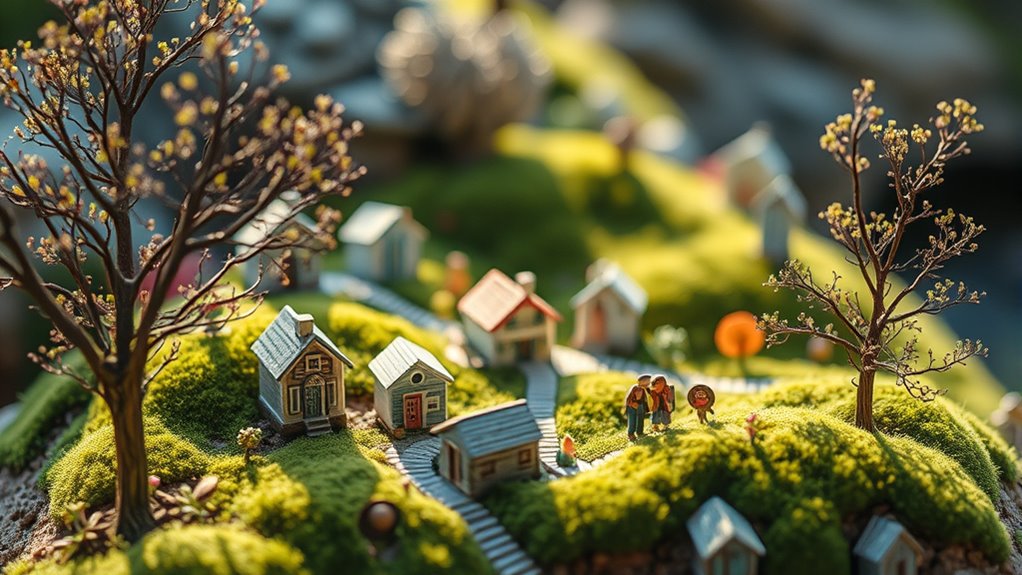

Small world play lets you create mini worlds where your child can explore, imagine, and tell stories. By building scenes with natural materials like sticks, leaves, or rocks, they develop creativity, spatial awareness, and social skills. As they act out different roles and scenarios, they gain confidence and a deeper connection with nature. Keep exploring to discover more ways this engaging activity can boost your child’s development and imagination.
Key Takeaways
- Small world play encourages children to create detailed miniature worlds that serve as stages for storytelling and imagination.
- Using natural materials like rocks, leaves, and twigs, children build scenes that enhance creativity and sensory awareness.
- Constructing mini worlds allows children to act out real-life scenarios and fantasies, promoting problem-solving and role-play skills.
- Collaborative play in small worlds fosters communication, teamwork, and empathy through shared storytelling and scene building.
- Engaging in miniature world creation builds confidence, emotional expression, and a lifelong love for exploration and imaginative play.

Have you ever noticed how children become completely absorbed when they engage in small world play? It’s like they enter their own little universe, where every detail matters and their imagination takes center stage. This type of play offers a unique opportunity for kids to explore the world around them, especially through nature exploration. When they set up tiny scenes with natural materials—rocks, leaves, sticks—they connect with the environment on a deeper level. They might pretend that a pinecone is a treasure chest or that a twig is a sword, turning simple objects into characters and tools within their stories. This process not only nurtures their curiosity but also helps develop their understanding of nature’s complexity. As they gather materials and arrange them, they learn to observe details like textures, colors, and shapes, sharpening their sensory awareness. Engaging in such activities can also support their nutrient-rich learning experiences when combined with outdoor exploration.
But the magic of small world play isn’t just about nature exploration; it’s about creating rich, imaginative scenarios that transport children beyond their immediate environment. When you see kids build miniature villages, forests, or marketplaces, you realize they’re doing more than just playing—they’re constructing worlds where they can act out real-life situations and fantasies. They might imagine themselves as explorers discovering new lands or as leaders managing a busy town. This kind of storytelling fuels their creativity and problem-solving skills, as they navigate conflicts, develop stories, and invent characters. The beauty of small world play is that it allows children to experiment with different roles and scenarios, all within their carefully crafted miniature universe. It’s a safe space where they can test ideas, express feelings, and build confidence through storytelling.
Engaging in small world play also encourages social interaction, especially when children share their miniature worlds with friends or family. They collaborate on building scenes, invent narratives together, and negotiate roles, which enhances their communication skills and sense of teamwork. When you set up a small world scene, you’re giving children a blank canvas for limitless storytelling possibilities. They learn to think creatively, adapt to challenges, and develop empathy by imagining life from different perspectives. Whether they’re pretending the forest is a busy town or that their tiny figures are on a daring adventure, they’re immersing themselves in worlds of their own making. These experiences foster a love for exploration, storytelling, and discovery that can last a lifetime.
Frequently Asked Questions
How Can I Incorporate Cultural Diversity Into Small World Play?
You can incorporate cultural diversity into small world play by including multicultural narratives and diverse figurines that represent different backgrounds. Encourage children to share stories from their own cultures or explore others through these figures. Use materials, landmarks, and costumes from various cultures to make the mini worlds more authentic. This approach promotes inclusivity, broadens understanding, and allows children to celebrate and learn about different cultures through engaging and meaningful play.
What Safety Precautions Should I Consider for Small World Materials?
You should always choose non-toxic paints to keep children safe during play. Make sure all small world materials are sturdy with secure attachments to prevent choking hazards. Regularly inspect toys for damage or loose parts, and avoid sharp edges. Keep the play area clean and supervise children closely. By taking these precautions, you create a safe environment where kids can explore and imagine freely without risk.
How Do I Encourage Imaginative Storytelling During Play?
Want to turn your kids into storytelling superstars? Start with story prompts that spark curiosity and roll out role-playing techniques that make characters leap off the mini worlds. Encourage them to ask “what if” questions, imagine unexpected twists, and act out scenes with enthusiasm. By giving them open-ended prompts and guiding role play, you’ll unleash their creativity and turn simple play into epic tales that wow everyone.
What Age Is Appropriate for Introducing Small World Play?
You can introduce small world play to early childhood children around ages 2 to 3, when they reach key developmental milestones like improved fine motor skills and imaginative thinking. At this stage, children love exploring miniature worlds, which boost their creativity and storytelling abilities. By providing simple props and varied themes, you support their growth and make play engaging, fun, and educational, perfectly suited for their developmental needs.
How Can Small World Play Support Children With Special Needs?
You can support children with special needs through small world play by enhancing sensory integration and social development. You encourage them to explore different textures, shapes, and materials, which helps regulate sensory input. Additionally, small world play fosters social skills as they interact with peers or adults, practicing communication, sharing, and turn-taking in a safe, engaging environment. This approach promotes confidence and inclusion, benefiting their overall developmental progress.
Conclusion
As you explore small world play, you start to see how it naturally sparks creativity and storytelling skills. Some believe these mini worlds mirror a child’s inner thoughts and emotions, offering a glimpse into their developing mind. While there’s no definitive proof, the theory suggests that these imaginative environments foster emotional growth and cognitive development. So, by building tiny worlds, you’re not just playing—you’re helping children understand themselves and the world around them.