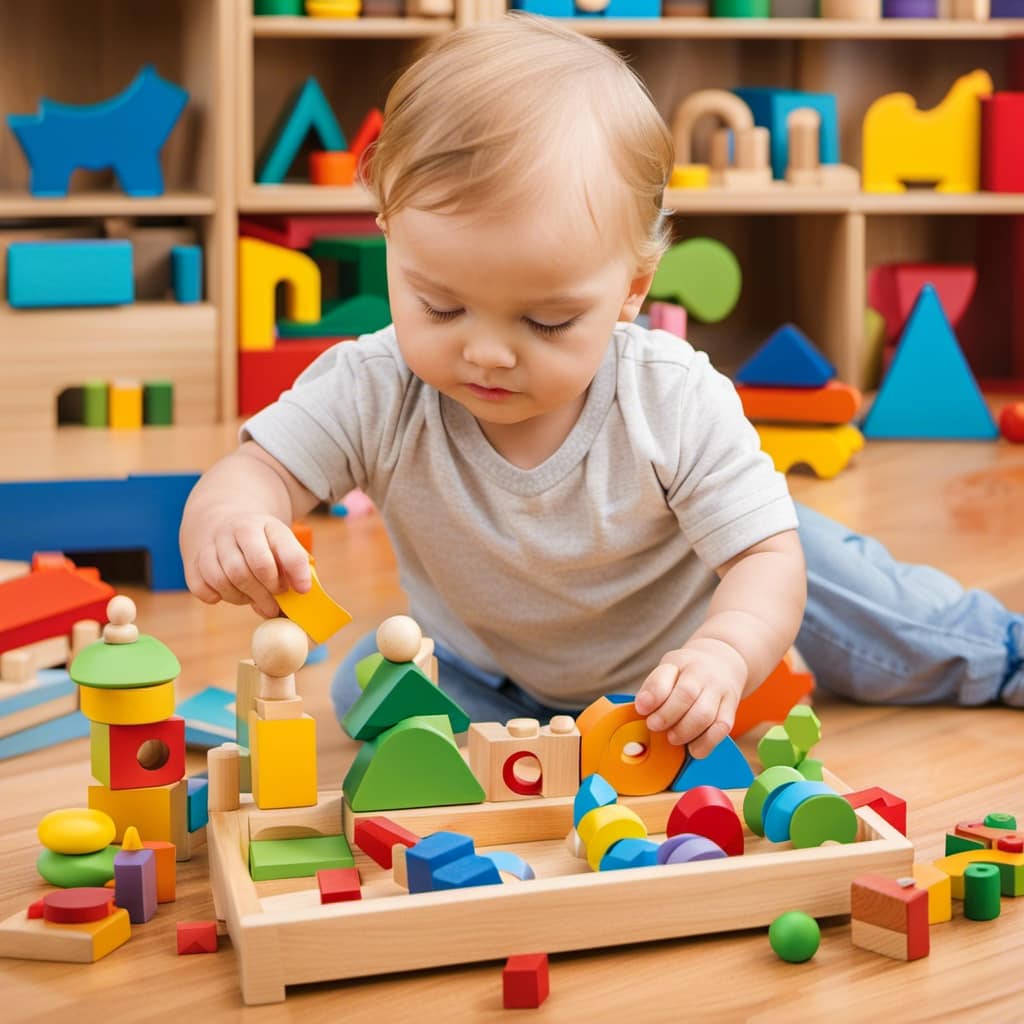
To encourage more imagination with simpler toys, offer open-ended play ideas that invite storytelling and world-building. Use textured fabrics, household objects, or basic materials as prompts for creative scenarios, and ask questions like “What’s inside this box?” to spark curiosity. Let your child explore freely, giving them space to transform ordinary items into adventures. Keep encouraging sensory exploration and narrative play, and you’ll find even the simplest toys can open endless imaginative potential—more tips await!

Turn the school run and nap time into listening time
- Thousands of audiobooks, podcasts and originals
- Listen on your phone, tablet or Echo — also offline
- Cancel anytime
Key Takeaways
- Use open-ended questions to stimulate storytelling and creative ideas with simple toys.
- Incorporate sensory exploration to transform ordinary objects into imaginative play scenarios.
- Encourage child-led play by allowing children to decide how to use and interpret toys.
- Repurpose everyday household items as characters or tools to enhance resourcefulness and creativity.
- Provide space and encouragement for exploration, emphasizing that simplicity fosters inventive thinking.

In a world filled with high-tech gadgets and complex toys, encouraging your child’s imagination can be surprisingly simple. The key lies in choosing toys that invite open-ended play, such as simple blocks, plush animals, or everyday household items. These toys become blank canvases for your child’s creative storytelling, where they can invent worlds, characters, and scenarios with just their imagination. When you give them the freedom to craft stories around their toys, you’re fostering their ability to think creatively and develop narrative skills that will serve them well in many areas of life.
Sensory exploration plays a crucial role in nurturing a child’s imagination. Toys like textured fabrics, modeling clay, or sensory bins filled with different materials allow your child to explore the world through their senses. This exploration sparks curiosity and encourages them to ask questions and make connections, fueling their creative storytelling. For instance, a simple box can turn into a spaceship, a castle, or a hiding spot, depending on your child’s mood and imagination. As they manipulate and explore these objects, their minds are actively engaging in imaginative play, transforming ordinary items into extraordinary adventures. Furthermore, understanding the importance of biodiversity can inspire children to appreciate the natural world and see potential for creative stories and imaginative play in their environment.
You can support this process by prompting your child to describe what they’re doing or what they imagine. Ask questions like, “What’s inside this box?” or “Who lives in this house?” This not only helps develop their language skills but also deepens their engagement with their play. Let them lead and follow their ideas, rather than directing every aspect of their play. This approach encourages confidence and independence in their creative thinking. Incorporating everyday objects into play can be incredibly effective. A set of old buttons, paper towel rolls, or a collection of shells can become characters, tools, or treasures in your child’s stories. The simplicity of these toys invites your child to see potential everywhere, making playtime more meaningful and imaginative. You don’t need expensive or complicated toys to inspire creativity; often, the most simple and familiar objects spark the most inventive ideas. Ultimately, nurturing imagination with simpler toys is about giving your child space and encouragement to explore, create, and tell their own stories. By fostering sensory exploration and supporting their creative storytelling, you help develop their imagination, problem-solving skills, and confidence—all crucial for their growth and happiness. Remember, the simplest toys often offer the richest opportunities for your child’s imagination to flourish.
open-ended wooden blocks for kids
As an affiliate, we earn on qualifying purchases.
As an affiliate, we earn on qualifying purchases.
Frequently Asked Questions
What Age Is Best for Introducing Simple Toys?
You can introduce simple toys as early as infancy, around 6 months, but they’re especially beneficial for children aged 1 to 3 years. During this stage, your child develops creative storytelling skills and their imagination blossoms with open-ended materials like blocks or plush toys. Using these age-appropriate, simple toys encourages your child to invent stories, explore ideas, and develop problem-solving skills through play that’s both engaging and educational.
How Can Parents Avoid Over-Structuring Play?
You can avoid over-structuring play by allowing your child to explore freely with open-ended questions that spark their imagination. Instead of giving strict instructions, offer creative constraints that encourage problem-solving and storytelling. Let them decide how to use the toys, and resist the urge to direct every activity. This approach nurtures independence, boosts creativity, and keeps playtime enjoyable and spontaneous.
Are There Specific Toys That Boost Creativity More?
You’ll find that colorful blocks and open-ended dolls boost creativity the most. These toys let your child use their imagination freely, transforming them into anything they want—castles, spaceships, or stories. Some might worry about mess or chaos, but with simple toys like these, your child’s creativity flourishes naturally. Keep playtime relaxed and flexible, and you’ll see their ideas grow without feeling overwhelmed or over-structured.
How Do I Prevent My Child From Losing Interest?
To prevent your child from losing interest, regularly introduce new activities like outdoor exploration and incorporate music therapy to keep things fresh. You can also rotate toys to maintain excitement and encourage curiosity. Engaging in outdoor adventures stimulates their imagination, while music therapy enhances creativity. By varying activities and environments, you keep your child interested and motivated to explore, learn, and imagine more with simple toys.
Should I Set Rules for Imaginative Play?
You should set rules for imaginative play, as they provide essential boundaries that spark creativity. Studies show that children thrive when given a balance of structure and freedom. By establishing clear rules, you guarantee safety and focus, while still allowing for creative freedom. This balance encourages your child to explore their imagination within healthy limits, fostering confidence and inventive thinking. Remember, rules guide without stifling their natural curiosity.
Conclusion
Think of simple toys as blank canvases waiting for your child’s imagination to paint vibrant stories. By stepping back and offering fewer distractions, you give their creativity room to breathe and grow. Remember, it’s not about the complexity of the toy, but the worlds your child can build with it. When you encourage open-ended play, you plant seeds of innovation and joy that will blossom far beyond the toy itself.
Halloween Picks
halloween
As an affiliate, we earn on qualifying purchases.