
You can easily create fun puppet plays at home with simple materials like socks, paper bags, or gloves. Use household items and decorate them with googly eyes, yarn, or stickers to bring your characters to life. Encourage storytelling by making up adventures or fairy tales, and experiment with different voices and movements. For more creative ideas and tips on crafting your puppets and staging your show, keep exploring ways to make your puppet play even more exciting.
Key Takeaways
- Use household items like socks, paper bags, or gloves to quickly create fun puppets at home.
- Design characters from simple themes such as animals or fairy tales to inspire storytelling.
- Create a mini puppet theater using a box or draped sheet for engaging performances.
- Incorporate expressive movements and voices to bring puppets to life during playtime.
- Use recyclable materials to craft eco-friendly puppets, adding an educational element to play.
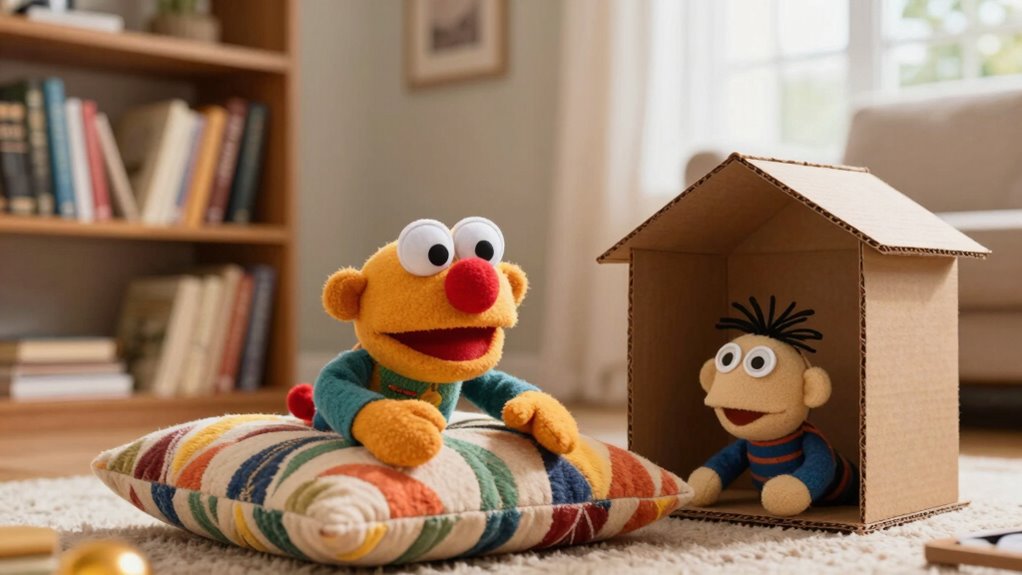
Puppet play is a fantastic way to spark creativity and entertainment right at home, and you don’t need fancy equipment to get started. All you really need is your imagination and a few simple materials. One of the most engaging parts of puppet play is crafting your puppet stories. You can create themes around everyday experiences, fairy tales, or even your own adventures. Think about the characters you want to bring to life—animals, people, mythical creatures—and plan out a simple storyline. This process not only entertains but also boosts your storytelling skills and encourages your child’s imagination.
Puppet play sparks creativity, storytelling, and imagination with simple materials and endless story ideas at home.
When it comes to selecting puppet materials, you want options that are easy to work with and safe for all ages. You might start with basic household items, such as socks, paper bags, or old gloves, which can be transformed into puppets with a bit of creativity. Sock puppets are especially popular because they’re simple to make and require minimal supplies. You can add googly eyes, yarn for hair, or fabric scraps for costumes to make each puppet unique. For paper bag puppets, the bag serves as the head and body, and you can decorate it with markers, stickers, or fabric pieces. Gloves, on the other hand, can be turned into finger puppets by drawing faces on each finger or attaching small accessories.
Once you have your materials, the fun really begins. You can start by designing simple characters that fit your story. For example, if you’re telling a tale about animals, craft a puppet for each creature, giving them distinct features. This process is a perfect opportunity for you to involve children in the creative act of selecting colors, gluing on accessories, or decorating costumes. As you craft your puppets, think about how they’ll move and express emotions—this will make your storytelling more lively and engaging. Incorporating biodiversity themes into your stories can also be a fun way to teach children about different species and ecosystems while playing. Additionally, understanding how different materials can be repurposed encourages resourcefulness and creativity in your puppet-making process. Exploring recyclable materials for puppet creation can further inspire environmentally conscious craftsmanship. Using recycled materials not only helps the environment but also adds a unique touch to each puppet, making the activity both fun and educational.
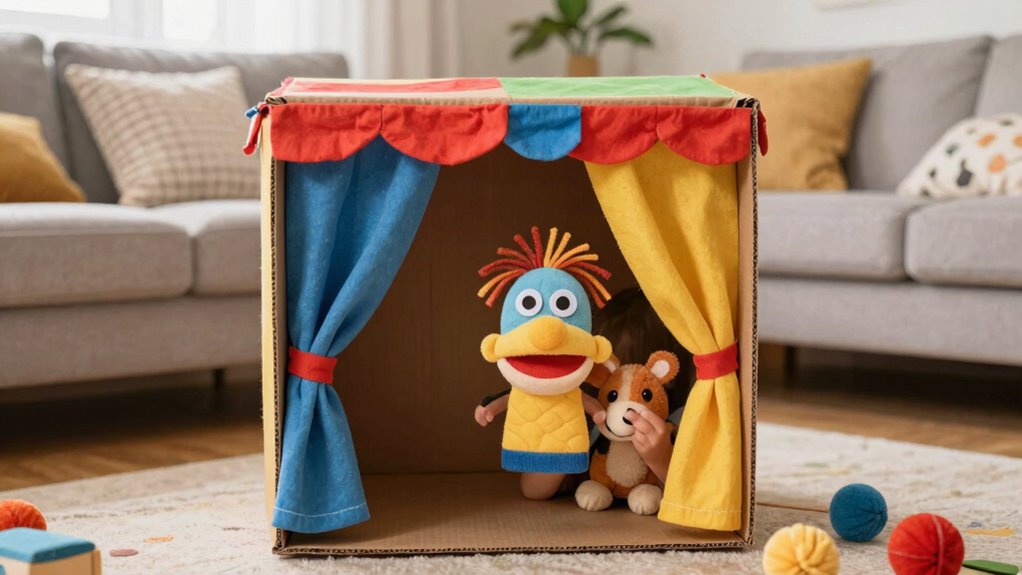
After your puppets are ready, it’s time to perform your story. Use your hands, or create a little puppet theater using a box or a sheet draped over furniture. As you narrate, bring your puppets to life with expressive movements and voices. The simple act of improvising dialogues and reacting to your puppet characters will make the story more dynamic and fun for everyone involved. Puppet play not only fosters creativity but also creates an interactive experience that can entertain and educate at the same time. And the best part? You can do it again and again, experimenting with new stories and puppet designs whenever inspiration strikes.

WATINC Hand Puppet Making Kit, Felt Sock Puppet Toys for Kids (Animals)
- Complete DIY Puppet Kit: Includes 6 puppets, pompoms, googly eyes, and decorations
- Boosts Creativity & Motor Skills: Enhances imagination, concentration, and fine motor skills
- Ideal Indoor Craft Activity: Safe, fun, and engaging for kids at home or school
As an affiliate, we earn on qualifying purchases.
As an affiliate, we earn on qualifying purchases.
Frequently Asked Questions
What Age Group Is Best Suited for Puppet Play at Home?
You’ll find puppet play is perfect for kids aged 3 and up, as they enjoy engaging with puppet types like hand, finger, or sock puppets. For age-specific activities, younger children love simple storytelling and basic puppet manipulation, while older kids can create their own puppet shows and develop characters. Puppet play boosts imagination, communication, and fine motor skills, making it a versatile activity suited for various developmental stages.
How Can I Involve Multiple Children in Puppet Shows?
You can involve multiple children in puppet shows by organizing a group performance where each child gets to customize their puppet, making it unique and engaging. Encourage them to work together, sharing ideas for the story and characters. Assign roles for puppet customization, scriptwriting, and acting, fostering collaboration. This teamwork makes the puppet show more fun, promotes creativity, and guarantees everyone feels included in the performance.
Are There Eco-Friendly Materials for Homemade Puppets?
Think of eco-friendly materials as a garden of possibilities for your puppet creations. You can craft charming puppets from recycled fabrics, giving old clothes a new life as whimsical characters. Biodegradable materials, like natural fibers or biodegradable glues, help your puppets return to the earth when their performance is over. These sustainable choices allow you to nurture creativity while caring for the planet, turning your puppet shows into a celebration of both art and nature.
How Do I Teach Storytelling Through Puppet Play?
You teach storytelling through puppet play by engaging your audience with puppet storytelling techniques like voice modulation, expressive movements, and character differentiation. Use creative story ideas that inspire imagination—such as adventures, moral lessons, or funny scenarios. Let your puppets guide the story, encouraging interaction and improvisation. This hands-on approach helps you develop storytelling skills, making the experience lively, memorable, and fun for everyone involved.
What Safety Precautions Should I Consider During Puppet Activities?
Did you know that children under five are most vulnerable to choking hazards? During puppet activities, prioritize puppet safety by choosing non-toxic, child-safe materials and avoiding small parts that could be swallowed. Always supervise play to prevent accidents, and guarantee the puppets are sturdy and well-made. Proper material selection and constant vigilance create a safe environment, letting your little ones enjoy imaginative fun without risks.
Conclusion
With these simple puppet play ideas, you can spark creativity, foster imagination, and create memorable moments right at home. You’ll laugh, you’ll learn, and you’ll connect through storytelling and play. You’ll discover joy in improvisation, delight in discovery, and pride in your creations. Whether you’re introducing characters or building stories, these ideas bring fun, foster bonding, and encourage expression. So, grab your puppets, get creative, and turn ordinary moments into extraordinary memories.