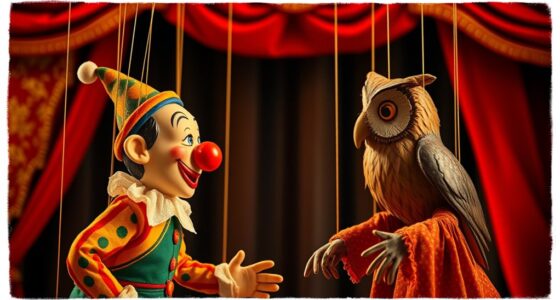
Puppet theaters are great for language growth because they encourage you to actively participate in stories, making learning fun and memorable. When you create and act out scenes, you naturally practice vocabulary, pronunciation, and sentence structure. It also boosts your confidence as you engage with diverse stories from different cultures, fostering empathy and understanding. By exploring new characters and ideas, you develop your imagination and communication skills — keep going to discover even more ways puppet theaters can help you grow.
Key Takeaways
- They promote active participation, allowing children to practice vocabulary, pronunciation, and sentence structure through improvisation.
- Puppet theaters build confidence by engaging children directly in storytelling, making language learning fun and memorable.
- They expose children to diverse cultures and stories, broadening vocabulary and fostering empathy.
- Creating and acting with puppets encourages hands-on, descriptive language development and creative expression.
- The immersive, interactive nature makes language learning engaging, enhancing fluency, comprehension, and emotional intelligence.
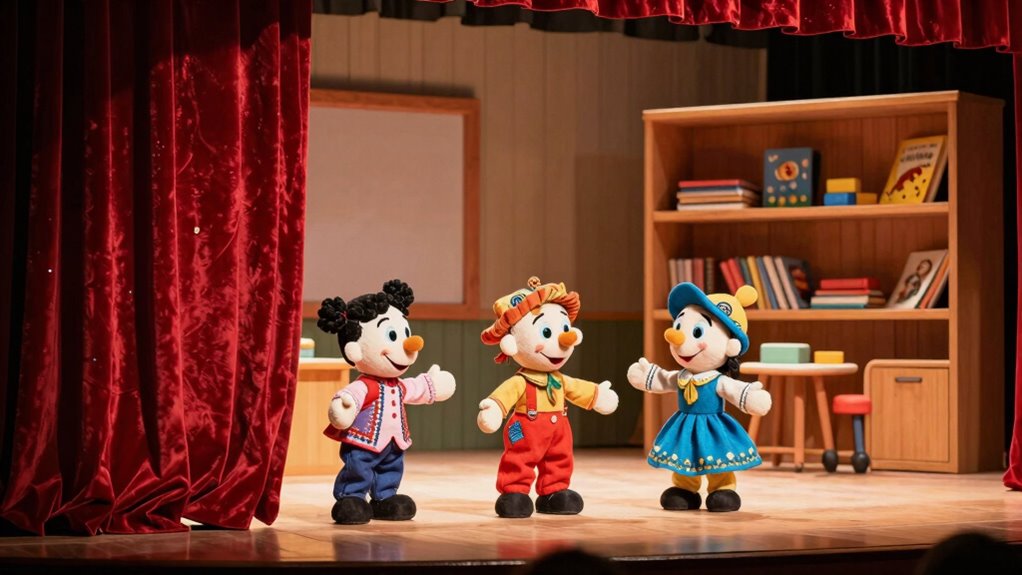
Have you ever considered how puppet theaters can boost a child’s language development? When you introduce puppet theaters into a child’s play, you’re opening the door to a world of interactive storytelling that sparks their imagination and encourages active participation. Unlike passive activities, puppet theaters invite children to become storytellers themselves, using puppets to act out scenes, dialogue, and emotions. This hands-on approach helps children practice vocabulary, sentence structure, and pronunciation naturally, making language learning engaging rather than tedious. As they repeat lines, ask questions, or improvise, they reinforce language skills effortlessly. This form of interactive storytelling isn’t just fun; it’s a powerful way to develop fluency, comprehension, and expressive abilities. The more children immerse themselves in creating stories with puppets, the more confident they become in their language use.
Puppet theaters transform storytelling into an engaging, hands-on way to build language skills and boost confidence.
Moreover, puppet theaters serve as an excellent medium for cultural exposure. When you select stories from different traditions or backgrounds, children gain insight into diverse customs, beliefs, and languages. This exposure broadens their understanding of the world and fosters an appreciation for cultural differences. As they explore stories rooted in various cultures, children learn new words, idioms, and expressions that they might not encounter in everyday conversations. Playing with puppets representing characters from different backgrounds also helps break down stereotypes and encourages empathy. They see the world through different perspectives, which enhances their social and emotional intelligence while expanding their vocabulary within a rich context of cultural stories. Additionally, integrating storytelling techniques from design thinking principles can enhance their engagement and creativity during these activities. Incorporating interactive storytelling strategies can make these experiences even more impactful and memorable for children.
The beauty of puppet theaters lies in their versatility. You can create a simple setup at home or in the classroom, using everyday materials to craft puppets and backdrops. This process itself becomes an interactive activity that promotes language development, as children describe their creations and narrate what’s happening. Creating opportunities for hands-on learning within puppet play allows children to deepen their understanding of language through physical interaction and imagination. Plus, puppet theaters naturally lend themselves to storytelling that is dynamic and adaptable, allowing you to tailor stories to your child’s interests or language level. They can be educational, entertaining, or a mix of both. When children act out stories, they’re not just listening—they’re doing, which solidifies learning through action.
In essence, puppet theaters turn language development into a lively, immersive experience. They foster interactive storytelling that engages children actively, making language learning feel like an adventure. Simultaneously, they expose young minds to different cultures, enriching their vocabulary and worldview. When you harness the power of puppet theaters, you’re providing a fun, meaningful way for children to grow their language skills and cultural awareness simultaneously.
As an affiliate, we earn on qualifying purchases.
Frequently Asked Questions
How Does Puppet Play Improve Vocabulary Retention?
Puppet play boosts your vocabulary retention by making language engaging and memorable. When you manipulate puppets and act out stories, you actively participate, which helps you remember new words better. The visual and auditory cues from puppet play create strong associations with vocabulary, making it easier to recall later. This interactive experience keeps you motivated, ensuring that new words stick longer and improve your language skills more effectively.
What Age Is Best for Introducing Puppet Theaters?
Introducing puppet theaters is like planting seeds in young minds, best suited for ages 3 to 7. At this stage, kids quickly grasp puppet theater setup and enjoy exploring puppet crafting techniques. Their developing language skills thrive through storytelling and role-play, making it an ideal time to foster creativity and communication. You’ll find children keen to participate, learning new words and concepts naturally through hands-on puppet play.
Can Puppet Theaters Support Bilingual Language Learning?
Yes, puppet theaters can support bilingual language learning by providing rich cultural exposure and emotional engagement. When you use puppets to tell stories in two languages, you create an immersive experience that helps children connect words to emotions and cultural contexts. This active participation boosts their vocabulary, pronunciation, and comprehension in both languages, making learning fun and meaningful. Puppet theaters truly enhance bilingual development through engaging storytelling.
How Do Puppet Characters Enhance Storytelling Skills?
You enhance storytelling skills by engaging in puppet improvisation, which encourages you to think quickly and creatively. Well-designed puppet characters help you bring stories to life, capturing your audience’s attention and conveying emotions effectively. As you develop puppet character design, you learn to craft expressive characters that communicate complex ideas simply. This active involvement boosts your confidence, storytelling ability, and expressive skills, making your narratives more engaging and memorable.
Are There Specific Puppet Types That Boost Language Development?
Yes, certain puppet types can boost your language development more effectively. Hand puppets encourage expressive storytelling and dialogue, helping you practice vocabulary and sentence structure. Shadow puppets promote descriptive language as you create scenes, while marionettes challenge your coordination and expressive skills. Each puppet type engages different language skills, making them valuable tools for developing vocabulary, articulation, and storytelling abilities. Using a variety of puppet types keeps your language growth dynamic and fun.
Conclusion
Imagine your child’s language skills as a tiny seed. Puppet theaters are like nurturing sunlight and water, helping that seed grow into a vibrant, expressive plant. I once watched a little girl confidently tell her puppet story after just a few sessions—her words blossomed like colorful flowers. Research shows that children engaged in puppet play increase their vocabulary and communication skills faster. So, embrace puppet theaters—they’re the sunshine your child’s language garden needs to thrive.