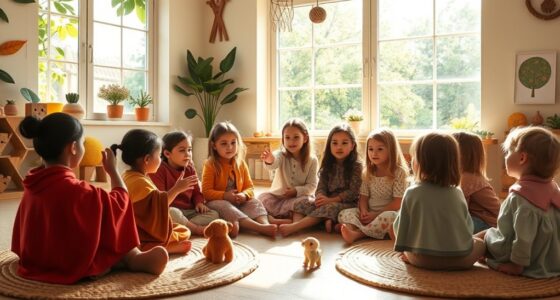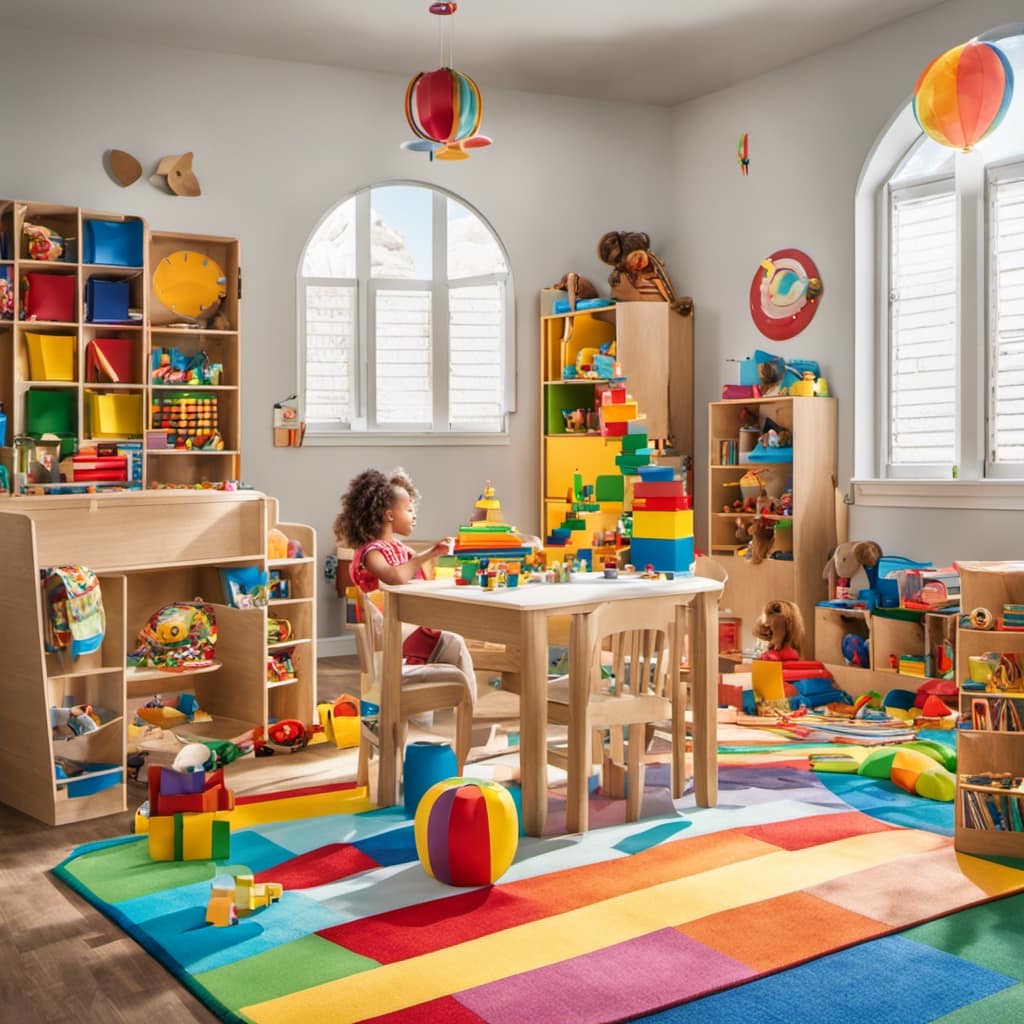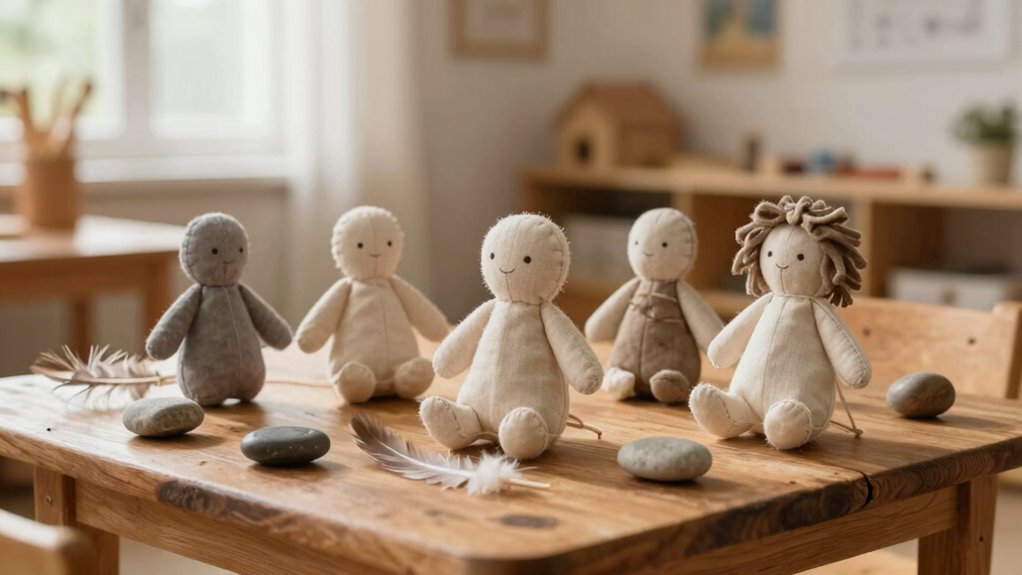
Simple dolls matter in Waldorf play because they spark your child’s imagination and emotional connections through handcrafted, natural materials. These dolls act as blank slates for stories and feelings, supporting open-ended play that nurtures creativity and emotional growth. Made from wool, cotton, and wood, they promote mindfulness and respect for the environment. If you keep exploring, you’ll uncover more about how these dolls enrich your child’s inner world and cultural understanding.

Get baby and family essentials delivered free — and shop member deals
- Fast, free delivery on millions of items
- Access to Prime Big Deal Days deals on October 6–7
- Prime Video, Amazon Music and more included
Key Takeaways
- Simple dolls serve as open-ended tools that foster imagination and emotional connection in Waldorf play.
- They are crafted from natural materials, promoting mindfulness, craftsmanship, and environmental awareness.
- Handmade dolls reflect cultural diversity, enhancing respect, understanding, and global awareness in children.
- Creating simple dolls develops fine motor skills, patience, and a sense of pride in craftsmanship.
- Their simplicity aligns with Waldorf values, emphasizing authenticity, sustainability, and nurturing the inner life.
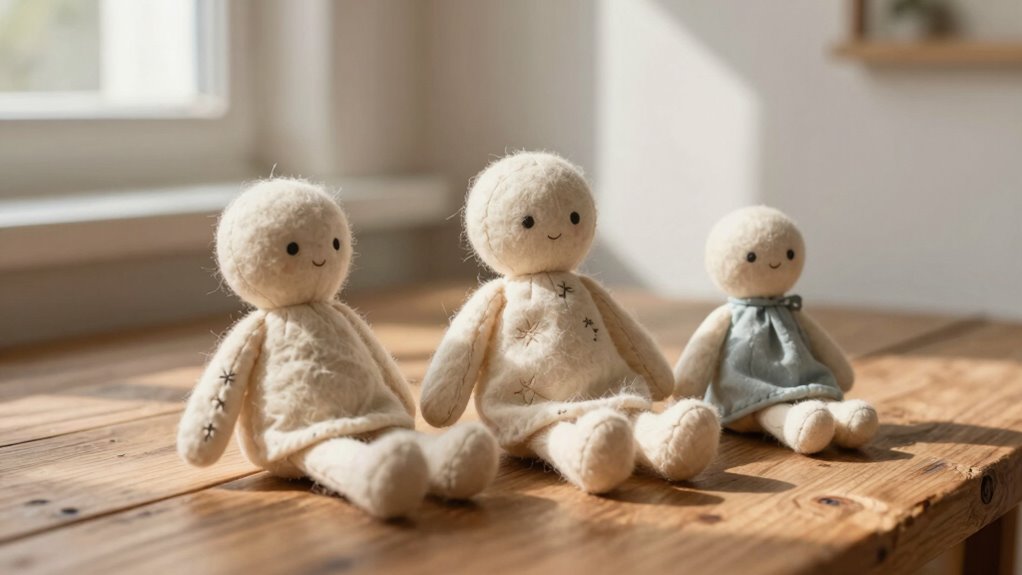
Simple dolls hold a special place in Waldorf play because they encourage imagination and emotional connection. When you create and play with these dolls, you’re not just making toys—you’re nurturing a child’s inner world. Waldorf education emphasizes the importance of simplicity and natural materials, which is why these dolls are often handcrafted from wool, cotton, and wood. By engaging in doll making techniques that favor minimalism, you allow children to project their feelings and stories onto the doll, fostering deep emotional bonds. These techniques often involve basic sewing, felting, or wrapping, making the process accessible and meaningful. As you craft each doll, you’re also passing down a tradition that emphasizes mindfulness, patience, and craftsmanship.
The cultural significance of simple dolls in Waldorf play goes beyond their physical form. They are rooted in a philosophy that values the developmental stages of childhood, encouraging children to see the doll as a blank canvas for their imagination. Unlike commercial dolls with predefined features or characters, simple dolls do not impose a specific narrative, allowing children to invent their own stories. This open-ended play supports their emotional development and helps them process their experiences. Additionally, these dolls serve as a reflection of cultural diversity, as they can be made to represent different ethnicities, traditions, or historical periods. When you make dolls that mirror various cultures, you’re fostering respect and understanding in children, teaching them to appreciate differences through play.
You might notice that the focus on natural materials and handcrafted techniques connects children to cultures worldwide. For example, a felted doll inspired by traditional Scandinavian or African dolls carries with it a piece of cultural history. Making these dolls yourself allows you to incorporate cultural significance into your craft, creating meaningful objects that celebrate diversity. This process also enhances the child’s awareness of global traditions and values, making play an educational experience. The simplicity of the dolls matches Waldorf’s aim to cultivate a child’s inner life, free from overly commercial influences, emphasizing authenticity and cultural richness. Incorporating cultural diversity in doll making enriches the child’s appreciation for the world’s varied traditions and histories. Recognizing the importance of handcrafted techniques helps children develop patience, fine motor skills, and a sense of pride in their work.
Furthermore, emphasizing natural materials in the creation process helps children develop a connection to the environment and an understanding of sustainability. When you prioritize these aspects, you’re helping children develop a sense of identity, empathy, and respect for the world around them. Simple dolls truly matter in Waldorf play because they serve as both tools for imaginative storytelling and vessels of cultural understanding.
As an affiliate, we earn on qualifying purchases.
Frequently Asked Questions
How Are Waldorf Dolls Different From Commercial Dolls?
Waldorf dolls differ from commercial dolls because they encourage imaginative play and embody cultural symbolism. You’ll notice they’re simple, often handmade with natural materials, allowing your child to project their creativity onto them. Unlike mass-produced dolls, Waldorf dolls have blank faces, inviting personal expression and emotional connection. This simplicity helps children develop their imagination, empathy, and understanding of different cultures through meaningful, open-ended play.
Can Children Customize or Personalize Their Waldorf Dolls?
Have you ever wondered if children can personalize their Waldorf dolls? Absolutely! Doll personalization and creative customization are encouraged, allowing children to make their dolls uniquely theirs. They might choose different outfits, add gentle accessories, or even craft small features. This process not only fosters imagination but also helps deepen their emotional connection. Isn’t it wonderful to see a doll that truly reflects your child’s personality and creativity?
What Materials Are Typically Used in Handmade Waldorf Dolls?
You’ll find that handmade Waldorf dolls are crafted from natural fibers like wool, cotton, and silk, which are gentle and safe for children. These dolls feature hand-stitched details that add charm and durability, making each one unique. The use of natural fibers guarantees a soft, breathable feel, encouraging imaginative play. Hand stitching not only enhances the doll’s beauty but also reflects the care and craftsmanship invested in every piece.
How Do Waldorf Dolls Support Emotional Development?
You see, Waldorf dolls support your child’s emotional development by fostering emotional resilience and empathetic understanding. As they engage in imaginative play with simple, natural dolls, they learn to express and process feelings. These dolls encourage your child to develop empathy, as they imagine the doll’s emotions and stories. This nurturing play builds a foundation of emotional strength and compassionate awareness that benefits them throughout life.
Are Waldorf Dolls Suitable for All Age Groups?
Yes, Waldorf dolls are suitable for all age groups because of their simple design and cultural significance. They encourage imaginative play and emotional expression across ages. However, you should consider safety considerations, like ensuring the dolls are made from non-toxic materials and free of small parts for younger children. Their gentle, natural aesthetic appeals to everyone, making them versatile toys for fostering creativity, empathy, and cultural appreciation at any age.
Conclusion
In the end, simple dolls are more than just toys—they’re gateways to boundless imagination and heartfelt connection. When you embrace their simplicity, you create a world where your child’s creativity can soar like an eagle in the sky, unhindered by flashy distractions. These humble dolls nurture genuine empathy and joy that last a lifetime. Trust in their quiet magic—because sometimes, the simplest things hold the power to shape the most extraordinary lives.
Fall Picks
fall essentials
As an affiliate, we earn on qualifying purchases.