
To teach narrative structure in shadow-puppet theater using a flashlight, focus on precise puppet manipulation to support storytelling. Use deliberate gestures and movements to portray emotions and character actions, guiding the audience through the story’s flow. Optimize lighting to create clear, contrasting silhouettes, emphasizing key moments. Combining these techniques helps convey plot developments and emotions vividly. Keep exploring these methods further, and you’ll discover how to craft engaging, visually compelling shadow stories that captivate your audience.
Key Takeaways
- Use flashlight lighting to create clear, contrasting shadow silhouettes that enhance storytelling clarity.
- Incorporate puppet movements that support narrative flow and highlight key plot moments.
- Teach students to develop a story structure, using puppet gestures to represent characters and conflicts.
- Employ different puppet sizes and styles to visually distinguish scenes and emotional tones.
- Utilize lighting and puppet manipulation techniques to build suspense and emotional impact within the story.
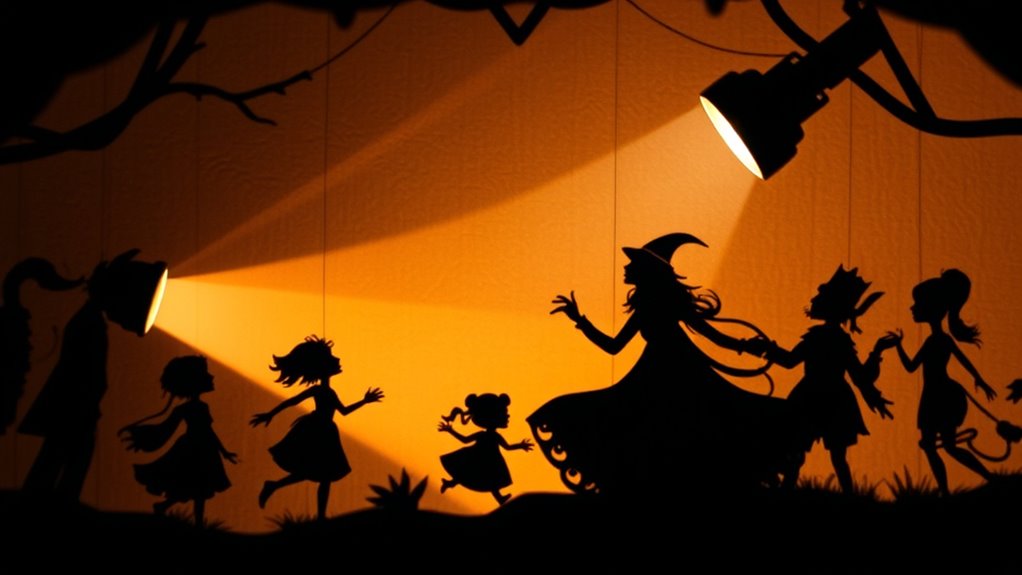
Have you ever been captivated by the mysterious dance of shadow puppets on a screen? There’s something enchanting about how simple shapes come alive through carefully crafted puppet manipulation, transforming flat figures into storytellers that evoke emotion and imagination. When you’re working with shadow-puppet theater, mastering puppet manipulation becomes your most powerful tool. Every movement you make—whether gently shifting a figure or quickly flicking it across the screen—can dramatically change the narrative’s tone. Precise puppet manipulation allows you to convey character emotions, highlight key moments, and create a sense of rhythm that keeps your audience engaged. With practice, you’ll learn how to control your puppets seamlessly, making them glide smoothly or jerk sharply to emphasize action or tension. This control is essential because storytelling techniques in shadow puppetry hinge on how convincingly you bring your figures to life. Additionally, understanding how contrast ratio influences visual clarity can help you optimize your lighting setup for the best shadow effects. Using storytelling techniques effectively means understanding the flow of your narrative and how your puppets’ movements support it. Think of your shadow puppets as actors in a play—each gesture, stance, and progression should serve the story. For example, a slow, deliberate movement can symbolize hesitation or fear, while quick, jerky motions might communicate excitement or chaos. Combining puppet manipulation with thoughtful storytelling techniques allows you to craft scenes that resonate emotionally and visually. You can build suspense by gradually revealing figures or use contrasting movements to underscore conflicts. Additionally, employing different puppet sizes and styles can help distinguish characters and set the scene’s mood. With shadow puppets, the storytelling is not just in the words but in how you animate them, turning simple silhouettes into compelling narratives.
Frequently Asked Questions
How Can I Adapt Shadow-Puppet Theater for Virtual Teaching?
To adapt shadow-puppet theater for virtual teaching, you can create a digital setup using a webcam and a screen or wall as your backdrop. Use digital tools to design and animate puppets, encouraging students to participate actively. This digital adaptation boosts virtual engagement by making storytelling interactive and visually appealing. You’ll foster creativity and comprehension, making lessons memorable even in a virtual environment.
What Age Groups Benefit Most From Shadow-Puppet Storytelling?
You’ll find that early childhood and elementary students benefit most from shadow-puppet storytelling. At these ages, kids develop their imagination, storytelling skills, and understanding of narrative structure through engaging visuals and simple narratives. Shadow puppets captivate their attention, making learning interactive and fun. Plus, they’re perfect for fostering creativity, language, and social skills, helping young learners connect with stories in a memorable, hands-on way.
Are There Recommended Materials for Creating Durable Puppets?
For creating durable puppets, you should focus on quality puppet materials like sturdy cardboard, foam, or felt. Durability tips include reinforcing edges with tape, using strong glue, and sealing surfaces with paint or varnish. These materials and tips help your puppets withstand frequent handling and play. Choose materials that are lightweight yet resilient, ensuring your puppets last longer and maintain their shape during storytelling sessions.
How Can I Incorporate Diverse Stories Into Shadow-Puppet Performances?
You can incorporate diverse stories into your shadow-puppet performances by actively seeking out different cultural tales and perspectives. Use storytelling diversity to showcase a range of voices, and incorporate cultural representation by including symbols, costumes, and narratives from various backgrounds. Engage with communities, research authentic stories, and adapt them respectfully. This approach enriches your performance, making it more inclusive and educational for your audience, while celebrating a wide array of cultural traditions.
What Are Some Common Challenges When Teaching Narrative Structure With Shadows?
When teaching narrative structure, you might notice student engagement drops or face technical difficulties like shadow clarity issues. For example, a classroom struggled with lighting, causing confusion during the story. These challenges can hinder learning, but you can overcome them by preparing equipment beforehand and encouraging students to actively participate. Addressing technical difficulties promptly keeps students engaged, making it easier for them to grasp story elements through shadow puppetry.
Conclusion
As you bring your shadow-puppet story to a close, remember that every good tale has a beginning, middle, and end. By mastering this simple technique, you turn a flashlight into a storytelling tool that captivates and teaches. Just like the saying goes, “A picture is worth a thousand words.” So, keep experimenting, and let your shadows tell the stories that words can’t always express. Your creativity has no limits—let your shadows shine.