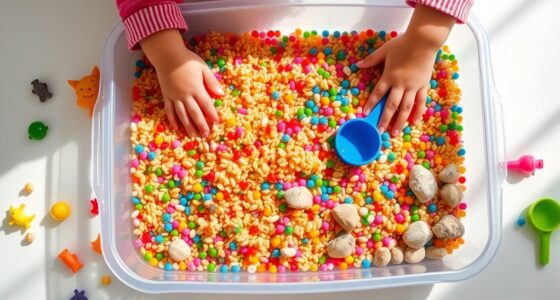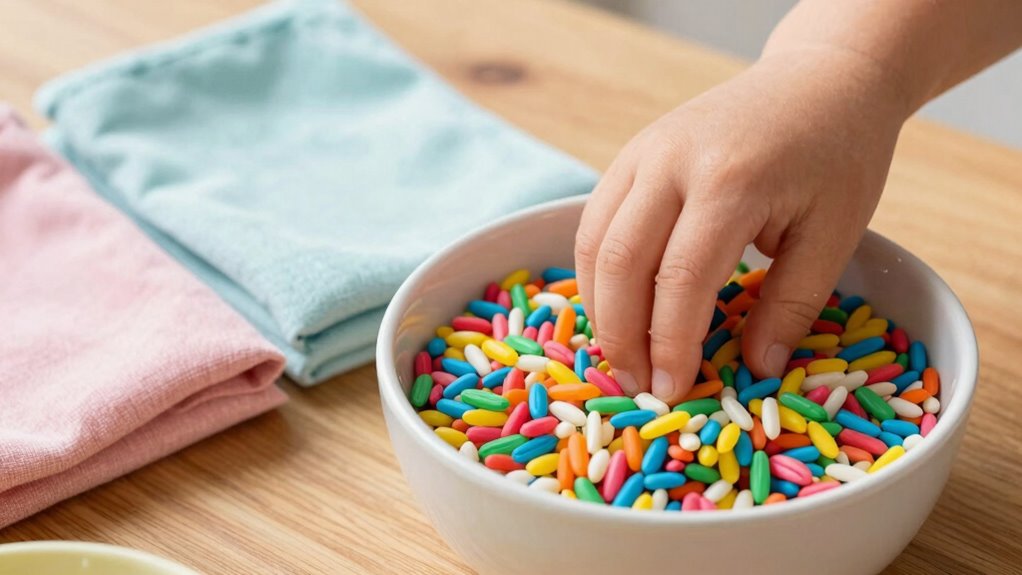

To help kids who avoid new textures, start with familiar materials and gradually introduce new ones alongside favorite textures. Turn exploration into fun activities like guessing jars or sorting objects, and use storytelling or pretend play to make it feel like an adventure. Be patient, observe their reactions, and respect boundaries to build confidence slowly. Creating a supportive environment with multi-sensory activities aids their comfort and resilience—continue exploring ways to support their sensory journey.

Turn the school run and nap time into listening time
- Thousands of audiobooks, podcasts and originals
- Listen on your phone, tablet or Echo — also offline
- Cancel anytime
Key Takeaways
- Start with familiar textures and gradually introduce new ones alongside preferred materials to build confidence.
- Incorporate playful activities like guessing jars or sorting to make texture exploration engaging.
- Combine textures with sight and smell for multi-sensory experiences that promote comfort.
- Use storytelling or pretend play to make exploring new textures feel like a fun adventure.
- Observe reactions carefully, respect boundaries, and provide gentle, consistent exposure to foster positive experiences.
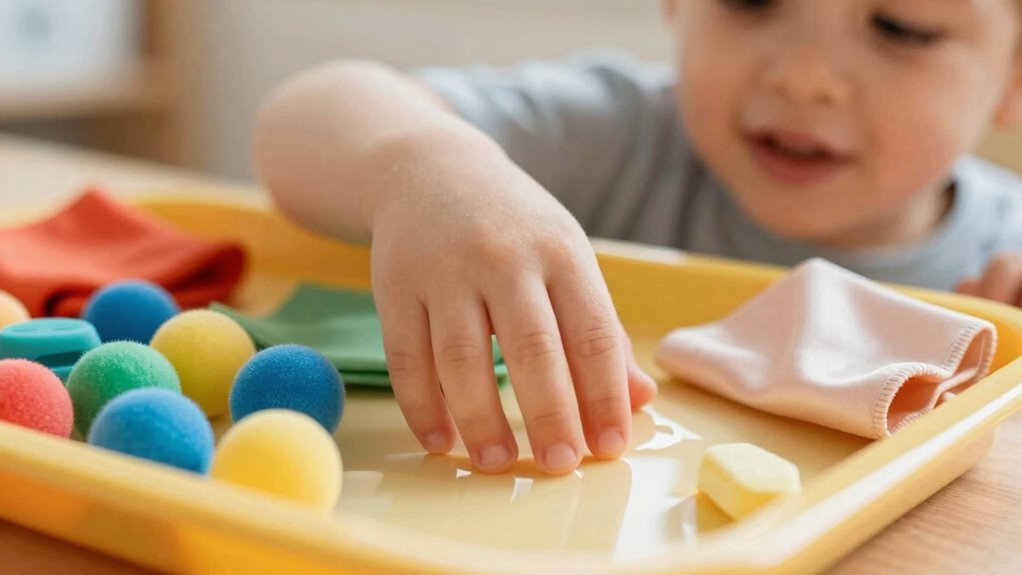
Many children are hesitant to explore new textures, which can make sensory play challenging and frustrating. When a child avoids unfamiliar surfaces or materials, it often stems from sensory sensitivities or past negative experiences. As a result, engaging in texture exploration might feel overwhelming or intimidating for them. However, with patience and creative strategies, you can support their sensory integration and gradually build comfort with different textures. The goal is to create a safe, inviting environment where they can explore at their own pace without pressure.
Start by incorporating familiar textures into play and gradually introducing new ones alongside things they already enjoy. For example, if your child likes soft fabrics, introduce slightly different textures like velvet or fleece, and then slowly add more varied surfaces such as smooth stones or bumpy barks. This incremental approach helps reduce anxiety, making the process less intimidating. It’s essential to observe their reactions carefully and respect their boundaries, offering reassurance and encouragement without forcing them into uncomfortable interactions. Over time, these small exposures can help your child build confidence in their ability to explore new textures, facilitating sensory integration. Incorporating gradual exposure techniques can further support their comfort level with unfamiliar textures. Additionally, understanding how sensory sensitivities influence their reactions can help tailor your approach to meet their individual needs. Recognizing the importance of sensory processing can help parents and caregivers develop more effective strategies for supporting children with texture aversions. Engaging in sensory-rich activities also promotes overall sensory development and resilience.
Gradually introduce familiar textures to help children build confidence in exploring new surfaces comfortably.
Another effective technique is to turn texture exploration into a playful and engaging activity. Use games that involve feeling different objects or materials, such as guessing jars filled with various textured items or sorting objects by their surface qualities. You can also incorporate storytelling or pretend play to make the experience more immersive and less clinical. For example, pretend to be explorers discovering new lands with strange and interesting surfaces, which can make the process feel like an adventure rather than a chore. This playful approach helps children associate sensory exploration with fun, reducing anxiety and encouraging curiosity.
Additionally, consider using multi-sensory activities that combine texture with other senses like sight and smell. For instance, create sensory bins filled with rice, beans, or pasta, and hide small toys or objects with different textures inside. Let your child explore with their hands, encouraging them to describe what they feel and notice. These multi-sensory experiences promote sensory integration by engaging multiple senses simultaneously, helping your child process and adapt to new textures more comfortably. Remember, consistency is key; regular, gentle exposure to a variety of textures can gradually lessen sensitivities and foster a more positive attitude toward sensory exploration. Patience, creativity, and understanding will guide your child toward a more confident and enjoyable sensory journey.
sensory play materials for kids who avoid textures
As an affiliate, we earn on qualifying purchases.
As an affiliate, we earn on qualifying purchases.
Frequently Asked Questions
How Can I Introduce Textures Gradually Without Overwhelming My Child?
To introduce textures gradually, start with familiar, soft textures your child already likes. Use gentle, slow exposure during sensory play, allowing them to explore at their own pace. Incorporate small, manageable amounts of new textures alongside familiar ones, encouraging curiosity without pressure. This method of gradual exposure helps your child build confidence in texture exploration, making new sensations feel safe and less overwhelming over time.
Are There Specific Textures That Tend to Be More Acceptable Initially?
Start with textures your child is already comfortable with, like soft fabrics or smooth objects, as they tend to be more acceptable initially. Pay attention to their texture preferences and avoid sensory aversions by gradually introducing new textures alongside familiar ones. This approach helps build confidence and reduces overwhelm, making sensory play enjoyable. Over time, your child may become more receptive to exploring a wider variety of textures at their own pace.
How Do I Recognize if a Child Genuinely Dislikes a Texture or Is Just Hesitant?
To tell if a child genuinely dislikes a texture or is just hesitant, watch for consistent cues. If they withdraw, wrinkle their nose, or pull away repeatedly, it signals sensory aversions. Hesitation might involve brief pauses or curiosity, but no strong negative reactions. Recognize their texture preferences by observing their reactions over time, noting patterns. Patience and persistent play can help determine if their discomfort is rooted in dislike or just initial unfamiliarity.
Can Sensory Play Help Children Overcome Texture Sensitivities Long-Term?
Yes, sensory play can help children overcome texture aversion over time. By engaging in sensory integration activities, you encourage your child to gradually explore and tolerate new textures in a safe, controlled environment. Consistent exposure helps desensitize their sensory system, building comfort and confidence. Over time, this approach promotes long-term adaptation, reducing avoidance behaviors and improving their ability to handle diverse textures in daily life.
What Safety Precautions Should I Consider During Sensory Activities?
During sensory activities, you should prioritize safety to prevent sensory overload and injuries. Always supervise your child closely, especially with small or potentially harmful objects. Use appropriate safety gear like gloves or aprons if needed, and guarantee the environment is safe, clutter-free, and free from choking hazards. Keep activities short and observe for signs of distress, adjusting or stopping if your child shows signs of sensory overload or discomfort.
Conclusion
By gently introducing new textures through these sensory play ideas, you’re opening a world of discovery for your child—one that could transform their entire experience of the world. Remember, patience and consistency are your best tools; even the tiniest progress feels like a giant leap. With your support, they’ll learn to embrace new sensations, revealing confidence and resilience far greater than you ever imagined. Together, you’re shaping a brave, curious little explorer destined to conquer any obstacle ahead.
Halloween Picks
halloween
As an affiliate, we earn on qualifying purchases.