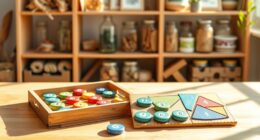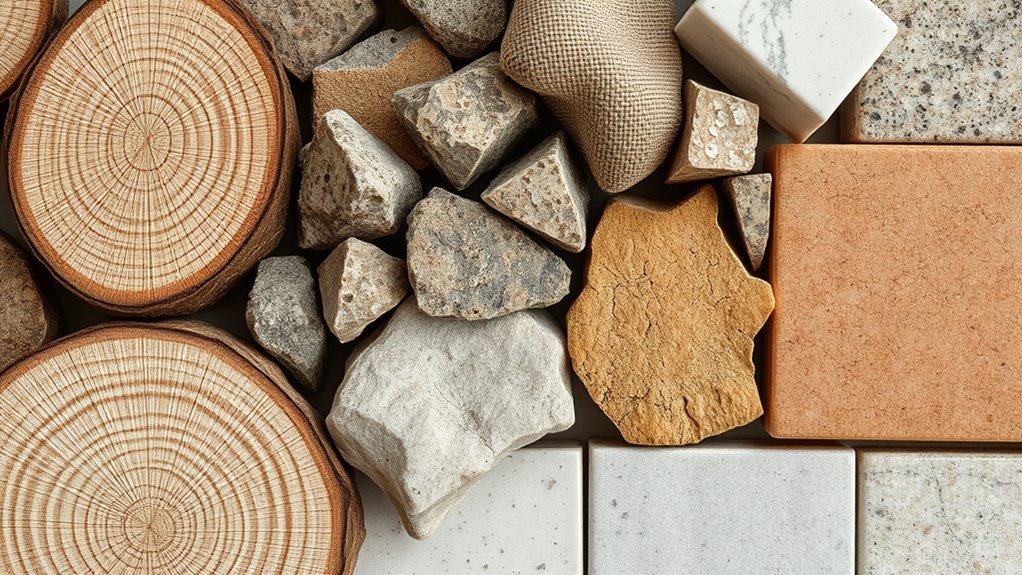

Sensorial materials help you develop and refine your senses through a structured process of order, grading, and active exploration. By systematically arranging materials from simple to complex, you improve your ability to discriminate textures, colors, sounds, and smells. Engaging hands-on with these materials boosts confidence and enhances sensory perception. As you progress, you’ll notice finer differences and deeper understanding emerging. Keep exploring, and you’ll discover how these tools can truly sharpen your sensory awareness and perception skills.
Key Takeaways
- Sensorial materials are systematically ordered to facilitate focused exploration and enhance sensory discrimination skills.
- Grading involves arranging materials from simple to complex to support progressive learning and confidence building.
- Active exploration through manipulation and comparison sharpens perception of textures, colors, sounds, and smells.
- Structured order and grading promote recognition of subtle sensory differences and foster detailed perceptual understanding.
- Integrating exploration with sensory development supports broader cognitive and perceptual growth through engaging activities.
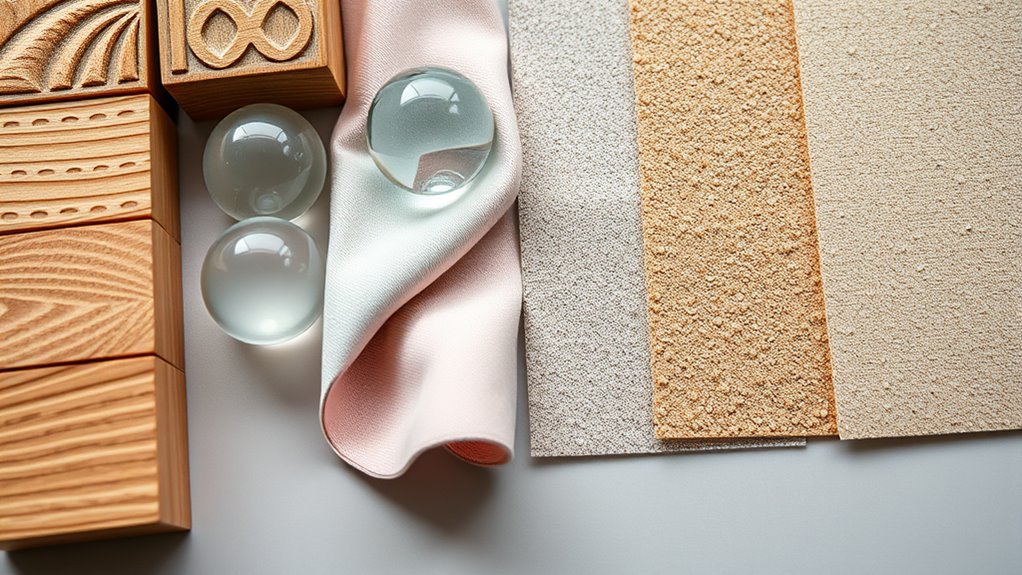
Sensorial materials are designed to engage your senses, providing tactile, visual, auditory, or olfactory experiences that enhance learning and interaction. When you work with these materials, you’re actively stimulating your sensory channels, which plays a fundamental role in your sensory development. This development is essential because it helps you process and interpret the world around you more effectively. As you explore, you begin to notice differences in textures, colors, sounds, and smells, sharpening your ability to discriminate between various sensory stimuli.
A fundamental aspect of working with sensorial materials is material categorization. This process involves grouping objects based on shared features, such as size, shape, color, or texture. When you categorize materials, you develop a better understanding of their properties and relationships, which in turn supports cognitive growth. For example, sorting different colored blocks by hue or matching rough and smooth surfaces helps you recognize patterns and establish mental connections. This activity isn’t just about organization; it deepens your understanding of how different sensory qualities relate to each other, laying a foundation for more complex reasoning skills.
Order and grading are essential in sensorial activities because they create a structured environment that encourages focused exploration. When materials are arranged systematically—by size from smallest to largest, by shade from dark to light—you learn to observe subtle differences and develop your ability to discern fine distinctions. This structured approach enhances your sensory discrimination, a key component of sensory development. As you progress through graded activities, you build confidence and refine your skills, learning to notice even the smallest variations. For instance, starting with broad differences in textures and gradually moving to more nuanced distinctions trains your senses to become more sensitive and precise.
Exploration with sensorial materials is a hands-on process that invites curiosity. You’re encouraged to touch, compare, and analyze materials freely, which promotes active engagement. This exploration helps reinforce your understanding of material properties and their sensory characteristics. By manipulating materials in a systematic way—such as grading objects by weight or texture—you develop a more refined sensory awareness. This process also fosters independence, as you learn to make decisions based on your sensory observations, and it boosts your confidence in your perceptual abilities. Additionally, incorporating integration with other learning areas helps deepen your sensory understanding and applies these skills in broader contexts.
Ultimately, sensorial materials serve as a powerful tool in nurturing your sensory development through categorization, order, and graded exploration. They turn learning into an interactive and engaging experience, helping you sharpen your senses and deepen your understanding of the world in a meaningful way.
Frequently Asked Questions
How Do Sensory Materials Support Language Development?
Sensory materials support your child’s language development by enhancing sensory integration and tactile stimulation. As they explore different textures and sensations, they learn to describe their experiences, expanding their vocabulary. This hands-on engagement encourages them to communicate their feelings and observations more effectively. By actively participating in sensory activities, your child develops better listening skills and understanding, which are essential for building a strong language foundation.
What Are the Best Ways to Introduce New Sensory Materials?
Imagine opening a treasure chest of sensory play—you should introduce new sensory materials gradually, ensuring each item is age-appropriate through careful material grading. Start with familiar materials to build confidence, then gently explore new textures, sounds, or scents. Observe your child’s reactions closely, and encourage exploration at their own pace. This thoughtful approach makes discovery exciting and safe, turning learning into a delightful adventure.
How Can Sensory Activities Be Adapted for Children With Special Needs?
You can adapt sensory activities for children with special needs by using individualized approaches and adaptive techniques. Modify textures, sounds, and visuals to suit their sensitivities, and offer options for different engagement levels. Incorporate tools like weighted blankets or noise-canceling headphones, and allow extra time for exploration. By tailoring activities to each child’s unique needs, you create a supportive environment that encourages development and confidence in sensory exploration.
What Safety Considerations Are Important for Sensory Exploration?
When planning sensory exploration, you need to prioritize safety by conducting a hazard assessment beforehand to identify potential risks. Always use appropriate safety gear, like gloves or goggles, to protect children from possible injuries or allergic reactions. Keep an eye on children at all times, and make certain the environment is clean and free of sharp objects or choking hazards. These precautions help create a safe, enjoyable sensory experience for everyone involved.
How Do Sensory Materials Promote Cognitive Development?
Sensory materials promote cognitive development by enhancing sensory integration and providing tactile stimulation that helps you process information better. When you explore different textures, shapes, and colors, you strengthen neural pathways, improve problem-solving skills, and develop focus. These materials encourage active engagement, which boosts memory and comprehension. By stimulating your senses through tactile experiences, you build a foundation for more complex thinking and learning skills.
Conclusion
By exploring and grading sensorial materials, you open a world of tactile discovery and learning. For example, imagine a classroom where children sort textured fabrics by roughness and smoothness, developing their sensory awareness. This hands-on approach not only refines their perception but also fosters curiosity and confidence. When you prioritize order and exploration, you create a rich environment that nurtures natural curiosity and enhances sensory development—making every touch a meaningful learning experience.