Through play, you guide your child from relying on you for emotional support to managing their feelings independently. Play helps them practice steering through frustrations, sharing, and negotiating with peers, building emotional resilience and self-control. Children learn to recognize and express emotions, develop patience, and resolve conflicts—skills crucial for independence. Engaging in social and imaginative play, especially in enriching environments like glamping, encourages ongoing growth. Keep exploring how play shapes emotional self-regulation step by step.
Key Takeaways
- Play facilitates gradual independence by helping children practice emotional regulation and self-control in safe, supportive environments.
- Co-regulation through adult-guided play builds foundational skills for autonomous emotional management.
- Peer interactions during play promote self-awareness, empathy, and the ability to self-regulate in social contexts.
- Repeated play experiences strengthen resilience, enabling children to handle setbacks and frustrations independently.
- Creative play settings like glamping inspire emotional exploration, fostering confidence and autonomous coping skills.
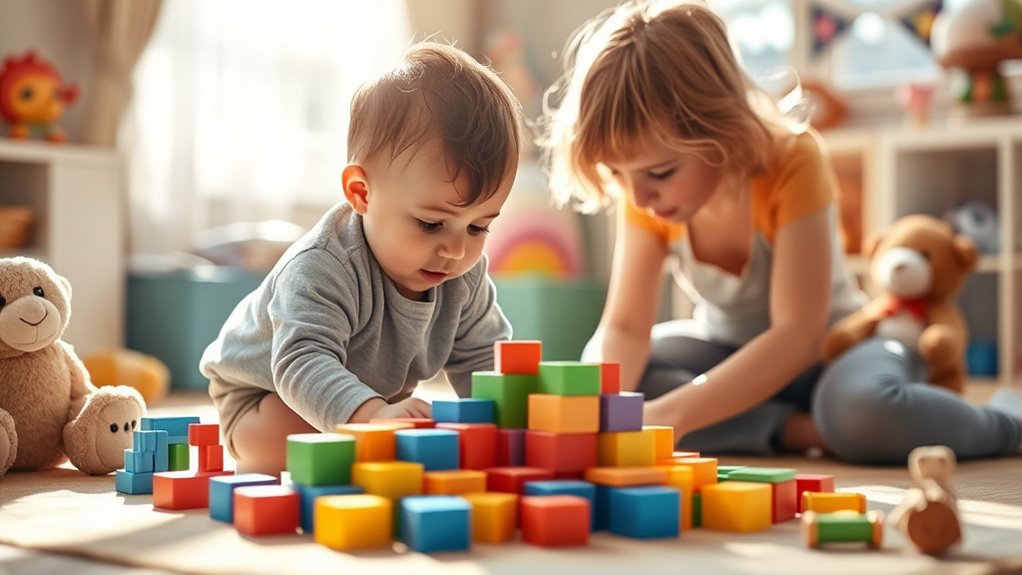
Play isn’t just fun—it’s a powerful tool for helping children develop self-regulation skills. When you observe children engaged in play, you’ll notice how they navigate their emotions and respond to others. Play creates a natural environment for children to build emotional resilience, which is essential for managing stress, setbacks, and challenging feelings. Through play, children learn to stay calm when things don’t go their way and to recover quickly from disappointments. This resilience doesn’t develop overnight; it’s fostered through repeated opportunities to face small frustrations and successes during play.
Peer interaction plays a pivotal role in this process. When children play together, they learn to share, take turns, and negotiate. These interactions require them to regulate their emotions—whether they’re feeling excited, frustrated, or left out—and to adapt their behavior accordingly. For example, a child might feel upset if they don’t get a turn, but through social play, they learn patience and empathy. As they practice managing their feelings around peers, they become more adept at self-control and emotional awareness. Over time, these experiences help children develop the capacity to stay composed and focused, even in more complex social situations.
Play also offers a safe space for children to experiment with different ways of expressing themselves. When kids engage in role-playing or imaginative scenarios, they explore a range of emotions and learn to articulate their feelings. This process improves their emotional vocabulary and helps them recognize their own emotional states and those of others. As children become more skilled at reading social cues and responding appropriately, they strengthen their emotional resilience and their ability to navigate peer interactions. Additionally, incorporating elements of glamping during outdoor play can provide inspiring and comfortable environments that stimulate creativity and emotional growth.
Furthermore, play encourages children to practice problem-solving and conflict resolution. When disagreements arise during play, kids learn to negotiate, compromise, and find solutions. These experiences teach them to manage frustration and develop patience, reinforcing their self-regulation skills. As they become more confident in handling conflicts and setbacks, they gain independence in managing their emotions without constant adult intervention.
Frequently Asked Questions
How Does Cultural Background Influence Self-Regulation Development Through Play?
Your cultural background shapes how children develop self-regulation through play by influencing cultural norms and play traditions. You might notice that in some cultures, children are encouraged to be more independent during play, fostering self-control early on. In others, play emphasizes social harmony and cooperation, which guides children to regulate emotions and behaviors accordingly. These cultural values directly impact how children learn self-regulation skills through their play experiences.
What Role Do Siblings Play in Developing Regulation Skills During Play?
You might think siblings just cause chaos, but they actually play a crucial role in developing regulation skills. Through sibling collaboration, you learn patience, turn-taking, and empathy. When conflicts arise, you practice conflict resolution, helping you manage emotions and stay calm. These shared experiences foster self-regulation, turning everyday play into powerful lessons in emotional control and social skills, shaping your ability to navigate relationships confidently.
Can Technology-Based Play Support Self-Regulation Learning Effectively?
Technology-based play can support self-regulation learning effectively by offering digital interactions within virtual environments. You can guide children to navigate these spaces, helping them practice patience, problem-solving, and emotional control. Virtual environments provide safe, controlled settings where kids learn to manage their impulses and emotions. With intentional design, technology becomes a valuable tool for developing regulation skills, complementing traditional play and fostering independence in a tech-savvy world.
How Does Play-Based Self-Regulation Differ Across Various Developmental Stages?
You’ll find that play-based self-regulation varies across developmental stages, influenced by sensorimotor development and emotional regulation. In early childhood, play helps develop basic sensorimotor skills and emotional awareness, fostering foundational self-regulation. As you progress, play encourages more complex emotional regulation and social skills, supporting independence. Recognizing these stage-specific needs helps you tailor play activities to effectively support self-regulation growth throughout development.
What Are Signs of Challenges in Self-Regulation Emerging During Play?
You might notice signs of challenges in self-regulation during play, such as emotional dysregulation, where your child becomes overly upset or withdraws, or impulsivity cues, like acting without thinking or difficulty waiting their turn. These behaviors indicate they’re struggling to manage their emotions and impulses. Recognizing these signs early helps you provide the right support to guide them toward better self-control and emotional understanding.
Conclusion
As you guide your child through play, you’re planting seeds of independence in a garden of growth. With each shared moment, you’re building bridges from co-regulation to confident self-control, like a steady hand steering a sailboat through changing winds. Remember, your support is the compass that helps them navigate their inner world. Soon, they’ll glide freely on their own, like a bird taking flight—ready to explore the vast sky of their own potential.