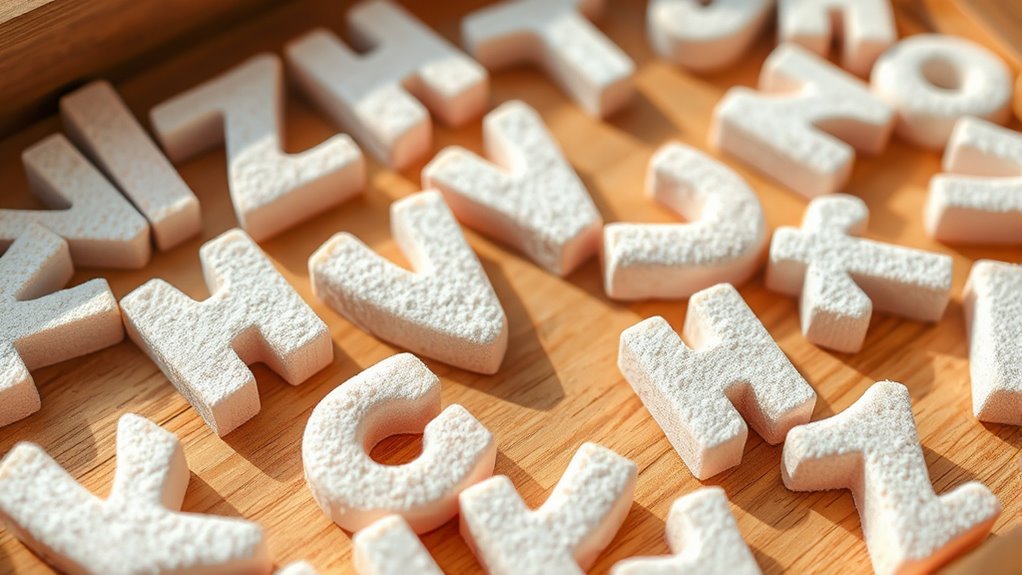

Using sandpaper letters in a sensory tray creates a multisensory experience that enhances letter recognition and fine motor skills. You can encourage children to trace, feel, and say each letter aloud, making learning hands-on and engaging. Incorporating related objects or images adds meaning and helps build connections. This activity supports early literacy by combining tactile feedback with visual cues, strengthening retention. If you keep exploring, you’ll discover more ways to make this method even more effective.
Key Takeaways
- Incorporate small objects related to each letter to create meaningful, multisensory learning experiences.
- Arrange sandpaper letters in various patterns or sequences to challenge and engage different skill levels.
- Use tactile tracing combined with verbal prompts to reinforce letter recognition and pronunciation.
- Adapt activities by adding visual or auditory cues to support children with diverse sensory processing needs.
- Transform traditional sandpaper letter activities into interactive, sensory-rich stations for enhanced engagement and retention.
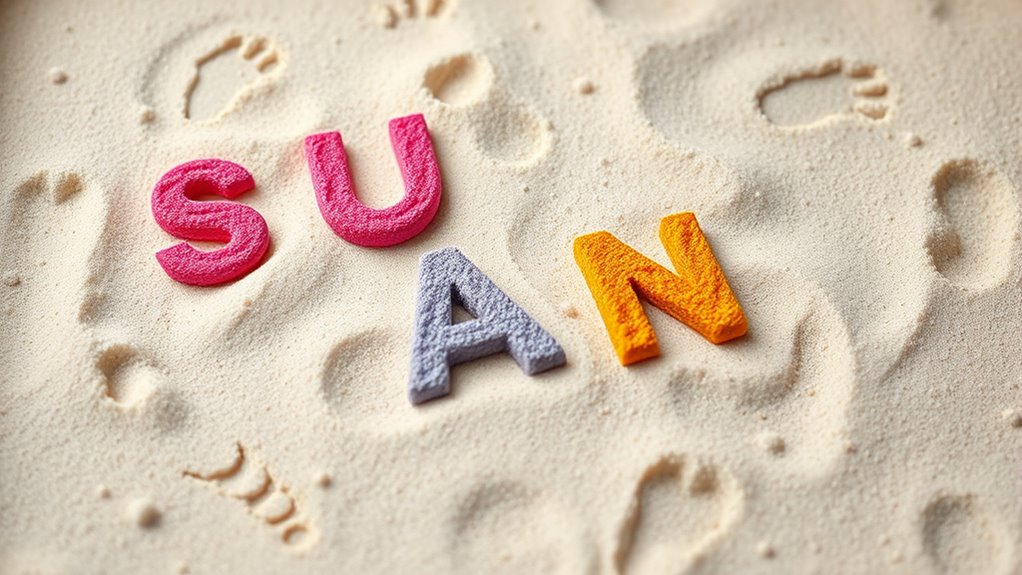
Using sandpaper letters in a sensory tray offers a hands-on way for children to develop their letter recognition and fine motor skills. When you incorporate these textured letters into a sensory experience, you engage multiple senses, making learning more effective and enjoyable. As your child touches, traces, and feels the rough surface of each letter, they begin to associate tactile sensations with visual shapes, reinforcing letter recognition through sensory integration. This multisensory approach helps children remember letter forms more deeply, especially those who learn best through touch and movement. Additionally, sensory processing plays a vital role in how children interpret tactile information, making this activity especially beneficial for children with varied sensory needs.
Engage multiple senses with sandpaper letters to boost letter recognition and fine motor skills.
As you set up the sensory tray, guarantee each sandpaper letter is easily accessible and clearly visible. You can arrange the letters in alphabetical order or mix them up for a more challenging activity. Encourage your child to pick up each letter, trace its shape with their finger, and say its name aloud. This process not only boosts letter recognition but also strengthens finger muscles, improving fine motor coordination necessary for writing. The tactile feedback from the rough surface helps children internalize the shape of each letter, making it easier for them to recognize and write later on.
Incorporating the sandpaper letters into a sensory tray transforms a traditional letter recognition activity into an engaging game. You might add small objects or pictures related to the letters to create connections between the letter’s shape and real-world items. For example, placing a toy car near the letter “C” or a picture of an apple near “A” helps children associate the letter with familiar objects, enhancing their understanding and retention. This contextual connection fosters cognitive links through sensory integration, making learning more meaningful.
You can also adapt the activity to suit different skill levels. For beginners, focus on tracing and naming each letter. For more advanced learners, challenge them to find specific letters in the tray or to arrange the letters in alphabetical order after exploring them. Repeating these activities regularly builds confidence and fluency in letter recognition. The tactile experience combined with verbal reinforcement creates a powerful learning loop that supports early literacy development.
Frequently Asked Questions
How Can I Adapt Sandpaper Letters for Older Children?
To adapt sandpaper letters for older children, you can challenge their letter recognition and fine motor skills by adding complexity. Use larger or more intricate letter designs, incorporate multi-sensory activities like tracing with different textures, or ask them to write words or sentences. You could also introduce timed activities or memory games to make letter recognition more engaging, helping them develop both fine motor control and literacy skills effectively.
What Are Alternative Materials for Sensory Letter Activities?
You can explore alternative textures and eco-friendly options for sensory letter activities by using materials like fabric, foam, or natural elements such as leaves or bark. These alternatives provide varied tactile experiences and are environmentally conscious choices. You might also consider using recycled paper or cork for letter tracing or stamping. These options stimulate sensory development while supporting sustainability, making your activities engaging and eco-friendly for older children.
How Do I Introduce the Sensory Tray to Shy Learners?
Think of introducing a sensory tray to shy learners as planting a delicate seed. You gently invite them to explore, using engagement strategies like soft spoken instructions and offering choices. Shy learner tips include starting with simple tasks and providing reassurance. You create a safe space, encouraging curiosity without pressure, helping shy children blossom at their own pace. Patience and gentle encouragement turn hesitation into confidence.
What Safety Precautions Should I Take With Sandpaper Letters?
When using sandpaper letters, you should prioritize child supervision at all times to prevent choking or injury. Regularly inspect the material for tears, rough edges, or small pieces that could pose hazards. Guarantee the workspace is clear of clutter and instruct children on proper handling. By staying attentive and checking the materials frequently, you create a safe environment that encourages exploration without unnecessary risks.
How Can I Incorporate This Activity Into a Homeschool Curriculum?
You can incorporate this activity into your homeschool curriculum by using it as part of multisensory learning to reinforce letter recognition and phonics skills. Integrate it into your language arts lessons by pairing it with handwriting practice or reading activities. Curriculum integration is seamless when you use tactile activities like sandpaper letters to engage different learning styles, making learning more interactive and memorable for your child.
Conclusion
Incorporating sandpaper letters into a sensory tray turns learning into a delightful dance of discovery. As your child explores textures and shapes, their confidence blossoms like a flower in spring. This hands-on approach not only sharpens their letter recognition but also nurtures their curiosity. Remember, each tactile moment is a stepping stone on their literacy journey—making education a gentle stream that flows effortlessly, shaping bright minds one touch at a time.