
Engaging in risky play helps children develop essential skills like coordination, problem-solving, and resilience, boosting their confidence and independence. Setting clear safety boundaries and conducting regular risk assessments allow children to explore safely while learning to judge and manage hazards. Balancing safety with freedom encourages responsible decision-making and helps children build a healthy relationship with risk. If you keep exploring, you’ll discover how to create environments that support both safe exploration and growth.
Key Takeaways
- Risky play fosters vital skills like problem-solving, resilience, and confidence through manageable challenges.
- Proper risk assessment ensures activities are beneficial while minimizing unnecessary hazards.
- Establishing clear safety guidelines and boundaries promotes self-regulation and a sense of security.
- Balancing safety measures with exploration encourages learning without overprotection or excessive risk.
- Educating children about safety and involving them in boundary-setting develops responsibility and good judgment.
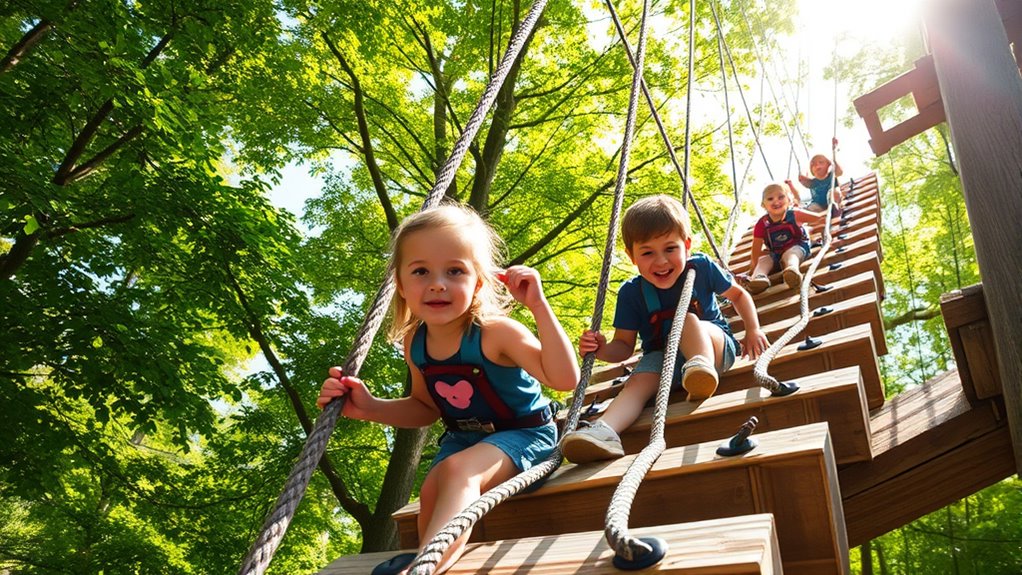
Have you ever wondered why allowing children to engage in risky play can be so beneficial? The answer lies in how children learn to navigate the world around them. When kids take on challenges like climbing trees, balancing on logs, or jumping from heights, they’re developing essential skills such as coordination, problem-solving, and resilience. But it’s natural to worry about safety, which is why understanding risk assessment and safety guidelines is so important. These tools help you create an environment where children can explore and push boundaries while minimizing potential dangers. Risk assessment involves carefully analyzing the play environment to identify possible hazards and determine whether the activity’s benefits outweigh the risks. By doing this, you can decide what safety measures to implement—like soft ground under climbing areas or ensuring equipment is well-maintained—without completely removing opportunities for adventure. Safety guidelines serve as a framework for setting appropriate boundaries, so children know what is acceptable and what isn’t, helping them learn self-regulation and judgment. When you establish clear rules and supervise play, you foster a sense of security while still encouraging kids to test their limits. Remember, the goal isn’t to eliminate all risks but to manage them sensibly. Children need to experience manageable challenges to develop confidence and independence. If you overprotect them, they might miss out on essential learning moments; if you’re too lax, they could face unnecessary harm. Striking the right balance involves ongoing risk assessment—reviewing the play environment regularly and adjusting safety guidelines as children grow and their abilities change. This dynamic approach helps guarantee that play remains both fun and safe. It’s also indispensable to teach children about safety and risk from a young age, empowering them to make informed decisions during play. By involving children in discussions about boundaries and safety, you help them develop good judgment and a sense of responsibility. Incorporating appropriate safety measures based on current best practices ensures that children can explore confidently. Ultimately, allowing children to engage in risky play within a structured framework benefits their physical, emotional, and social development. It builds resilience, fosters creativity, and nurtures independence. When you combine thoughtful risk assessment with clear safety guidelines, you create an environment where children can thrive—exploring, learning, and growing into confident individuals while staying protected. This balance is essential for helping children develop a healthy relationship with risk that will serve them well throughout their lives.
Frequently Asked Questions
How Can Parents Safely Supervise Risky Play Activities?
You can safely supervise risky play by using effective supervision techniques like staying alert and maintaining clear communication. Conduct a thorough risk assessment beforehand to identify potential hazards and set appropriate boundaries. Keep a close eye on your child, but also give them space to explore within safe limits. Regularly check equipment and environment, and be ready to intervene if necessary, ensuring they enjoy the benefits of risky play safely.
What Age Is Appropriate for Introducing Risky Play?
You can introduce risky play around ages 3 to 4, adjusting based on your child’s age and individual risk tolerance. At this stage, children develop better coordination and understanding of boundaries, making it appropriate to gently encourage safe risks. Observe their confidence and ability to handle challenges, gradually increasing complexity as they grow. Always supervise closely and communicate about safety to foster healthy risk-taking skills.
Are There Any Legal Restrictions on Risky Play in Schools?
You should know that legal policies and liability concerns do influence risky play in schools. While regulations vary by region, most schools must follow safety standards and obtain proper insurance to limit liability. It’s important to balance encouraging risky play with ensuring safety, so you’ll need to review your local laws and school policies carefully. Always prioritize safety, but don’t shy away from supporting controlled risky play that benefits children’s development.
How Do Risky Play Benefits Differ for Children With Special Needs?
You’ll find that risky play offers children with special needs unique benefits, fostering inclusive development and encouraging sensory exploration. While all kids gain confidence and resilience, children with special needs often develop greater motor skills and emotional resilience through safe risks. Their participation promotes social inclusion and independence, helping them navigate challenges. Embracing these benefits supports their growth, ensuring they experience the enriching, developmental aspects of risky play alongside their peers.
What Signs Indicate a Child Is Engaging in Safe Risky Play?
You can tell a child is engaging in safe risky play when they show good hazard awareness and conduct a natural risk assessment, like checking their surroundings before climbing or jumping. They might pause to evaluate potential dangers or adjust their actions to stay safe. Their confidence grows as they understand limits, demonstrating control and awareness without overstepping boundaries, which indicates they’re managing risk responsibly while exploring.
Conclusion
So, next time you see a child about to climb a tree or jump from a low wall, remember—those risky plays are actually building their confidence and resilience. It’s ironic, isn’t it? The very activities we worry about might be the ones shaping their strength for the future. Embrace the boundaries, but don’t forget to let them take a few daring leaps. After all, the real risk is missing out on life’s greatest lessons.