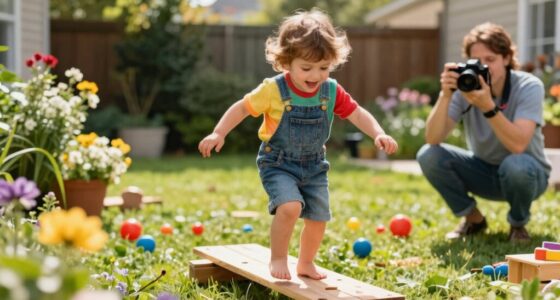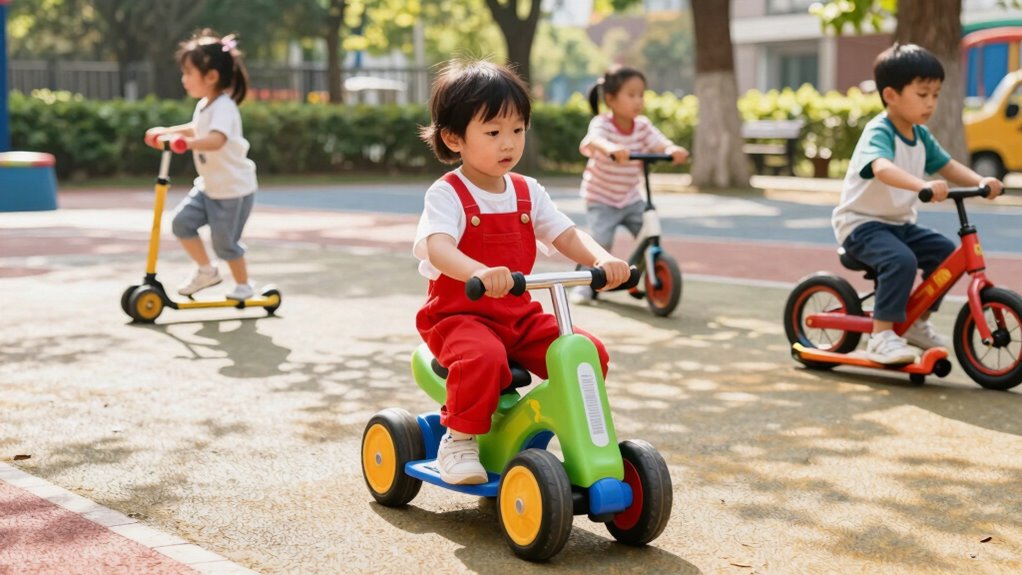

Ride-on toys boost your child’s spatial awareness by encouraging active movement and obstacle navigation. As they steer, push, and maneuver around furniture or yard obstacles, they develop a better understanding of distances, speed, and space. This active play helps them create mental maps of their environment and improves depth perception. Over time, they become more confident exploring new spaces. Keep exploring to discover more ways ride-on toys support your child’s growth and learning.

Turn the school run and nap time into listening time
- Thousands of audiobooks, podcasts and originals
- Listen on your phone, tablet or Echo — also offline
- Cancel anytime
Key Takeaways
- Navigating around obstacles enhances children’s ability to judge distances and spatial relationships.
- Moving in different directions helps develop depth perception and mental mapping skills.
- Steering and maneuvering improve understanding of personal space and environmental boundaries.
- Play encourages awareness of surroundings, fostering exploration and cognitive perception of spatial dynamics.
- Interacting with others during play sharpens social spatial awareness and adaptive movement skills.
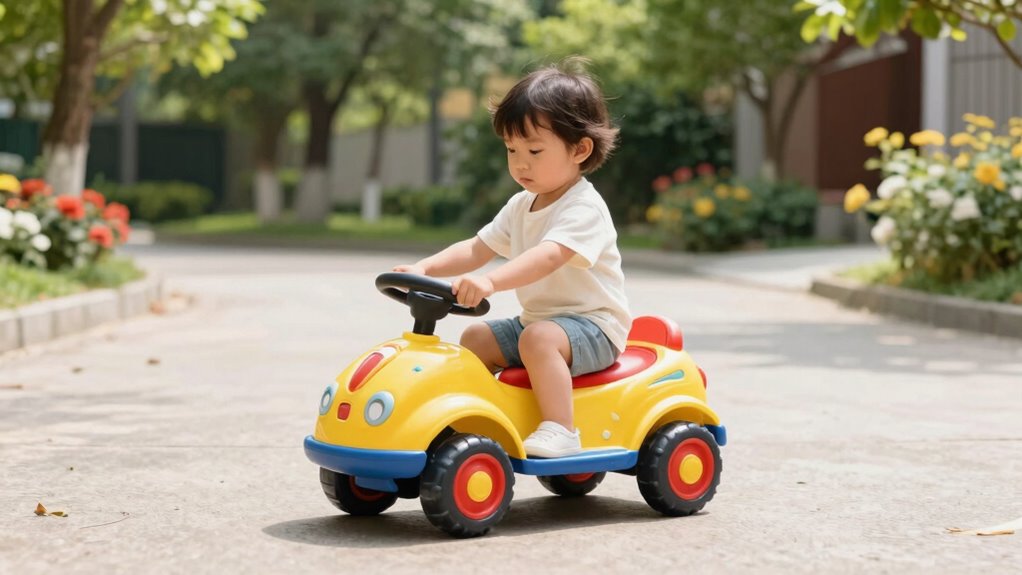
Ride-on toys are more than just fun playthings; they play a vital role in helping children develop spatial awareness. When you encourage your child to hop on a ride-on, you’re giving them a chance to explore their environment in a hands-on way. As they push, steer, and maneuver around furniture or yard obstacles, they start to understand how their body relates to the space around them. This active engagement is essential for motor skill development, as it enhances their coordination, balance, and control. The more they practice steering and adjusting their position, the more confident they become in their physical abilities.
Ride-on toys boost motor skills, coordination, and confidence through active exploration and maneuvering around obstacles.
Your child’s confidence builds naturally as they master riding skills. Each successful turn or obstacle avoided boosts their belief in what they can do. This sense of accomplishment motivates them to try more complex movements, which further refines their spatial awareness. With consistent practice, they begin to anticipate how their movements affect their surroundings, leading to better judgment and decision-making. Riding a toy isn’t just about fun; it’s about learning to control their body within a space and understanding the boundaries and distances around them.
In addition, riding toys help children learn about depth perception and spatial relationships. As they move forward, backward, or around objects, they develop a mental map of their environment. This process encourages visual-spatial skills that are essential for later academic tasks like reading, writing, and math. When your child steers around furniture or other obstacles, they’re practicing how to judge distances and judge the speed and direction of their movements. These skills transfer to many everyday activities, making them more adept at exploring the world confidently. Developing spatial awareness through play is a foundational skill that supports their overall cognitive growth.
Furthermore, ride-on toys foster social skills that support spatial awareness. When children play together, they learn about personal space, sharing, and coordinating movements. Watching others and adjusting their own actions in response sharpens their understanding of spatial dynamics. As they become more comfortable in their physical abilities and spatial understanding, they tend to approach new environments and challenges with less hesitation and more curiosity. This combination of motor skill development and confidence building creates a solid foundation for their overall growth, making ride-on toys a powerful tool in early childhood development. Additionally, engaging with these toys can help children recognize the importance of environmental awareness in their play and daily activities.
As an affiliate, we earn on qualifying purchases.
Frequently Asked Questions
At What Age Should Children Start Using Ride-On Toys?
You should start introducing ride-on toys around age one or 12 months, as they help with motor skill development and encourage imaginative play. At this age, children gain confidence in balancing and steering, which supports their physical growth. As they grow, ride-on toys continue to boost coordination and creativity, making playtime both fun and educational. Always supervise to guarantee safety as your child explores and develops new skills.
How Can Parents Ensure Safety While Children Play?
Are you ready to keep your child safe on their ride-on toy? Always supervise playtime, ensuring playground safety by choosing flat, obstacle-free areas. Encourage your child to wear a helmet for protection, emphasizing its importance in preventing injuries. Regularly check the toy for loose parts and stability before use. By staying vigilant and prioritizing safety measures, you can create a fun, secure environment for your child’s adventures.
Do Ride-On Toys Improve Coordination or Just Spatial Skills?
Ride-on toys boost both coordination and spatial skills by encouraging your child to navigate and control movement. As they push, steer, and balance, they develop motor skills and enhance their balance. These activities challenge their physical abilities, helping them improve coordination and spatial awareness simultaneously. By playing actively, your child builds confidence in their physical movements, making ride-on toys a fun way to support overall motor skill development and balance enhancement.
Are There Specific Types of Ride-On Toys Better for Spatial Development?
Yes, certain ride-on toys are better for spatial development. Look for models that encourage active movement and steering, like balance bikes or tricycles, which help refine motor skills. These toys also boost imaginative play, making the experience more engaging. By steering different terrains and directions, your child learns spatial relationships and improves coordination, fostering overall development through fun, interactive play.
How Long Should Children Regularly Play With Ride-On Toys for Benefits?
You should aim for about 15 to 30 minutes of playtime duration with ride-on toys daily to maximize developmental benefits. This amount of time encourages your child to practice coordination, balance, and spatial awareness without causing fatigue or frustration. Consistent, moderate play sessions help your child develop essential motor skills, build confidence, and enjoy the physical activity, all while supporting their overall growth in a fun and engaging way.
Conclusion
In the end, ride-on toys are more than just fun—they considerably boost your child’s spatial awareness. Did you know that kids who regularly play with ride-on toys show a 30% improvement in spatial reasoning skills by age five? By encouraging your little one to navigate, steer, and control these toys, you’re helping them develop essential skills for future learning and coordination. So, keep those rides coming—your child’s brain will thank you!
Cold & flu season Picks
humidifiers
As an affiliate, we earn on qualifying purchases.