
Using recycled materials for creative play sparks your child’s imagination and helps them see potential in everyday items. It teaches valuable lessons about environmental responsibility, showing how play can be eco-friendly and sustainable. Recycled resources are cost-effective, encouraging problem-solving and resourcefulness while reducing waste and demand for new materials. Plus, these safe, non-toxic options promote health and safety. Keep exploring to discover more ways recycled materials can inspire fun and meaningful learning experiences.

Get baby and family essentials delivered free — and shop member deals
- Fast, free delivery on millions of items
- Access to Prime Big Deal Days deals on October 6–7
- Prime Video, Amazon Music and more included
Key Takeaways
- Recycled materials inspire imagination by transforming everyday objects into new, creative toys and play activities.
- Using recycled items teaches children about environmental responsibility and sustainable sourcing.
- Repurposing reduces waste, conserving resources and lowering environmental impact during play.
- Recycled materials are often safe, non-toxic, and affordable, making eco-friendly play accessible and cost-effective.
- Engaging with recycled objects fosters resourcefulness, problem-solving, and eco-conscious habits from a young age.
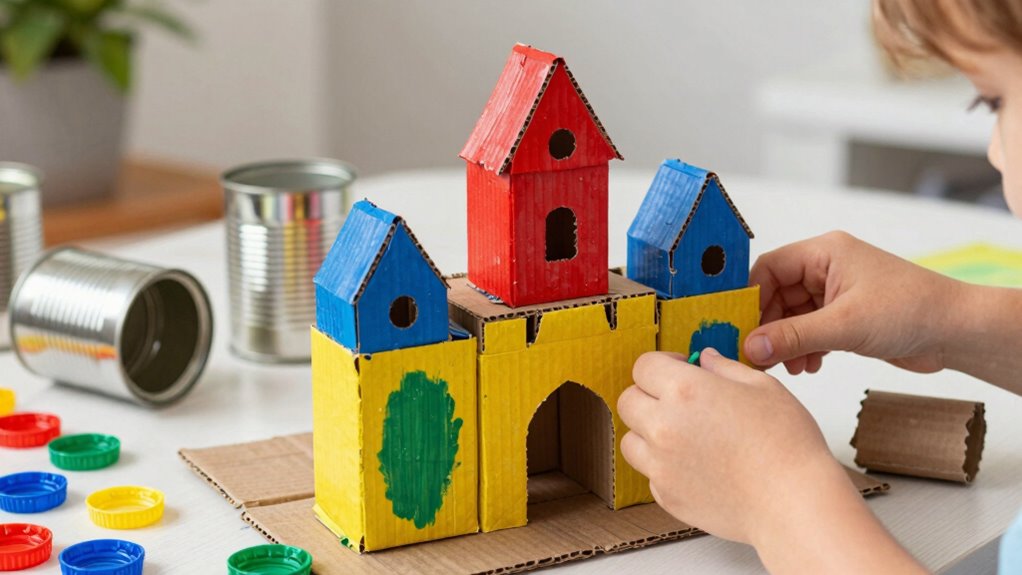
Recycled materials offer a fantastic way to fuel your child’s imagination while teaching them about sustainability. When you choose to incorporate recycled items into their play, you’re not just encouraging creativity—you’re also instilling important values about caring for the environment. These materials often have eco-friendly benefits, reducing waste and lessening the need for new resources. By repurposing items like cardboard boxes, bottle caps, or fabric scraps, you demonstrate that play can be both fun and environmentally responsible. It’s a simple yet powerful way to introduce your child to the concept of sustainable sourcing, helping them understand where materials come from and why it’s important to reuse and recycle.
Recycled materials inspire creativity and teach kids about sustainability and caring for the environment.
Using recycled materials in creative play also promotes resourcefulness. Instead of constantly relying on store-bought toys, you teach your child to see potential in everyday objects. For example, a cardboard tube can become a telescope, a race car, or a puppet. This approach not only sparks their imagination but also emphasizes the value of repurposing. The act of transforming discarded items into something meaningful can foster problem-solving skills and boost confidence as they see their ideas come to life. Plus, it’s a cost-effective way to keep playtime exciting, which makes it an appealing option for many families. Incorporating sustainable sourcing into playtime helps children develop an understanding of environmentally responsible choices from a young age. Teaching them about recycling practices can further deepen their appreciation for the environment and how they can contribute positively. Additionally, emphasizing the importance of resource conservation** can help instill habits that benefit the planet long-term. Recognizing that many recycled materials are safe and non-toxic** further reassures parents about their use during creative projects.
Another benefit of choosing recycled materials is that it supports sustainable sourcing. When you select items that are already in circulation, you’re helping to reduce the demand for new manufacturing, which often involves resource extraction and energy consumption. This conscious choice aligns with eco-conscious values and encourages your child to think critically about their environmental footprint. Additionally, many recycled materials are safe and non-toxic, offering peace of mind when it comes to your child’s health. You can often find or craft these materials from items you already have at home, making it an accessible and eco-friendly option for creative projects.
Ultimately, integrating recycled materials into your child’s playtime is a meaningful way to nurture their creativity while emphasizing sustainability. It teaches them that play doesn’t have to come at the expense of the planet. Instead, they learn that resourcefulness, eco-friendly benefits, and sustainable sourcing can go hand in hand, shaping their understanding of environmental responsibility from a young age. As you watch them invent, build, and explore with recycled items, you’re fostering a mindset that values innovation and conservation—lessons that will stay with them long after playtime ends.
recycled cardboard craft kits for kids
As an affiliate, we earn on qualifying purchases.
As an affiliate, we earn on qualifying purchases.
Frequently Asked Questions
How Do Recycled Materials Promote Environmental Awareness in Children?
Recycled materials promote environmental awareness in children by making eco-conscious habits tangible, encouraging them to see the value in reusing and repurposing. When you involve kids in creative projects with recycled items, you influence their behaviors positively, fostering a sense of responsibility toward the planet. This hands-on experience helps them understand sustainability, shaping their future choices and inspiring a lasting commitment to protecting the environment.
Are Recycled Materials Safe for All Age Groups During Play?
Recycled materials can be safe for all ages if you follow proper safety precautions and rely on thorough material testing. Always guarantee the items are non-toxic, free from sharp edges, and suitable for children’s play. By checking labels and verifying that materials meet safety standards, you create a secure environment. This mindful approach lets everyone enjoy creative play while maintaining safety and peace of mind.
How Can Parents Encourage Sustainable Play With Recycled Items?
You can encourage sustainable play by involving your kids in eco-friendly crafts using recycled items. Show them how to create sustainable toy ideas, like making jewelry from bottle caps or building structures with cardboard boxes. Praise their creativity and emphasize the importance of caring for the environment. This hands-on approach makes eco-friendly crafts fun and inspiring, helping your children develop eco-conscious habits while enjoying imaginative play.
What Are Some Unexpected Recycled Items Suitable for Creative Projects?
Like hidden treasures waiting to be transformed, unexpected recycled items spark your creativity. You can turn old CD cases into colorful mosaic frames or use broken ceramics for upcycled craft ideas that add texture. Plastic bottle caps become vibrant mosaics, and worn-out shoes can inspire quirky sculptures. These innovative reuse techniques not only surprise your child but also teach valuable lessons about sustainability and resourcefulness through imaginative play.
How Do Recycled Materials Compare to New Materials in Durability?
Recycled materials often have a durability comparison that varies depending on the item and its intended use. Generally, they may have shorter material longevity than new materials, especially if exposed to wear and tear. However, many recycled items, like sturdy plastics and metals, hold up well for creative projects. You just need to choose the right recycled material for your craft’s durability needs, ensuring your creations last longer.
Conclusion
Just like Pandora’s box, recycled materials hold endless surprises waiting to spark your child’s imagination. By choosing to recycle, you’re not only helping the planet but also opening a world of creative possibilities. Think of these materials as modern-day magic, turning everyday scraps into treasures of innovation. So, embrace the adventure, and watch your child’s creativity soar—after all, every great builder started with a simple, recycled idea.
Cold & flu season Picks
humidifiers
As an affiliate, we earn on qualifying purchases.